High water pressure feels great in the shower, but it quietly destroys your home’s plumbing. It wears out pipe joints, cracks fixtures, and shortens the life of appliances like your dishwasher and washing machine. Most homeowners never think about water pressure until something breaks and by then, the damage is already done.
That is where a PRV comes in. If you are wondering what is PRV in plumbing and whether your home needs one, the short answer is this: a pressure reducing valve is a small device that protects your entire plumbing system from the damage that high municipal water pressure causes every single day.
What Is a Pressure Reducing Valve?
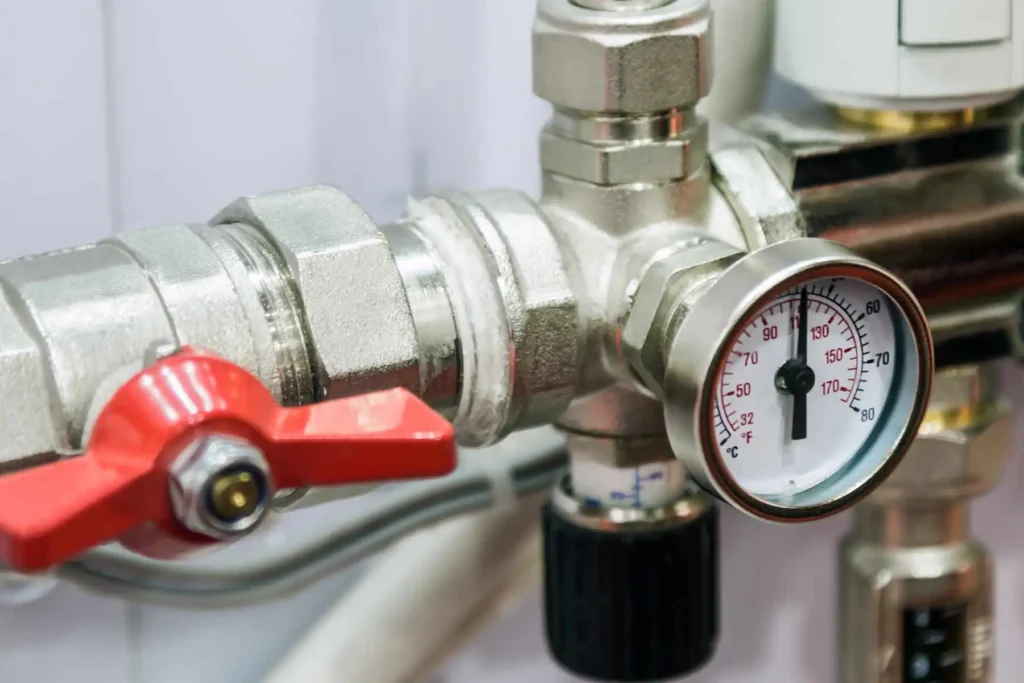
A pressure reducing valve also called a PRV, water pressure regulator, or pressure regulator valve is a plumbing device that automatically reduces the incoming water pressure from your municipal supply line to a safe, steady level inside your home.
Municipal water systems operate at pressures between 60 and 150 PSI (pounds per square inch). Your home’s plumbing, fixtures, and appliances are designed to handle 40 to 80 PSI. Anything above 80 PSI puts constant stress on every pipe, fitting, valve, and appliance in your home.
The water pressure reducing valve sits on the main supply line where it enters your home typically near the water meter or where the supply pipe comes through the foundation wall. It works automatically, 24 hours a day, without any action from you.
Most PRVs are set from the factory at 50 to 60 PSI. A licensed plumber can adjust this to fit your home’s specific needs. The standard safe range recommended by the Uniform Plumbing Code is 40 to 80 PSI, with 60 PSI being the sweet spot for most residential homes.
What does a PRV look like? It is a bell-shaped brass fitting about the size of a fist. You will see an adjustment screw or bolt on top, a locknut to hold the setting in place, and threaded connections on both ends where it connects to your supply pipe.
You can read about: What Is an Expansion Tank
How Does a Pressure Reducing Valve Work?
The mechanism inside a water pressure regulator valve is straightforward once you understand the parts.
The five main components inside a PRV:
- Inlet port: Where high-pressure municipal water enters the valve
- Diaphragm: A flexible rubber disc that moves in response to downstream pressure
- Spring: Pushes against the diaphragm to maintain the set pressure
- Adjustment screw: Controls the spring tension and therefore the output pressure
- Outlet port: Where regulated, lower-pressure water exits into your home’s pipes
Here is how it works in real time:
When you open a faucet, water flows from the municipal line through the PRV and into your home. The diaphragm senses the downstream pressure. If that pressure drops below your set point (say, 60 PSI), the valve opens wider to allow more flow. If the pressure rises above the set point because demand dropped when you close a faucet the spring pushes the diaphragm to partially close the valve, restricting flow and bringing pressure back down.
This constant self-adjustment happens automatically. You never see it or hear it when the valve is working properly. The only time you notice it is when it fails.
Self-contained vs. pilot-operated PRVs
Most residential homes use self-contained PRVs of the type described above. Large commercial or industrial buildings often use pilot-operated PRVs, which handle higher flow rates and use a separate pilot valve to control the main valve. For a standard single-family home, a self-contained brass PRV is the right tool.
Where Is a PRV Installed?
Knowing where your water pressure regulator is located helps you check it, adjust it, and notice problems early.
In most homes, the PRV is installed:
- On the main supply line, within 12 inches of where the water enters the home
- Near the water meter (sometimes outside, sometimes inside near the meter box)
- In the basement or crawl space, on the main line before it branches off to different areas
- Near the water shut-off valve they are often installed together
If your home was built after 1985, there is a good chance it already has a PRV. Homes built before that era may not, especially if they have not had a plumbing upgrade.
To check your current water pressure without a plumber, buy a simple pressure gauge at any hardware store for $10 to $20. Thread it onto an outdoor hose bib (spigot), turn the water on fully, and read the gauge. Anything above 80 PSI means you need a PRV or your existing one needs adjustment.
How to Adjust a Pressure Reducing Valve
The water pressure regulator valve has an adjustment screw on top, usually brass or steel, with a locking nut underneath it. Adjusting it is a straightforward process, but it requires a pressure gauge to do accurately.
What you need:
- Pressure gauge (thread onto any hose bib)
- Flat-head or Phillips screwdriver (or a wrench for the adjustment bolt)
- Pliers or wrench for the locknut
Step-by-step adjustment process:
Step 1 — Measure your current pressure. Attach the pressure gauge to an outdoor hose bib. Turn the water on and record the reading. This tells you where you are starting from.
Step 2 — Locate the PRV. Find your pressure reducing valve on the main supply line. Most are in the basement, utility room, or near the main shut-off valve.
Step 3 — Loosen the locknut. Use a wrench to loosen the locknut below the adjustment screw. Do not remove it, just loosen it enough so the adjustment screw can turn freely.
Step 4 — Adjust the screw. Turn the adjustment screw clockwise to increase pressure. Turn it counterclockwise to decrease pressure. Make small adjustments a quarter turn at a time.
Step 5 — Check the pressure. Go back to the hose bib and check the gauge again. Repeat the adjustment until you reach your target pressure (60 PSI for most homes, no higher than 75 PSI).
Step 6 — Tighten the locknut. Once you hit your target, tighten the locknut to hold the adjustment in place.
When NOT to DIY: If adjusting the screw has no effect on pressure the gauge reading stays the same regardless of how you turn it the valve’s diaphragm has likely failed. A failed diaphragm means the valve is no longer regulating. At that point, replacement is the only fix. Call a licensed plumber.
PRV vs. Expansion Tank: Do You Need Both?
This is a question many homeowners have when they first learn about PRVs. The short answer: yes, in many cases you need both.
When a PRV is installed on a main supply line, it creates what plumbers call a “closed system.” Cold water enters, gets heated in the water heater, expands in volume, and that extra volume has nowhere to go because the PRV acts as a one-way barrier and prevents it from pushing back into the municipal line.
That built-up pressure from thermal expansion cycles through your pipes, stresses your water heater’s pressure relief valve, and shortens the life of your plumbing system.
The solution is a thermal expansion tank a small pressurized vessel installed on the cold water supply line near the water heater. It absorbs the expanding water volume before it becomes a pressure problem. Most local plumbing codes require an expansion tank whenever a PRV is installed.
If a plumber is installing a PRV in your home, ask about the expansion tank at the same time. Installing both together takes about the same labor time as installing just the PRV, and it protects your water heater and pipes from thermal expansion damage.
4 Warning Signs It Is Time to Replace Your PRV
A pressure reducing valve typically lasts 10 to 15 years. When it starts to fail, it shows clear warning signs. Catch them early and you save money. Ignore them and you risk burst pipes, appliance damage, and expensive water bills.
Sign 1 — High water pressure despite a working PRV If your gauge reads above 80 PSI and your PRV is set to 60 PSI, the valve is no longer holding its setting. The diaphragm or spring has failed. Adjusting the screw will have no effect. Replacement is the fix.
Sign 2 — Pressure fluctuates constantly. Water pressure that surges and drops throughout the day strong one minute, weak the next is a sign the valve is struggling to regulate. A healthy PRV maintains steady, consistent pressure.
Sign 3 — Water hammer — banging pipes A loud banging or thumping noise in your walls when you turn off a faucet quickly is called water hammer. It happens when high-pressure water stops suddenly and creates a shockwave in the pipe. A failed PRV that is no longer controlling pressure is a common cause of persistent water hammer.
Sign 4 — Leaking from the PRV body If you see water dripping from the valve itself not from connections on either side, but from the valve body the internal seals have failed. At this point the valve cannot be repaired. It needs to be replaced.
A note on lifespan: Hard water accelerates PRV wear. Mineral deposits build up inside the valve and affect the diaphragm’s ability to flex properly. If your area has hard water, have your PRV inspected every 5 years rather than waiting for symptoms.
What Are the Benefits of a PRV?
Understanding what is PRV in plumbing makes more sense when you see the real-world impact it has on your home.
- Protects pipes and fittings Constant high pressure is the leading cause of pinhole leaks in copper pipes. The repeated stress of pressure above 80 PSI fatigues metal over time. A water pressure regulator valve keeps pressure at a level your pipes were designed to handle.
- Extends appliance lifespan Your dishwasher, washing machine, refrigerator ice maker, and water heater all have internal valves and hoses rated for a maximum pressure. Running them at 100 PSI instead of 60 PSI dramatically shortens their working life. High pressure is why washing machine supply hoses burst often flooding entire rooms.
- Reduces water bills Higher pressure means more water flows from every faucet and showerhead per minute than you actually need. Reducing pressure from 100 PSI to 60 PSI can cut household water consumption by 20 to 30%. Over a year, that adds up to meaningful savings on your water bill.
- Prevents water heater damage High pressure stresses your water heater’s pressure relief valve (T&P valve). When that valve cycles open repeatedly from pressure spikes, it wears out faster than it should. A working PRV reduces this stress significantly.
- Quieter plumbing Pipes that sing, hiss, or hammer under high pressure go quiet when a pressure reducing valve brings the system to a normal range. Homeowners who install a PRV after years of noisy pipes often say the difference is immediate and dramatic.
- Code compliance Most U.S. building codes require a PRV whenever municipal water pressure exceeds 80 PSI at the meter. Installing one keeps your home code-compliant, which matters when you sell or file an insurance claim.
PRV Cost: What to Expect
Knowing what a pressure reducing valve costs helps you budget and avoid being overcharged.
| Item | Typical Cost |
| PRV valve (residential, brass) | $40 – $120 |
| Labor (installation, 1–2 hours) | $150 – $300 |
| Expansion tank (if needed) | $60 – $150 |
| Expansion tank installation | $100 – $200 |
| Total (PRV only) | $200 – $400 |
| Total (PRV + expansion tank) | $350 – $650 |
These are national averages. In high cost-of-living areas like Los Angeles, expect labor rates on the higher end of these ranges. The valve itself a quality brass unit from Watts, Wilkins, or Cash Acme costs $40 to $120 at a plumbing supply house.
One important note: do not buy the cheapest PRV you find at a big-box store. Cheap valves use low-quality diaphragms that fail within a few years. A quality brass PRV from a reputable brand lasts 10 to 15 years.
Why Choose Derks Plumbing for Pressure Reducing Valve Installation
If you are in the Los Angeles area and suspect your water pressure is too high or your PRV has failed, Derks Plumbing handles the entire job from start to finish.
Here is what sets us apart:
We test first. Before recommending a replacement, we check your actual water pressure, inspect the existing valve, and confirm whether adjustment or replacement is the right call. You will never pay for work you do not need.
We use quality parts. Derks Plumbing installs commercial-grade brass PRVs from trusted manufacturers. The same quality parts used in high-end new construction — not the cheap hardware store valves that fail in two years.
We handle the full picture. If your home needs an expansion tank alongside the PRV, we install both in the same visit. If your water pressure issue has caused damage to fittings or supply lines, we identify and fix those at the same time.
We are licensed and insured in California. PRV installation is not a DIY job in most jurisdictions. Improper installation can void your homeowner’s insurance and create liability. Our team holds all required California plumbing licenses.
As part of our complete Plumbing Services in Los Angeles, we serve homeowners across the greater LA area from pressure reducing valve installation to full plumbing inspections and water heater service.
Contact Derks Plumbing to schedule a pressure test and PRV inspection. We will tell you exactly what your system needs and what it does not.

Conclusion
A pressure reducing valve is one of the most important and most overlooked parts of your home’s plumbing system. It stands between the high-pressure municipal supply and every pipe, fixture, and appliance in your home. When it works correctly, you never think about it. When it fails, the damage adds up fast.
Now that you understand what is PRV in plumbing and how it protects your home, you know what to watch for. Check your water pressure once a year. Listen for warning signs of water hammer, pressure fluctuations, and leaks from the valve body. Replace your PRV every 10 to 15 years as part of normal home maintenance.
FAQs
What is PRV in plumbing?
PRV stands for pressure reducing valve. It is a device installed on the main water supply line that automatically lowers incoming municipal water pressure to a safe level typically 40 to 80 PSI before it reaches your home’s pipes, fixtures, and appliances.
What PSI should my PRV be set to?
Most residential plumbers set PRVs to 60 PSI. The safe operating range recommended by the Uniform Plumbing Code is 40 to 80 PSI. Never set your water pressure regulator above 80 PSI; anything higher causes accelerated wear on pipes and appliances.
How long does a PRV last?
A quality brass pressure reducing valve lasts 10 to 15 years under normal conditions. Hard water, high incoming pressure, and heavy daily usage can shorten lifespan to 7 to 10 years. Annual pressure checks help you catch a failing valve before it causes damage.
Do I need a PRV if my water pressure feels fine?
Water pressure that feels fine in the shower can still be dangerously high for your pipes. Municipal pressure above 80 PSI damages plumbing slowly and silently. Buy a $15 pressure gauge, test your hose bib, and know your actual number before assuming everything is fine.
What happens if I do not have a PRV?
Without a water pressure reducing valve on a high-pressure supply, you face accelerated pipe wear, leaking fittings, burst washing machine hoses, frequent appliance failures, and higher water bills. Homes in areas with municipal pressure above 80 PSI are at significant risk without a PRV.
Can I adjust my PRV myself?
Basic adjustment is a DIY task if you have a pressure gauge and the right tools. However, if adjusting the screw has no effect on pressure, the valve has failed internally and needs professional replacement. Incorrect adjustment can also cause pressure that is too low affecting flow throughout the home.




