Most homeowners need to pump their septic system every three to five years. Skipping this simple task can cause heavy solids to clog your drain field and trigger nasty home backups. Regular maintenance keeps your system working smoothly and prevents thousands of dollars in sudden repair bills.
Knowing how often clean septic tank systems require attention depends on your home size and daily water usage. Our guide covers everything you need to keep your system healthy and avoid costly plumbing headaches.
How Often Should You Clean a Septic Tank?
In general, most home systems need service every three to five years. This standard timeframe works well for average households with standard tank sizes. Smaller homes with fewer people can often wait five years between service visits. Larger families may need service every two or three years to avoid trouble.
If you want to know how often clean septic tank units need deep service, check your tank volume. Heavy daily water use fills the tank with solid waste much faster. When solids build up near the outlet pipe, wastewater cannot flow properly.
Asking a technician how often to get septic pumped is a smart first step. A routine check gives you an exact schedule based on your actual home habits.
What Determines How Often a Septic Tank Needs Cleaning?
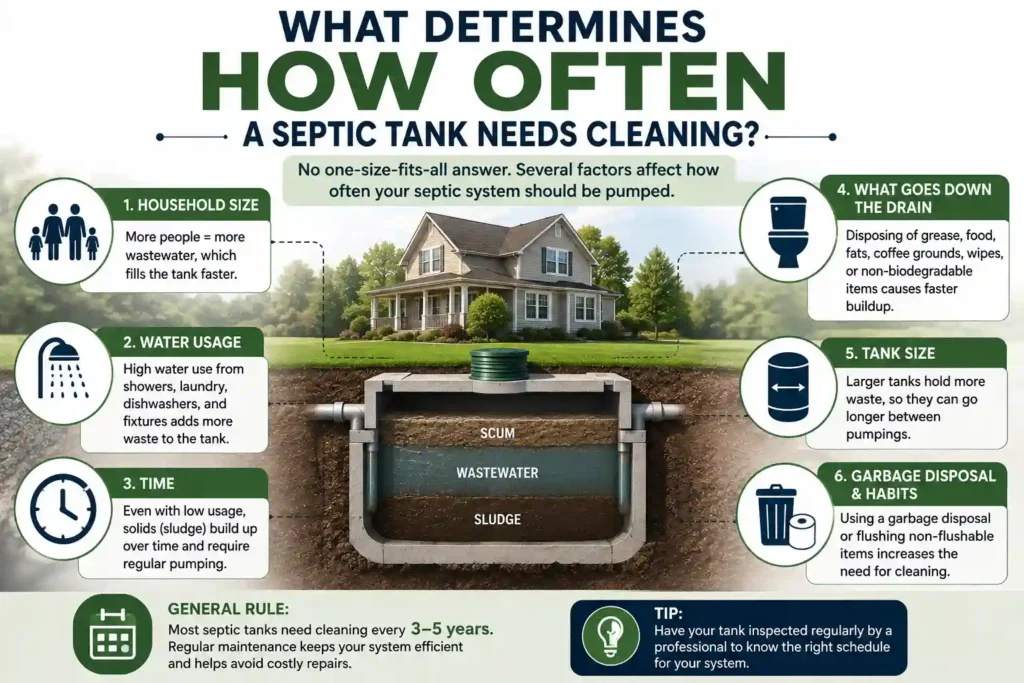
Several daily factors change how fast your system fills up with solid waste. Tank size is one of the most critical elements in this math. A small tank reaches total capacity much faster than a large concrete container.
Household size also plays a massive role in overall waste accumulation. More people living in the home means more daily toilet flushes and shower drain water. High water volume pushes solids through the tank before they can break down properly.
Your daily appliance habits impact system health every single day. Using an in-sink garbage disposal adds thick food particles to your wastewater. These scraps do not break down fast and fill the tank bottom quickly.
Understanding septic system pumping how often decisions require reviewing these habits closely. Heavy laundry schedules can also overload your system with excess water in a short time.
Septic Tank Cleaning vs. Pumping: What’s the Difference?
Many people use the terms cleaning and pumping like they mean the exact same thing. However, there is a clear distinction between these two common maintenance tasks.
Pumping removes the liquid wastewater and the floating top scum layer from the tank. A technician uses a strong vacuum hose to pull out these upper layers. This process frees up space so wastewater can continue flowing safely into the drain field.
Cleaning goes one step further by removing the thick, settled sludge from the tank bottom. The technician breaks up heavy solid buildup using high-pressure water tools. They wash down the tank walls and clean out interior baffles completely.
Knowing how often clean septic tank components vs standard pumping is essential for long-term health. Simple pumping happens every few years, while deep tank cleaning happens during major maintenance routines.
Septic Tank Pumping Schedule by Household and Tank Size
Your service schedule changes based on your home size and total tank capacity. Understanding these basic numbers helps you plan routine maintenance before emergencies strike.
A single person living in a home with a 1,000-gallon tank can wait up to nine years. Two people with that same tank should schedule service every five years. A family of four using a 1,000-gallon tank needs service every three years.
Larger homes require bigger tanks to handle high daily water flow. A 1,500-gallon tank serving four people usually needs attention every four to five years. That same 1,500-gallon tank with six residents will need service every two or three years.
When figuring out how often pump septic tank systems, always track your household changes. Adding new family members or guests increases total waste volume rapidly.
Key Factors Affecting Your Wastewater Volume
Every gallon of water that goes down your drain ends up inside your underground tank. High water usage shortens the time between needed service visits significantly.
Leaky toilets can waste hundreds of gallons of clean water every single week. This constant flow floods the tank and prevents solids from settling to the bottom. Fixing simple plumbing leaks keeps your system working efficiently.
Washing multiple loads of laundry on one day also causes major problems. Pushing too much water through the system at once stirs up settled sludge. Spreading laundry across the week gives your system time to process waste properly.
Water efficient showerheads and toilets lower your overall daily water output. Reducing excess water flow extends the life of your entire system.
What Are the Signs Your Septic Tank Needs Pumping?
Your system gives clear warning signs long before a total breakdown occurs. Learning to spot these early red flags saves you time and money.
Slow drains throughout your home are often the first sign of a full tank. If sinks, tubs, and toilets drain sluggishly at once, waste has nowhere to go.
Foul sewage odors near the tank or inside your home signal serious trouble. Gases escape when the tank is full or when pipes become blocked.
Gurgling sounds coming from your plumbing pipes are another common indicator. Bubbles trapped in full lines create strange noises after you flush the toilet.
Standing water or unusually lush green grass over your drain field means wastewater is surfacing. This means your tank is overflowing and sending raw liquid to the lawn.
When you see these signs, ask a professional how often pump septic service should be scheduled. Waiting longer will lead to raw sewage backing up into your home.
What Happens If You Don’t Pump Your Septic Tank?
Neglecting regular maintenance leads to serious property damage and dangerous health hazards. As waste collects, sludge builds up until it reaches the outlet baffle.
Once sludge enters the drain field pipes, it clogs the surrounding soil. Soil cannot absorb liquid waste when thick sludge blocks tiny natural pores. Replacing a ruined drain field can easily cost ten thousand dollars or more.
Untreated sewage can also back up directly through your home plumbing fixtures. Raw sewage inside your home creates terrible odors and severe health risks. Clean-up costs for home sewage backups are extremely high.
Overflowing tanks can contaminate nearby groundwater supplies and local well water. This creates major environmental issues for your property and your immediate neighbors.
Understanding how often clean septic tank maintenance must happen helps you avoid these costly disasters. Regular pumping is tiny compared to the massive cost of total replacement.
How to Keep Your Septic Tank in Good Condition
You can extend the time between service visits by protecting your system daily. Simple changes in your daily routine keep bacteria healthy and pipes clear.
Watch what you flush down your toilets every single day. Only human waste and toilet paper belong in your plumbing system. Never flush wipes, paper towels, dental floss, or feminine products. These items do not dissolve and will clog your system fast.
Be careful with what goes down your kitchen sink drains. Never pour cooking grease, fats, or heavy oils down the drain. Grease cools inside pipes and forms thick blockages that stop wastewater flow.
Limit your use of harsh chemical drain cleaners and strong bleach. Harsh chemicals kill the beneficial bacteria that break down solids inside your tank. Use natural cleaners like baking soda and vinegar instead.
Learning how often to clean septic tank filters is another helpful habit. Rinsing your effluent filter once a year keeps liquid moving smoothly into the drain field.
Best Practices for Household Waste Management
Good waste management protects your tank investment and keeps performance high. Small changes make a big difference over several years.
Scrape food scraps directly into your trash can instead of using the disposal. Food waste adds unnecessary solid volume to your tank bottom.
Keep heavy vehicles and machinery off your buried tank and drain field. Heavy weight crushes underground pipes and compacts soil, stopping proper drainage.
Plant only grass over your drain field area. Deep tree roots can grow inside underground pipes, causing major blockages and broken lines.
Direct roof gutters and surface runoff away from your drain field soil. Excess rainwater saturates the ground and prevents household wastewater from absorbing properly.
How Often Should a Septic Tank Be Inspected?
Professional inspections should happen more frequently than actual pumping visits. Most experts recommend a full inspection every one to three years.
During an inspection, a technician measures the sludge and scum layers. They check interior baffles, mechanical pumps, and electrical components for wear. Early detection of broken parts prevents sudden system failures.
If you own an alternative system with electrical pumps, inspect it annually. Complex systems have more moving parts that require regular monitoring.
Asking your local inspector how often clean septic tank maintenance should occur keeps your schedule accurate. They provide exact records so you never forget your last service date.
When Should You Call a Septic Professional?
You should call a technician as soon as you notice performance changes. Do not wait for complete failure before seeking professional help.
Call right away if wastewater backs up into your sinks or showers. Sewage backups require emergency attention to protect your health and home.
Contact a expert if you smell persistent sewage odors near your yard. Strong smells mean gas is leaking from loose caps or full tanks.
If water pools on your lawn during dry weather, call a professional immediately. Wet spots mean your drain field is failing to process liquid waste.
Never open or enter a septic tank yourself under any circumstances. Septic tanks contain toxic gases that can cause severe injury or death. Always let trained experts handle inspections and repairs safely.
Conclusion
Keeping your system running smoothly requires simple planning and regular service. Pumping every three to five years protects your drain field and prevents costly home backups. Pay attention to warning signs like slow drains, strange odors, and wet spots in your yard.
Knowing how often clean septic tank units need care keeps your home safe and clean. If you need reliable Plumbing Services in Los Angeles, the expert team at Derks Plumbing is ready to help. Contact us today to schedule your next system inspection or pumping service!
Frequently Asked Questions
How do I know if my septic tank is full?
Common signs include slow drains, gurgling pipes, bad odors, and standing water near your drain field. A professional inspection can measure exact sludge levels inside your tank.
Can I pump my septic tank myself?
No, you should never attempt to pump a tank yourself. Septic systems contain hazardous gases and require heavy industrial machinery to pump safely.
Do septic tank additives eliminate the need for pumping?
No, chemical or bacterial additives cannot replace physical pumping. While additives may break down some organic waste, inorganic sludge still accumulates at the bottom.
What is the average lifespan of a septic tank?
A well-maintained concrete septic tank can last forty to fifty years. However, drain fields usually need replacement or restoration after twenty to thirty years.
How much water can a septic system handle per day?
Most home systems are designed for 120 to 150 gallons per bedroom each day. Conserving water prevents system overloading and extends time between service visits.




