A standard electric water heater uses about 4,000 to 4,500 watts of power per hour when heating water actively. For a typical family of four, this translates to roughly 13 to 15 kilowatt-hours (kWh) per day, or around 400 to 450 kWh every month.
When evaluating your monthly utility bills, understanding how much electricity does a hot water heater use helps you spot unnecessary energy waste. Running a water heater for three hours each day adds about 400 kWh to your monthly usage, making it the second-largest energy drain in most homes right after your central heating and air conditioning system.
How Much Electricity Does a Hot Water Heater Use on Average?
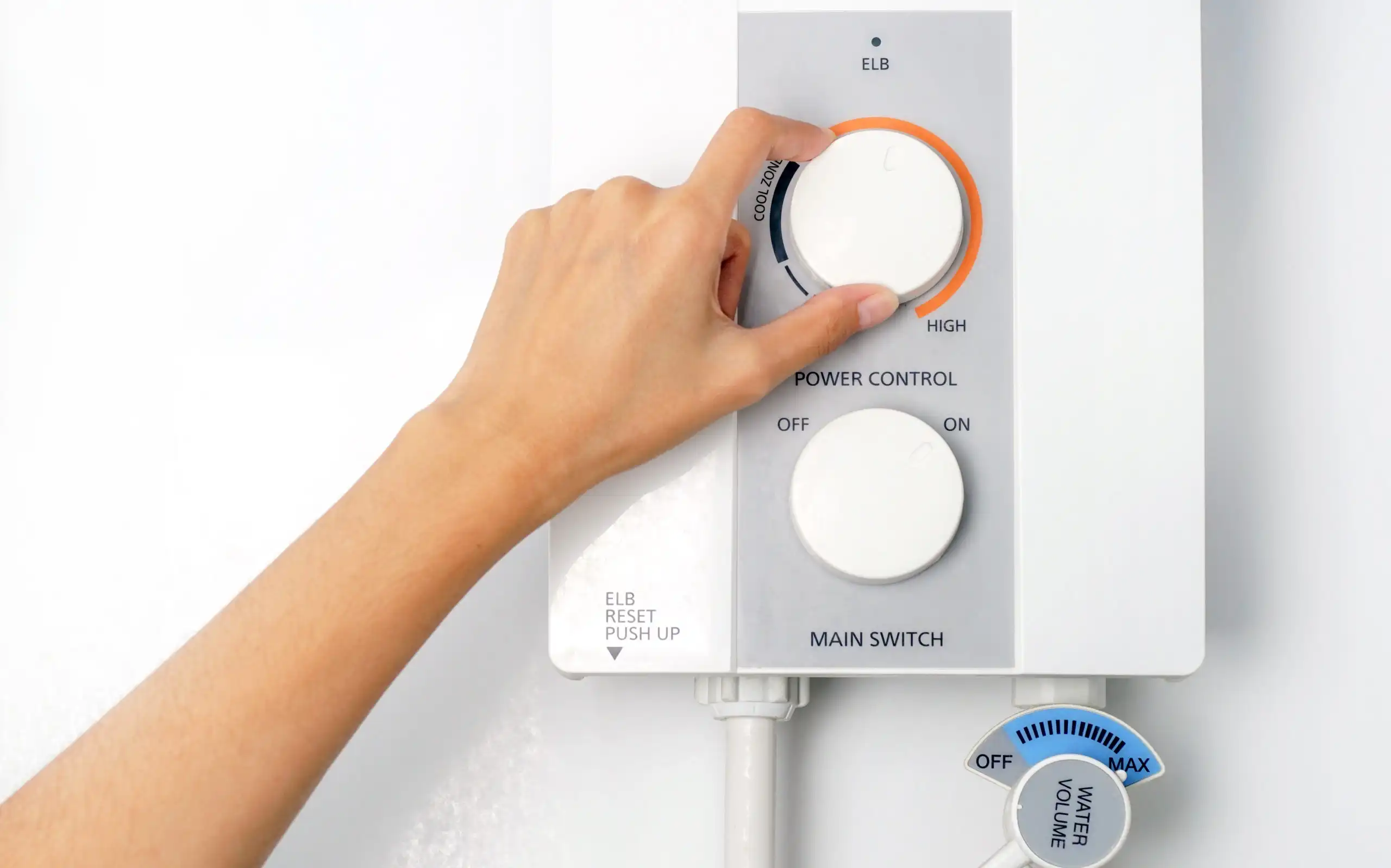
An average electric water heater consumes between 3,000 and 4,500 kilowatt-hours of electricity each year. How much power your home consumes depends heavily on household size, daily hot water demand, and the type of system installed in your utility room.
| Household Size | Daily Usage (Gallons) | Daily Electricity (kWh) | Monthly Electricity (kWh) |
| 1-2 People | 30 – 40 Gallons | 6 – 8 kWh | 180 – 240 kWh |
| 3-4 People | 50 – 60 Gallons | 12 – 15 kWh | 360 – 450 kWh |
| 5+ People | 80+ Gallons | 18 – 22 kWh | 540 – 660 kWh |
The average household runs its water heater heating elements for roughly three hours every day. If your household relies on heavy daily laundry cycles, long showers, or frequent dishwasher runs, your daily electric water heater electricity usage can easily top 20 kWh.
How Many Watts Does an Electric Water Heater Use?
Most standard tank-style water heaters operate using two heating elements, each rated between 3,500 and 5,500 watts. However, these two elements rarely run at the exact same time. The upper element heats the top half of the tank first, then switches off so the lower element can heat the rest.
Therefore, the water heater wattage consumption for a standard unit sits at 4,500 watts (4.5 kW) during active heating cycles.
Tankless electric units operate differently. Because they must heat cold groundwater instantly as it flows through the pipes, their wattage demand is much higher during operation.
- Standard Storage Tank Unit: 3,500 W to 5,500 W (runs 3 hours per day on average)
- Whole-House Tankless Electric Unit: 18,000 W to 27,000 W (runs only while tap is open)
- Heat Pump (Hybrid) Water Heater: 500 W to 1,500 W (uses ambient air heat to drastically drop power draws)
How Much Does It Cost to Run a Hot Water Heater?
To convert kilowatt-hours into actual money, multiply your monthly kWh usage by your local electric rate. The standard rate across the United States sits around $0.16 per kWh, though rates vary significantly by region.
If your household burns through 400 kWh of electricity each month for hot water:
- Daily Running Cost: $2.13 per day
- Monthly Running Cost: $64.00 per month
- Annual Running Cost: $768.00 per year
If you live in an area with higher electricity rates (such as $0.28 per kWh), that exact same 400 kWh monthly usage will cost you $112 per month, or $1,344 every year.
What Affects a Water Heater’s Electricity Usage?
Not every home burns through power at the same rate. Five major factors dictate how much electricity does hot water use in your daily routine.
1. Daily Hot Water Usage Volume
Taking high-flow showers, washing laundry in warm or hot water, and running the dishwasher twice a day forces your tank to constantly replenish its hot water supply with cold incoming water.
2. Thermostat Temperature Setting
Factory settings usually park water heater thermostats at 140°F (60°C). Lowering your thermostat down to 120°F (49°C) keeps your water safe from harmful bacteria growth while dropping standby energy loss significantly.
3. Incoming Groundwater Temperature
In colder climates or during winter months, incoming municipal water enters your home at 40°F to 50°F. The unit must work twice as hard to boost that water to 120°F compared to warm summer months when groundwater enters at 70°F.
4. Tank Sediment Buildup
Over time, mineral deposits like calcium and magnesium settle at the bottom of electric tanks. This hard layer acts as an insulating blanket over the lower heating element. The element must run far longer to heat water through that solid layer of scale.
5. Age and Tank Insulation
Older units feature thin insulation around the tank walls. As a result, heat escapes into your garage or basement rapidly, forcing the system to kick back on even when nobody is using water.
Does a Water Heater Use Electricity When Not Heating?
Yes, but the draw is minimal compared to active heating cycles. Standard tank water heaters lose heat through the outer shell day and night. This phenomenon is called standby loss.
When no water tap is open, the internal water temperature gradually drops. Once the thermostat senses a temperature drop of a few degrees, the heating elements turn on for 5 to 10 minutes to bring the tank back up to the set target.
Standby loss typically accounts for 10% to 20% of your total electric water heater power usage. That means you spend roughly $6 to $12 every month simply keeping hot water sitting idle inside an unused tank.
How to Calculate Your Water Heater’s Electricity Usage
You can easily calculate your system’s exact draw using three basic metrics: unit wattage, daily runtime, and your local power rate per kilowatt-hour.
Follow this simple three-step formula:
Find Kilowatts: Divide your unit’s wattage rating by 1,000.
(Example: 4,500 Watts / 1,000 = 4.5 kW)
Calculate Daily Usage: Multiply kilowatts by hours of daily operation.
(Example: 4.5 kW x 3 hours = 13.5 kWh per day)
Determine Monthly Cost: Multiply daily kWh by 30 days, then multiply by your electric rate.
(Example: 13.5 kWh x 30 = 405 kWh per month. At $0.16 per kWh, 405 x 0.16 = $64.80 per month)
Signs Your Water Heater Is Using Too Much Electricity
If your utility bill spikes without an obvious explanation, your water heating system may be running inefficiently or failing internally. Watch for these common warning signs:
Unusually High Electric Bills: Your power consumption surges without any shift in your family’s daily habits.
Popping or Rumbling Noises: Loud cracking sounds indicate thick mineral crust covering your lower element, trapping water pockets that boil instantly.
Tepid or Fluctuating Water: The upper or lower heating element is partially burnt out, forcing one element to run continuously without ever heating the tank fully.
Water Takes Too Long to Recover: Waiting hours between back-to-back showers points to failing thermostats or heavy sediment buildup.
Visible Moisture or Leaks: Water pooling around the base destroys outer insulation, leading to continuous standby heat loss.
How to Reduce Your Water Heater’s Electricity Consumption
You do not need to take cold showers to cut down on energy bills. Small adjustments yield real monthly savings.
Turn Down the Temperature
Lower your thermostat from 140°F down to 120°F. This single move cuts standby heat loss by up to 15% and protects small children from accidental scalding burns.
Install an Insulation Blanket
If your tank feels warm to the touch, it lacks adequate internal insulation. Wrapping the exterior with an inexpensive fiber blanket keeps heat locked inside the tank longer.
Flush the Tank Annually
Attach a garden hose to the drain valve at the bottom of your unit once a year. Flushing out sediment keeps your heating elements in direct contact with fresh water, maintaining rapid heat transfer.
Install Low-Flow Aerators
Replacing older showerheads with 1.75 or 2.0 gallon-per-minute (GPM) models reduces the total volume of hot water drained during everyday routines.
Switch to a Hybrid Heat Pump Unit
Hybrid heat pump water heaters pull heat directly from surrounding air to heat your domestic water supply. They use up to 70% less electricity than standard resistance units, saving hundreds of dollars every single year.
Conclusion
Knowing how much electricity does a hot water heater use gives you direct control over your home’s monthly utility expenses. Standard electric units use about 4,500 watts when actively heating, costing average households $60 to $80 per month. By lowering your tank temperature to 120°F, flushing sediment regularly, and adding insulation, you can instantly tame rising energy costs.
If your system is over 10 years old, making strange noises, or causing unexplained bill spikes, it may be time for a professional checkup. Contact the experts at Derks Plumbing for fast, reliable maintenance and replacement solutions. We specialize in tankless retrofits, heat pump upgrades, and comprehensive Water Heater Installation in Eagle Rock to keep your home running efficiently all year long.

Frequently Asked Questions
Does turning off your water heater at night save money?
Turning off your water heater overnight saves a small amount of standby energy, but reheating a full tank of cold water in the morning can cancel out most of those savings. Installing a timer switch is a smarter choice if you want automated control.
Which uses more electricity: a tankless or tank water heater?
Electric tankless water heaters draw high wattage (18,000 W to 27,000 W) while running, but they consume zero electricity when taps are closed. Traditional tank water heaters draw lower wattage (4,500 W) but run periodically all day long, resulting in higher overall annual energy use.
How do I know if my water heater element is burnt out?
If your shower water gets lukewarm quickly or never reaches your set temperature, one of your two heating elements is likely burnt out. A licensed plumber can test element continuity using a multimeter tool.
Is a heat pump water heater worth the higher cost?
Yes. Hybrid heat pump models cost more upfront, but they lower monthly electrical consumption by 60% to 70%. Most homeowners regain their initial investment through utility savings within two to three years.




