A septic system depends on bacteria and natural processes to break down waste. Toilet paper must break down easily after flushing. Paper that breaks apart well helps reduce the chance of buildup, slow drains, and clogs. The right paper is also less likely to add extra strain to your septic tank.
If you are asking what is septic safe toilet paper, it is toilet paper designed to break apart quickly in water and move through a septic system. It should dissolve without leaving large, tough pieces behind. However, the label alone does not tell the whole story.
What Is Septic Safe Toilet Paper?
Septic safe toilet paper is made to break down in water more easily than some thicker papers. This matters because flushed paper enters your septic tank with household wastewater.
Inside the tank, solids settle while liquid moves toward the drain field. Natural bacteria help break down organic waste. Toilet paper also starts breaking apart during this process.
A good septic-safe paper should become soft and separate into smaller pieces after contact with water. This makes it easier for the paper to move through the plumbing and settle in the tank.
The term “septic safe” is not a guarantee that every product will perform the same way. Paper can have different layers, fibers, binders, lotions, and other features. Your septic system also matters.
A home with older pipes, heavy water use, or poor tank maintenance may have more problems with waste buildup. Choosing suitable toilet paper is one part of good septic care.
How Does Septic Safe Toilet Paper Work?
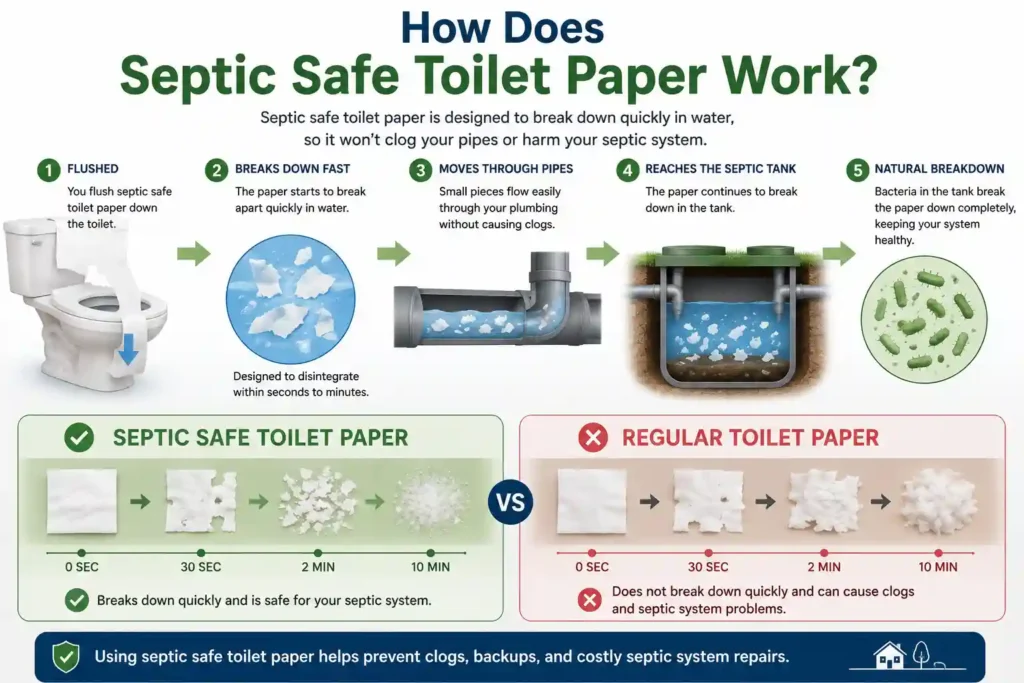
Toilet paper is designed to weaken when it gets wet. Septic-safe paper takes this a step further by breaking into smaller pieces during normal use and flushing.
Think about what happens when dry toilet paper gets wet in a sink. It loses much of its strength and starts separating. This same basic process happens after flushing.
Once the paper reaches the septic tank, bacteria and water continue to break down the material. Smaller paper pieces are easier to move and process than large, dense clumps.
This does not mean toilet paper disappears instantly. It still becomes part of the solids inside the tank. Those solids must eventually be removed through regular septic pumping.
For example, imagine a household that uses thick, strong paper several times each day. Large amounts of slow-breaking paper can add more solids to the tank over time.
A lighter paper that breaks apart easily can reduce that burden. Still, excessive toilet paper use can create problems even when the product is labeled septic safe.
What Makes Toilet Paper Septic Safe?
Several features can make toilet paper a better choice for a septic system.
Easy Breakdown in Water
The most important feature is how easily the paper separates when wet. Paper that breaks into smaller pieces is generally a better choice.
Fewer Heavy Layers
Thick, multi-ply paper can be harder to break apart. Two-ply or one-ply paper may break down more easily, depending on how it is made.
That does not mean every two-ply product is better than every three-ply product. The paper’s fiber and manufacturing process also matter.
No Heavy Lotions or Coatings
Some premium toilet papers contain lotions, fragrances, or other added materials. These features may affect how the paper behaves in water.
For a septic system, simple paper with fewer added materials can be a practical choice.
Clear Septic-Safe Label
Look for packaging that says the product is suitable for septic systems. You can also check the manufacturer’s product information for breakdown claims.
A useful rule is simple: choose paper that breaks apart easily rather than paper designed mainly for maximum strength.
Why Is Septic Safe Toilet Paper Important?
Your septic tank receives everything you flush down the toilet. That includes toilet paper, waste, and water.
When paper breaks apart well, it is easier for the septic system to handle. When large amounts of slow-breaking material enter the tank, solids can build up faster.
This does not mean the wrong toilet paper will immediately ruin your septic tank. Septic problems usually have several possible causes.
For example, flushing wipes, paper towels, feminine hygiene products, or other non-flushable materials can cause much bigger problems than normal toilet paper.
The bigger goal is to keep the material entering your septic system easy to break down and safe for your plumbing.
Regular septic pumping still matters. Even the best toilet paper cannot prevent a tank from filling with solids.
Is Regular Toilet Paper Safe for Septic Systems?
Yes, many regular toilet papers can be safe for septic systems. The key issue is how the paper breaks down after it gets wet.
You do not always need a product marketed as “septic safe.” Many standard toilet papers are made to break apart during flushing.
However, some very thick, strong, or heavily treated products may break down more slowly. If you have a septic system, check the package and product details before buying.
The best toilet paper for septic tanks is usually paper that breaks apart easily, uses fewer heavy layers, and does not contain unnecessary coatings.
Your household’s habits also matter. Using a large amount of paper with every flush increases the amount of material entering your tank.
How to Tell If Toilet Paper Is Septic Safe
Start by checking the package. Look for a septic-safe statement or information from the manufacturer.
You can also perform a simple home breakdown test.
Place a few sheets of toilet paper in a clear container filled with water. Let it sit for several minutes. Gently stir the water and watch how the paper reacts.
Paper that quickly separates into small pieces is generally more suitable for septic use. Paper that stays together in a strong sheet may break down more slowly.
This is only a basic comparison. It does not replace laboratory testing or manufacturer information.
You should also consider your plumbing. A paper that works well in one home may not solve problems caused by a damaged sewer line, blocked drain, or poorly maintained septic tank.
If your toilet drains slowly even with suitable paper, the paper may not be the real problem.
What Type of Toilet Paper Is Best for a Septic Tank?
The best toilet paper for septic tanks is usually soft enough for normal use but designed to break apart easily in water.
One-ply and two-ply options are common choices for septic homes. Recycled paper can also be worth considering because many recycled products are designed with easy breakdown in mind.
Do not choose toilet paper based only on the number of layers. A two-ply paper can still be strong and slow to separate.
Instead, look at the complete product information. Check for septic compatibility, simple construction, and good breakdown performance.
You also do not need to buy the most expensive product. A basic toilet paper that breaks apart well can be a better choice than a premium paper with extra coatings.
How Fast Should Septic Safe Toilet Paper Dissolve?
There is no single universal time that every septic-safe toilet paper must meet. Different products use different fibers and manufacturing methods.
Good paper should begin breaking apart soon after becoming wet. It does not need to vanish completely within seconds.
This distinction is important. Safe for septic toilet paper does not mean the paper instantly disappears.
The goal is for the paper to lose its structure and separate into smaller pieces. That allows water, bacteria, and the natural septic process to handle it more easily.
If you test different brands at home, use the same amount of paper and the same amount of water. This gives you a more useful comparison.
What Toilet Paper Should You Avoid With a Septic System?
Avoid toilet paper that is extremely thick, heavily coated, or designed mainly for extra strength if it breaks down poorly.
You should also be careful with products that contain heavy lotions or other additives. These are not automatically harmful, but simpler paper is often a sensible choice for septic homes.
The same rule applies to paper marketed for special comfort features. A product may feel better while still being less suitable for quick breakdown.
If your septic system already has slow drainage or frequent backups, talk with a plumbing professional before changing only your toilet paper. The underlying issue may be elsewhere.
What Should You Never Flush Into a Septic System?
Toilet paper is made for flushing. Many other household products are not.
Never treat the toilet as a general waste bin. Items that do not break down easily can collect inside your plumbing or septic tank.
Avoid flushing:
- Baby wipes and cleaning wipes
- Paper towels
- Facial tissues in large amounts
- Cotton balls and cotton swabs
- Dental floss
- Feminine hygiene products
- Diapers
- Grease and cooking oil
- Cat litter
- Medication
- Household chemicals
Even products labeled “flushable” deserve caution. Some may pass through the toilet but still create problems later in plumbing or wastewater systems.
The safest habit is simple: flush human waste and toilet paper only.
How Can You Protect Your Septic System?
Choosing suitable paper is helpful, but septic care involves more than toilet paper.
Have the tank inspected and pumped according to its condition, household size, tank size, and water use. Avoid putting grease, chemicals, wipes, and other non-flushable items down the drain.
Fix leaking toilets and faucets as soon as possible. A constant flow of water can send far more wastewater into the septic system than normal daily use.
Spread laundry loads across the week when practical. Large amounts of water entering the tank at once can affect how the system handles wastewater.
Watch for warning signs such as slow drains, sewage odors, wet areas near the drain field, or sewage backing up into the home.
These signs need more attention than simply switching toilet paper brands.
When Should You Call a Plumber?
If your toilet backs up repeatedly, do not assume toilet paper is the cause.
A blocked drain, damaged pipe, tree root intrusion, poor venting, or septic tank issue can create similar symptoms.
A professional can inspect the plumbing and help identify the actual source of the problem. This prevents you from spending money on products that do not address the cause.
If you are dealing with recurring toilet or drainage problems, Derks Plumbing provides professional plumbing services in Los Angeles to help identify the underlying issue and recommend the right solution.

Conclusion
So, what is septic safe toilet paper? It is toilet paper that breaks apart easily in water and is suitable for normal use with a septic system.Look for paper that separates well when wet. Avoid products that stay strong after soaking or contain unnecessary heavy coatings. Most importantly, remember that toilet paper is only one part of septic care.Good habits also matter. Flush only appropriate waste, avoid wipes and other non-flushable items, repair plumbing leaks, and keep up with septic maintenance.
If you notice repeated backups, slow drains, or sewage odors, do not blame the toilet paper alone. Derks Plumbing can help find the plumbing problem and recommend the right solution.
FAQs
Is septic safe toilet paper different from regular toilet paper?
Sometimes. Septic-safe paper is made or tested with easier breakdown in mind. However, many regular toilet papers also work well with septic systems.
Can I use two-ply toilet paper with a septic tank?
Yes. Two-ply toilet paper can be suitable for septic systems when it breaks apart easily in water. Check the package for septic compatibility.
Is recycled toilet paper good for septic systems?
It can be. Many recycled products are designed to break down easily. Check the product label and manufacturer information before choosing one.
Can toilet paper clog a septic system?
Large amounts of slow-breaking toilet paper can add to solids and contribute to blockages. However, many septic problems have other causes, including wipes, damaged pipes, and poor maintenance.
How do I test toilet paper for septic safety?
Place a few sheets in water and gently stir them after several minutes. Paper that separates into small pieces breaks down more easily. This is a simple home comparison, not a formal test.




