A boiler heater is a specialized heating unit that warms water to heat your home. It uses gas, oil, or electricity to turn water into hot liquid or steam. The heat travels through pipes to radiators, baseboards, or underfloor tubes. Unlike forced-air furnaces, it provides quiet, even warmth without blowing dust around your rooms.
Many homeowners ask what is a boiler heater when shopping for new home heating equipment. Understanding this system helps you choose the best equipment for your home comfort. It also ensures you save money on monthly utility bills.
What Is Boiler Heater?
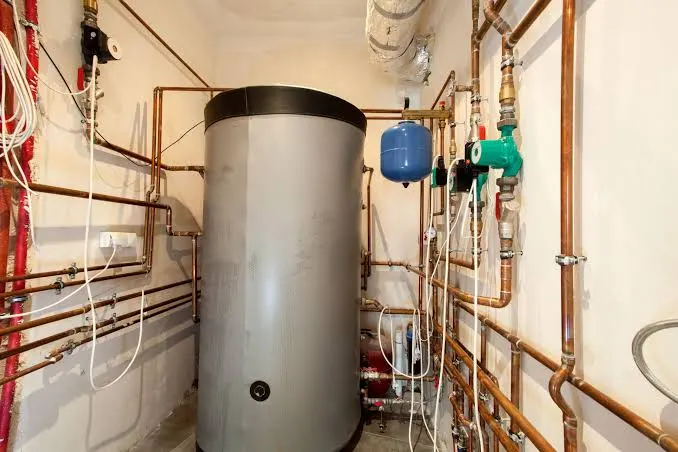
A boiler heater is a closed vessel designed to heat water or create steam for space heating. It acts as the central engine for hydronic heating in residential buildings. Instead of heating air directly, it transfers thermal energy into water.
When asking what is a heating boiler, think of it as a smart hydronic power plant. The system circulates hot water through a network of sealed pipes across your house. Radiators then release that heat gently into each room.
Modern household boiler systems are clean and reliable. They keep room temperatures steady without sudden blasts of cold or hot air. People love them because they create cozy indoor warmth during cold winter months.
How Does a Boiler Heater Work?
Understanding how a boiler works is simpler than it seems. The process starts when your thermostat detects a temperature drop. It sends an electric signal to start the boiler unit.
First, the fuel source ignites inside the combustion chamber. Natural gas, propane, or heating oil produces a controlled flame. Next, the flame warms a metal component called a heat exchanger.
Water flows past the heat exchanger and absorbs thermal energy quickly. A circulator pump pushes this hot water through your home’s pipe network. Radiators or radiant floor tubes absorb the heat and warm up your living space.
Once the water transfers its heat, it grows cooler. The cool water returns back to the boiler to start the cycle again. This closed loop makes heating with a boiler energy efficient and consistent.
Main Parts of a Boiler Heating System
A heater boiler system relies on several key components working together. Each part plays a vital role in safe and smooth operation.
Burner and Combustion Chamber
The burner mixes fuel with air and creates the heat flame. The combustion chamber holds this flame safely inside the unit.
Heat Exchanger
This metal container allows heat to move from the flame into the water safely. It keeps toxic exhaust fumes away from your indoor water supply.
Circulator Pump
The pump moves hot water out to your radiators and pulls cool water back in. It keeps water moving constantly through the pipes.
Expansion Tank
Water expands when it gets hot. The expansion tank accepts this extra volume so pipe pressure stays safe.
Thermostat and Safety Valves
The thermostat monitors room temperature and controls heating cycles. Pressure relief valves release excess pressure to protect your family and home.
Types of Boiler Heaters
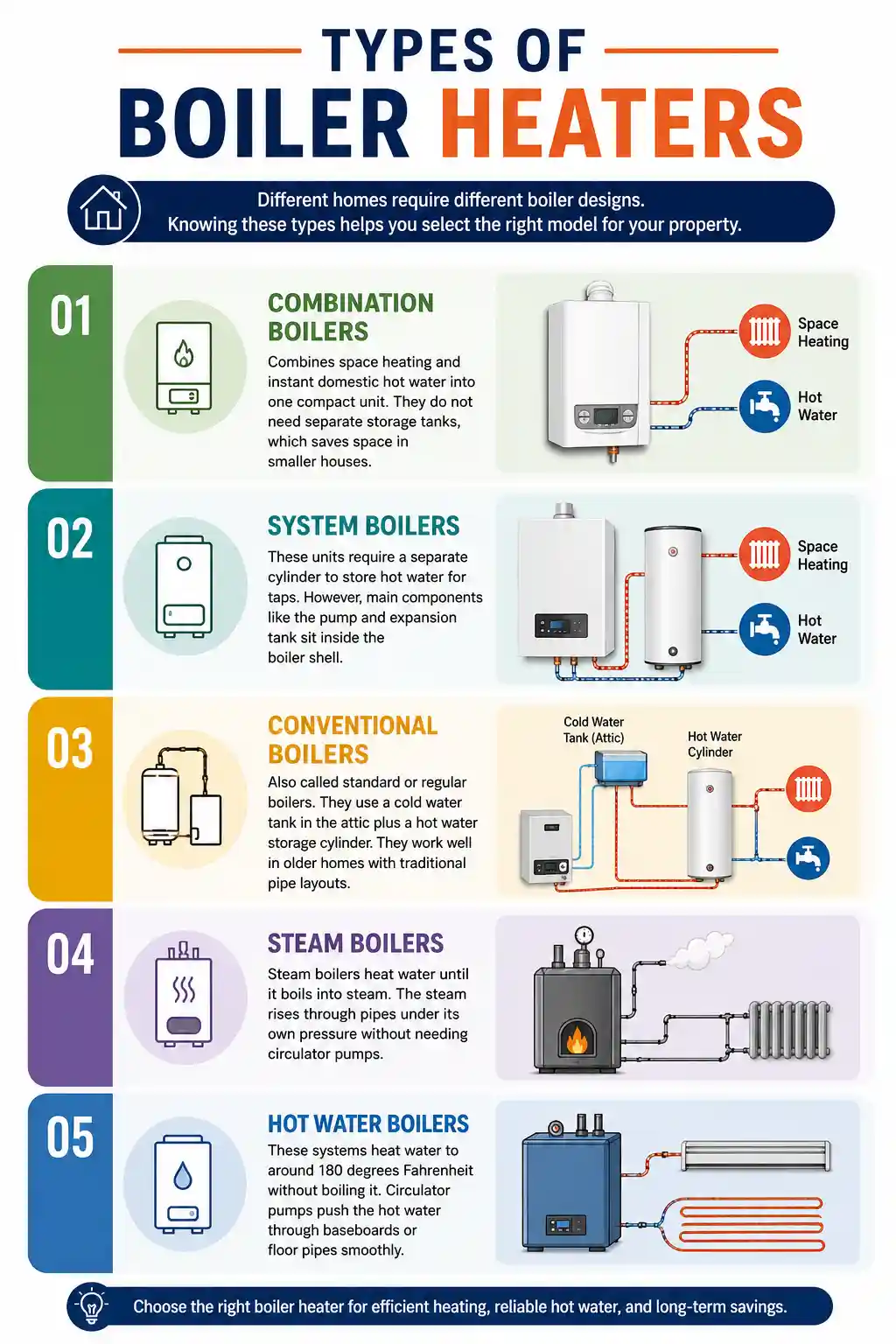
Different homes require different boiler designs. Knowing these types helps you select the right model for your property.
Combination Boilers
Combines space heating and instant domestic hot water into one compact unit. They do not need separate storage tanks, which saves space in smaller houses.
System Boilers
These units require a separate cylinder to store hot water for taps. However, main components like the pump and expansion tank sit inside the boiler shell.
Conventional Boilers
Also called standard or regular boilers. They use a cold water tank in the attic plus a hot water storage cylinder. They work well in older homes with traditional pipe layouts.
Steam Boilers
Steam boilers heat water until it boils into steam. The steam rises through pipes under its own pressure without needing circulator pumps.
Hot Water Boilers
These systems heat water to around 180 degrees Fahrenheit without boiling it. Circulator pumps push the hot water through baseboards or floor pipes smoothly.
Boiler Heater vs Water Heater
Many people confuse these two appliances, but they perform different jobs. Clarifying this topic helps when learning what is a boiler heater for your home setup.
A standard water heater heats domestic water for washing dishes, taking showers, and running laundry. It heats water and stores it in a tank until you turn on a tap.
A boiler heater is built primarily to heat your entire house. It circulates hot water continuously through closed radiator loops to maintain indoor comfort.
Some modern boiler models can perform both jobs. These dual systems heat your living space while supplying hot tap water on demand.
What Is a Boiler Heater Used For?
Homeowners use boiler systems for several practical heating application areas across their homes.
Baseboard Radiators
Hot water runs through metal baseboard units installed along room walls. The metal fins release steady warmth upward into the room air.
Cast Iron Radiators
Classic stand-alone radiators hold hot water or steam. They radiate soft heat into living rooms and bedrooms for long periods.
Radiant Floor Heating
Special plastic tubes run underneath your hardwood, tile, or carpet floors. The boiler pumps warm water through these pipes to warm your floors evenly.
Snow Melting Systems
Outer boiler loops push warm glycol fluid under driveways and walkways. This melts snow and ice automatically during heavy winter storms.
Benefits of a Boiler Heater
Homeowners enjoy several distinct advantages when heating with a boiler system.
Quiet Operation: Boilers do not use loud blowers or noisy air ducts. You only hear quiet water flow through sealed pipes.
Clean Air Quality: Forced-air systems can blow dust, pollen, and pet dander around rooms. Hydronic heat keeps indoor air clean and allergen free.
Consistent Comfort: Water holds heat longer than air does. This provides draft-free, steady warmth across every room in your home.
High Energy Efficiency: Water transfers thermal energy much better than air. Modern boilers convert almost all fuel directly into usable home heat.
Zone Control: You can set separate temperatures for different rooms or floors. This saves fuel by heating only the spaces you actually use.
Common Problems With Boiler Heaters
Like any mechanical system, boilers can run into operational issues over time. Spotting symptoms early saves money on major repairs.
No Heat or Low Hot Water
This issue often stems from broken motorized valves, low water pressure, or thermostat failure.
Strange Noises or Kettling
When lime scale builds up on the heat exchanger, water boils and forms bubbles. This causes a banging or kettle whistling noise.
Water Leaks
Leaks happen due to worn pump seals, high pressure, or corroded pipe joints. Address water leaks fast to prevent property damage.
Low System Pressure
If water pressure drops too low, your boiler will shut down automatically. Leaks or recent radiator bleeding can cause this pressure drop.
Frozen Condensate Pipe
Modern condensing boilers drain acidic water through an exterior plastic pipe. In freezing weather, this pipe can freeze and stop the system.
How Long Does a Boiler Heater Last?
When people research what is a boiler heater, durability is a major consideration. A well-maintained residential boiler lasts between 15 and 22 years.
Cast iron steam boilers can even last up to 30 years with careful maintenance. By comparison, standard hot water heaters often fail after 8 to 12 years.
Regular maintenance extends your boiler’s life significantly. Cleaning components, checking pressure, and flushing sediment keep the unit running smoothly for decades.
How to Maintain a Boiler Heater
Routine care protects your investment and maintains peak fuel efficiency each winter season.
Annual Professional Service
Schedule an annual inspection with a licensed technician. They clean the burner, inspect safety controls, and test fuel combustion.
Bleed Radiators
Air pockets can get trapped inside your radiators over time. Bleeding radiators releases trapped air so hot water fills the entire metal unit.
Monitor System Pressure
Check the pressure gauge on your unit regularly. Most home systems need pressure between 1.0 and 1.5 bar when cold.
Check Water Chemistry
Adding corrosion inhibitor chemicals to your water loop prevents rust and sludge build-up inside internal pipes.
Inspect Flue Pipes
Ensure exhaust vent pipes remain clear of debris, nests, or soot blockages. Safe exhaust venting protects your household from carbon monoxide gases.
When Should You Replace a Boiler Heater?
Knowing when to replace your unit prevents unexpected cold weather breakdowns.
Age Over 15 Years: Older units lose fuel efficiency and require more frequent repairs.
Rising Energy Bills: If heating costs spike without weather changes, your boiler is losing efficiency.
Frequent Breakdowns: Repairing your unit multiple times per winter gets expensive quickly.
Visible Yellow Flame: Gas burners should display a crisp blue flame. A yellow flame indicates improper combustion and possible carbon monoxide risk.
Unobtainable Replacement Parts: Finding parts for ancient units becomes difficult and costly.
Conclusion
Understanding what is a boiler heater makes it easy to appreciate hydronic warmth in modern homes. These reliable systems deliver silent heat, cleaner indoor air, and outstanding energy savings across cold seasons. Regular annual care ensures your system runs safely and efficiently for decades.
If you ever need help upgrading your home equipment or need reliable Water Heater Installation in Eagle Rock, trust our team at Derks Plumbing. Our experienced mechanics handle heating systems, boilers, and plumbing repairs with complete care. Contact us today to keep your home warm and cozy all year long!

Frequently Asked Questions
Is a boiler heater expensive to run?
Boiler heaters are very cost-effective because water holds heat better than air. Modern condensing boilers reach up to 95% fuel efficiency ratings.
Can a boiler heat water and the house at the same time?
Yes, combination boilers and system boilers with storage tanks supply both home space heat and domestic hot water for your household taps.
Why is my boiler heater making a knocking sound?
Knocking sounds usually indicate trapped air, low water pressure, or mineral scale build-up inside your heat exchanger.
Do I need to drain my boiler every year?
No, full draining is rarely necessary unless you need major repairs or must remove heavy internal pipe sludge.




