A clogged drain is one of those problems that shows up at the worst possible time. Standing water in the sink, a shower that pools around your feet, or a kitchen drain that barely moves all frustrating, all fixable. Most clogs clear with tools and materials you already have at home.
Knowing how to unclog a drain correctly saves you time and money. This guide covers every method from simple to advanced, tells you when each one applies, and explains clearly when it is time to stop DIYing and call a plumber.
What Causes a Drain to Clog?
A clogged drain rarely happens overnight. Most blockages build gradually over weeks or months. Understanding the cause helps you pick the right fix.
Kitchen drains clog from grease and cooking oil that coat the inside of pipes, food particles that slip past the strainer, and soap buildup that thickens over time. Coffee grounds and starchy foods like rice and pasta are especially problematic; they compact rather than break down.
Bathroom drains clog mainly from hair. Hair tangles around soap scum and builds a dense mesh that traps everything passing through. Toothpaste residue, shaving cream, and mineral deposits from hard water all contribute.
Toilet clogs come from flushing things that should never enter plumbing wet wipes, cotton balls, paper towels, dental floss, and excessive toilet paper in a single flush.
Slow drains across multiple fixtures usually signal a deeper problem in the main drain line, tree root intrusion, a collapsed pipe section, or years of buildup past the point that household tools can reach.
Signs You Have a Clogged Drain
Catch a clog early and you deal with it in minutes. Ignore the signs and you end up with a backup. Here is what to watch for:
- Water drains noticeably slower than it used to
- Standing water in the sink, tub, or shower after use
- Gurgling sounds from the drain after water goes down
- Unpleasant odor rising from the drain often from trapped organic material
- Water backing up into a nearby fixture when you flush or run water elsewhere
- The toilet bowl bubbles or gurgles when you run the bathroom sink
Multiple slow drains at the same time almost always means the clog is in the main line, not an individual fixture drain. That requires a different approach than a standard drain unclogging method.
How to Unclog a Drain Using Boiling Water
This is the first method to try for any slow kitchen or bathroom drain. It is free, takes two minutes, and works surprisingly well on grease and soap buildup.
How to do it:
Boil a full kettle of water. Pour it directly into the drain opening in two or three stages not all at once. Wait 10 to 15 seconds between pours. The heat softens and loosens grease and soap deposits clinging to the pipe walls.
When it works: Early-stage kitchen clogs caused by grease buildup, and slow bathroom drains with soap scum accumulation.
When to skip it: Do not use boiling water on PVC pipes sustained high heat can soften the joints. Use very hot tap water instead if your home has PVC drain lines. Also skip this method if you have a full standing water situation the water needs to reach the clog, and if the drain is completely blocked, it will not get there.
How to Unclog a Drain with Baking Soda and Vinegar
This combination creates a fizzing reaction that loosens light clogs and freshens the drain. It works best as a maintenance step or for minor slowdowns rather than full blockages.
How to do it:
Pour one cup of baking soda directly into the drain. Follow with one cup of white vinegar. Cover the drain immediately with a stopper or a cloth that forces the reaction downward into the pipe rather than up and out. Wait 20 to 30 minutes. Finish with a full kettle of hot water to flush everything through.
When it works: Mild soap and grease buildup, slow drains that are not fully blocked, and as a monthly maintenance flush to prevent future clogs.
What it does not do: This method will not break apart a hair clog, dissolve a grease plug deep in the line, or clear any kind of solid obstruction. If the drain does not improve after two attempts, move on to a physical method.
You can read about: Will Drain Cleaner Dissolve Hair
How to Unclog a Drain with a Plunger
A plunger is the most effective tool for clearing a drain clogged with a localized blockage. Most people only use one in the toilet but plungers work well on sinks and tubs too.
What you need: A cup plunger for sinks and tubs. A flange plunger for toilets the extra rubber flap creates a proper seal in the toilet opening.
How to do it:
For a sink: Seal the overflow opening (the small hole near the rim of the sink) with a wet cloth. This prevents air from escaping and makes the plunger effective. Place the cup over the drain opening and fill the sink with a few inches of water. Push down firmly and pull up sharply so you do not break the seal. Repeat 10 to 15 times. On the final pull, lift the plunger completely to release pressure.
For a toilet: Place the flange plunger into the bowl so the flange fits inside the drain opening. Push and pull firmly without lifting the plunger out of the water. The water movement, not air, is what shifts the blockage.
Key mistake to avoid: A dry plunge pushes air, not water. Always make sure there is water covering the plunger cup before you start.
How to Unclog a Drain Using a Drain Snake
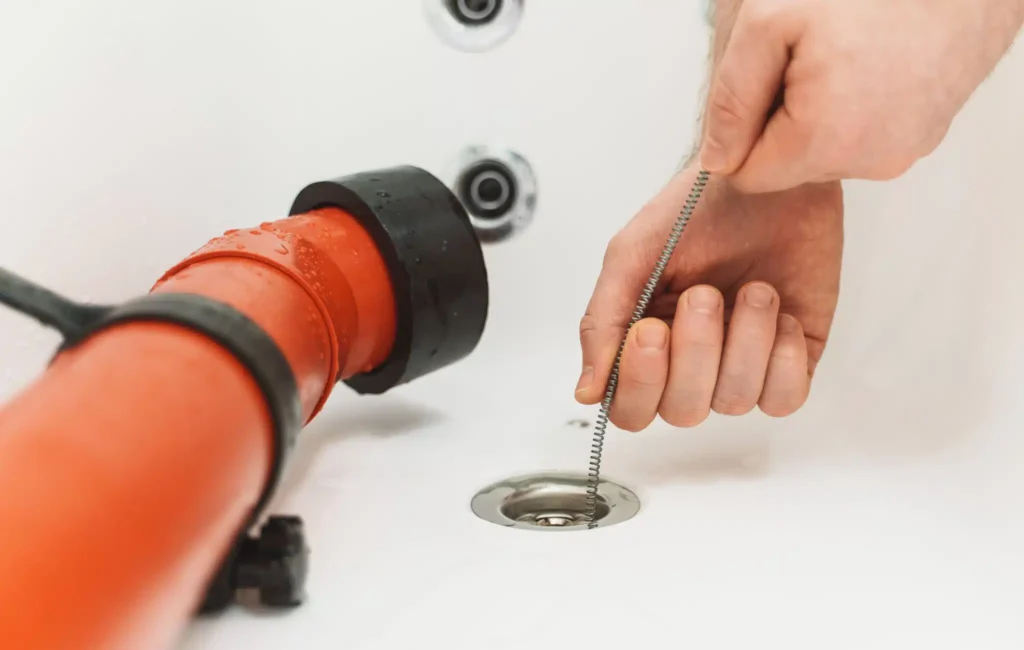
A drain snake also called a hand auger is the right tool when a plunger does not work. It physically reaches the blockage and either breaks it apart or hooks it so you can pull it out.
How to do it:
Feed the snake cable into the drain opening slowly. When you feel resistance, you have reached the clog. Rotate the handle clockwise while applying gentle forward pressure. This action either breaks the blockage apart or winds the cable into it so you can pull it back out. Pull slowly jerking the cable can push the clog deeper.
For toilets, use a toilet auger specifically. A standard drain snake can scratch the porcelain inside the trap. A toilet auger has a protective rubber sleeve that prevents this.
When to use a drain snake: Any time a plunger does not resolve the clog after multiple attempts. Also useful for hair clogs in bathroom sink and tub drains, which a plunger cannot hook and remove.
How to Remove Hair from a Drain
Hair is the most common cause of a clogged bathroom drain and one of the easiest to remove once you know how.
Method 1 — Drain cleaning tool: A plastic hair removal tool (sometimes called a Zip-It tool) is a thin flexible strip with barbs along the sides. Insert it into the drain, push it down to the clog, and pull back slowly. The barbs grab the hair and pull it out in one clump. These cost a few dollars at any hardware store and work better than any chemical for hair clogs.
Method 2 — Bent wire hook: Straighten a wire coat hanger and bend a small hook at one end. Insert it carefully into the drain and use a twisting motion to hook the hair bundle. Pull slowly toward you. This works well for hair clogs sitting just below the drain cover.
Method 3 — Remove the drain cover: On bathroom sinks and tubs, the drain stopper or cover usually unscrews or lifts out. Removing it gives you direct access to the hair sitting right at the top of the trap. Most of the time, the hair is right there and removing the stopper to clean it monthly prevents clogs entirely.
Prevention tip: A mesh drain catcher over every shower and tub drain costs almost nothing and eliminates hair clogs entirely. Empty it after every shower.
How to Unclog a Kitchen Drain
Kitchen drain unclogging follows a specific sequence because kitchen clogs are almost always grease-based rather than solid.
Step 1: Start with boiling water. Pour it in stages as described earlier.
Step 2: If still slow, use the baking soda and vinegar method followed by a hot water flush.
Step 3: If water is still backing up, use a cup plunger with the overflow sealed.
Step 4: If the plunger does not work, the clog is likely in the P-trap the curved pipe section directly under the sink. Clean it manually (see next section).
What not to do in kitchen drains: Avoid pouring grease down the drain even with hot water running. Grease cools and solidifies inside pipes. Over time, this creates a thick coating that narrows the pipe and eventually blocks it completely. Dispose of cooking grease in a container and throw it in the trash.
How to Clean the P-Trap
The P-trap is the curved pipe section under every sink. It holds water to block sewer gas from entering the home but it also collects grease, soap, and debris. Cleaning it manually clears many stubborn kitchen and bathroom sink clogs.
How to do it:
Place a bucket under the P-trap before you start water. The P-trap connects to the drain pipe above and the wall pipe behind with slip-joint nuts that you can usually unscrew by hand. If they are tight, use channel-lock pliers. Remove the trap, empty the contents into the bucket, and clean the inside with a bottle brush under running water. Check the pipe openings on both sides for buildup. Reattach the trap, hand-tighten the slip-joint nuts, run water, and check for leaks.
This takes about 10 minutes and solves a large percentage of stubborn under-sink clogs permanently.
You can read about: What Is a Drain Board
When to Avoid Chemical Drain Cleaners
Chemical drain cleaners are widely sold and widely misused. Here is the honest assessment.
What they do: They dissolve organic material hair, grease, and soap. They work on mild clogs in favorable conditions.
What they do not do: They cannot clear a solid obstruction, they will not help with a main line clog, and they are not effective against mineral scale or hardened grease deep in the pipe.
Why to be careful:
Chemical drain cleaners generate heat when they react with water. In PVC pipes, this heat can soften joints over repeated use. In older metal pipes, the caustic chemicals accelerate corrosion. If the drain is completely blocked and the chemical sits in standing water with no place to go, it sits against the pipe walls which causes the most damage.
They are also hazardous to skin and eyes, produce fumes in enclosed spaces, and if you call a plumber after using one, the chemical sitting in the pipe creates a safety hazard during service work.
Use chemical drain cleaners sparingly, only on partial clogs, and never as a substitute for addressing the actual blockage.
How to Prevent Future Drain Clogs
Clearing a clogged drain is satisfying. Not getting one in the first place is better. These habits make a real difference:
In the kitchen:
- Use a sink strainer to catch food particles empty it after every use
- Never pour grease, oil, or fat down the drain
- Run cold water for 30 seconds after using the garbage disposal it carries waste further down the line
- Flush the kitchen drain monthly with boiling water to dissolve early grease buildup
In the bathroom:
- Use a mesh drain catcher in every shower and tub drain
- Clean the drain stopper monthly most hair collects right there
- Never flush wipes, cotton products, or anything other than toilet paper
- Pour a baking soda and hot water flush down bathroom drains monthly
Whole-house habit: If your home has hard water, mineral scale builds inside pipes over time and narrows them. A water softener or periodic descaling treatment keeps pipes flowing properly.
When to Call a Professional Plumber
Knowing when to stop with DIY drain unclogging methods saves you from making a problem worse.
Call a plumber when:
- Multiple drains in the house are slow or backing up simultaneously
- You have tried all the methods above and the drain is still blocked
- Water backs up in one fixture when you use another a toilet that gurgles when you run the sink, or a tub that backs up when you flush the toilet
- You see water pooling near the base of the toilet or under a sink with no visible leak from the supply line
- Your home is more than 30 years old and you have recurring clogs in the same drain
- You can smell sewer gas near drains
These symptoms point to a main line issue, a damaged pipe, or a blockage too deep and compact for household tools to reach. Attempting to force a solution at this stage can push the blockage further or crack an already-stressed pipe.
Professional Drain Cleaning Services in Eagle Rock
When DIY methods are not enough, professional drain cleaning gets the job done right the first time. Derks Plumbing provides Drain Cleaning Services in Eagle Rock for homeowners dealing with stubborn clogs, recurring blockages, and main line issues throughout the Eagle Rock area.
Our team uses professional-grade drain snakes, hydro-jetting equipment, and drain camera inspections to locate and clear blockages completely, not just punch through them temporarily. Hydro-jetting cleans the full interior surface of the pipe, removing grease coating, mineral scale, and debris that a snake alone leaves behind. A camera inspection confirms the pipe is clear and identifies any structural issues like root intrusion or pipe damage before they become emergencies.
If you have a clog that comes back every few months, that is not a coincidence it means the blockage was never fully cleared or the pipe has a recurring issue that needs diagnosis. We find the cause and fix it properly.
Conclusion
How to unclog a drain depends on where the clog is and what caused it. Start simple boiling water, baking soda and vinegar, or a plunger. Move to a drain snake for blockages that physical pressure alone will not shift. Clean the P-trap manually for stubborn under-sink clogs. Keep hair out of bathroom drains with a catcher and grease out of kitchen drains entirely.
Most clogs respond to one of these methods within 20 minutes. If yours does not, or if multiple drains are affected, that is the signal to call in a professional before the problem gets worse.
Contact Derks Plumbing today for fast, professional drain cleaning in Eagle Rock. We diagnose the problem accurately, clear it completely, and make sure it does not come back.

Frequently Asked Questions
How do I know if I have a clogged drain or a bigger pipe problem?
A single slow drain usually means a localized clog close to the fixture. Multiple slow or backing-up drains at the same time means the blockage is in the main line further down and requires professional equipment to clear. Gurgling sounds across multiple fixtures is the clearest sign of a main line issue.
How to unclog a drain that smells bad even after clearing it?
A bad smell after clearing a clog usually means organic material grease, hair, or food is still coating the pipe walls even though water flows through again. Flush the drain with a baking soda and vinegar treatment followed by boiling water. For persistent odors, a professional hydro-jetting service strips the pipe walls completely and eliminates the odor source.
Can I use a drain snake on a toilet?
Use a toilet auger, not a standard drain snake. A regular snake does not have a protective sleeve and will scratch the porcelain inside the toilet trap. A toilet auger is specifically designed for this purpose and costs $20 to $40 at any hardware store.
How often should I clean my drains to prevent clogs?
A monthly hot water or baking soda flush keeps most household drains clear. Clean bathroom drain stoppers monthly to remove hair before it enters the pipe. In a household with hard water, a descaling treatment twice a year helps prevent mineral buildup. If you have older pipes, an annual professional inspection catches developing issues early.
Is it safe to use a plunger and a chemical drain cleaner together?
No. If you have poured a chemical drain cleaner into the drain, do not use a plunger immediately after. Plunging can splash caustic chemicals back onto your skin and eyes. Wait at least 30 minutes and wear protective gloves and eyewear before attempting any physical drain clearing after chemical use.




