A water heater explosion is one of those events most homeowners never think about until something goes wrong. These units run quietly in the background every day, and it is easy to assume they are completely safe. But under certain conditions, they can become dangerous fast.
Can water heater explode if turned off? In most cases, turning it off reduces the risk. But it does not eliminate danger entirely if the unit already has internal problems. This guide explains exactly what causes explosions, what warning signs to watch for, and how to keep your home safe.
Understanding How a Water Heater Works
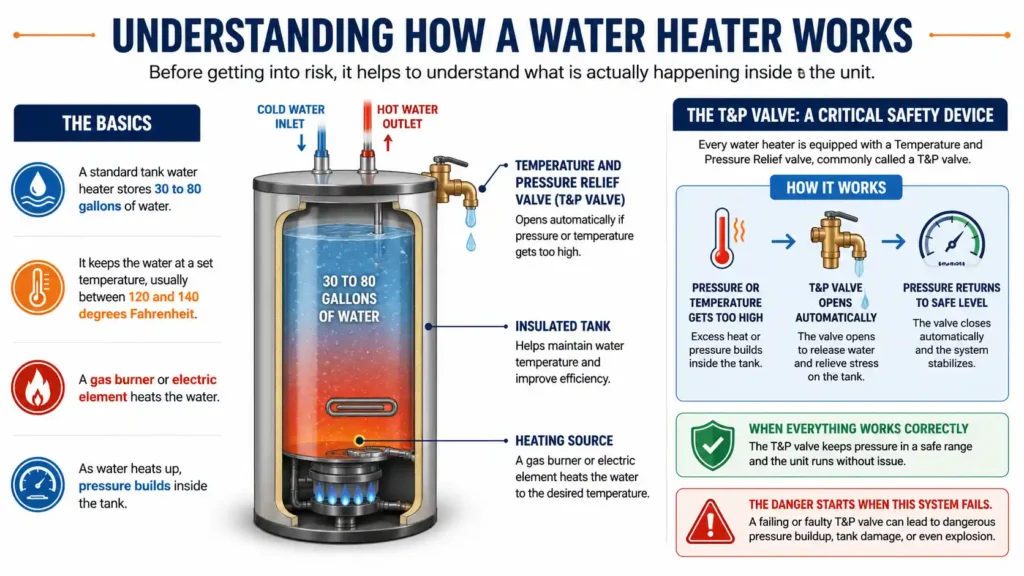
Before getting into risk, it helps to understand what is actually happening inside the unit.
A standard tank water heater stores 30 to 80 gallons of water and keeps it at a set temperature, usually between 120 and 140 degrees Fahrenheit. A gas burner or electric element heats the water. As water heats up, pressure builds inside the tank.
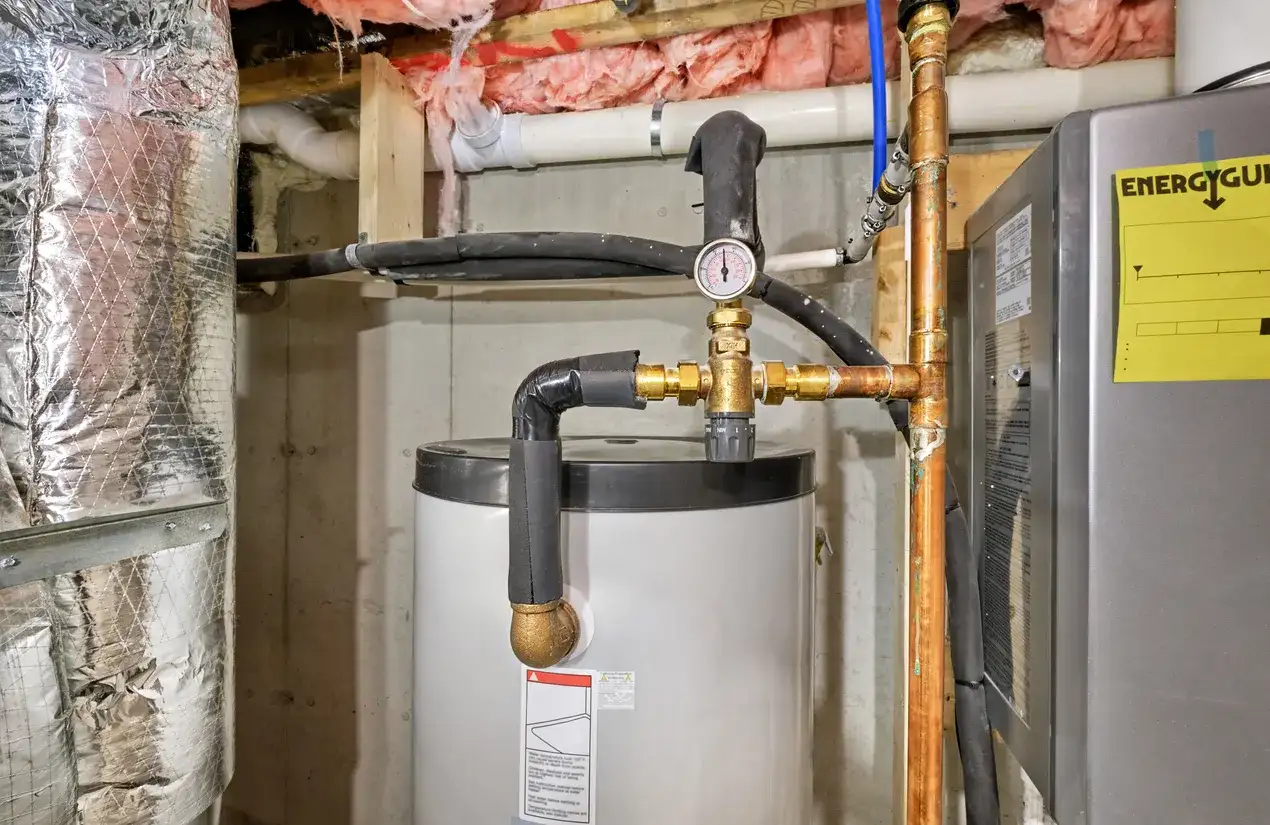
To manage that pressure, every water heater is equipped with a temperature and pressure relief valve, commonly called a T&P valve. This valve is designed to open automatically if pressure or temperature gets too high, releasing water and relieving the stress on the tank.
When everything works correctly, the T&P valve keeps pressure in a safe range and the unit runs without issue. The danger starts when this system fails.
So, Can Water Heater Explode If Turned Off?
This is the question most people come here with, so here is a direct answer.
Turning off a water heater lowers the risk of explosion because it stops the heating element or burner from adding more heat to the water. Less heat means less pressure buildup. In that sense, a turned-off unit is safer than one actively heating.
But can water heater explode if turned off completely? Yes, under specific conditions. If the T&P valve is already faulty and the tank is already under excessive pressure when you turn the unit off, that pressure does not disappear immediately. The water inside stays hot for hours. If the valve fails to release that pressure, the risk remains.
A turned-off unit with a corroded tank, a stuck T&P valve, or sediment buildup that has damaged the lining is still a potential hazard. Turning it off is the right first step, but it is not a complete fix for an already compromised unit.
What Are the Causes of an Exploding Water Heater?
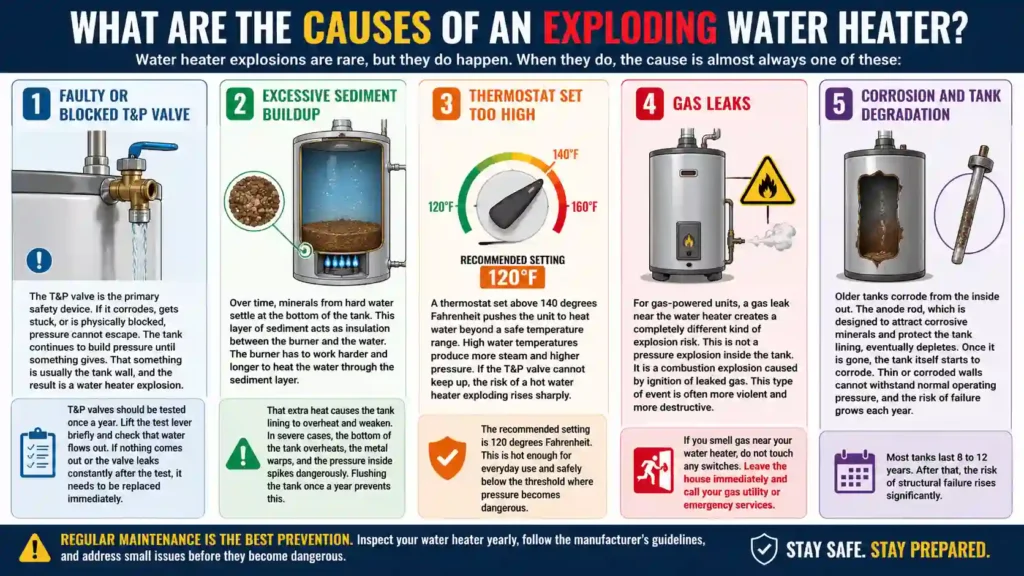
Water heater explosions are rare, but they do happen. When they do, the cause is almost always one of these:
1. Faulty or Blocked T&P Valve
The T&P valve is the primary safety device. If it corrodes, gets stuck, or is physically blocked, pressure cannot escape. The tank continues to build pressure until something gives. That something is usually the tank wall, and the result is a water heater explosion.
T&P valves should be tested once a year. Lift the test lever briefly and check that water flows out. If nothing comes out or the valve leaks constantly after the test, it needs to be replaced immediately.
2. Excessive Sediment Buildup
Over time, minerals from hard water settle at the bottom of the tank. This layer of sediment acts as insulation between the burner and the water. The burner has to work harder and longer to heat the water through the sediment layer.
That extra heat causes the tank lining to overheat and weaken. In severe cases, the bottom of the tank overheats, the metal warps, and the pressure inside spikes dangerously. Flushing the tank once a year prevents this.
3. Thermostat Set Too High
A thermostat set above 140 degrees Fahrenheit pushes the unit to heat water beyond a safe temperature range. High water temperatures produce more steam and higher pressure. If the T&P valve cannot keep up, the risk of a hot water heater exploding rises sharply.
The recommended setting is 120 degrees Fahrenheit. This is hot enough for everyday use and safely below the threshold where pressure becomes dangerous.
4. Gas Leaks
For gas-powered units, a gas leak near the water heater creates a completely different kind of explosion risk. This is not a pressure explosion inside the tank. It is a combustion explosion caused by ignition of leaked gas. This type of event is often more violent and more destructive.
If you smell gas near your water heater, do not touch any switches. Leave the house immediately and call your gas utility or emergency services.
5. Corrosion and Tank Degradation
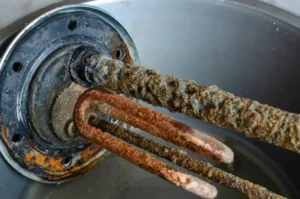
Older tanks corrode from the inside out. The anode rod, which is designed to attract corrosive minerals and protect the tank lining, eventually depletes. Once it is gone, the tank itself starts to corrode. Thin or corroded walls cannot withstand normal operating pressure, and the risk of failure grows each year.
Most tanks last 8 to 12 years. After that, the risk of structural failure rises significantly.
You can read about: How to Drain a Hot Water Heater
What Are the Signs of a Water Heater Likely to Explode?
Can hot water heaters explode without warning? Not usually. There are almost always signs before a serious failure. Knowing what to look for can save your home and your life.
Popping or rumbling sounds. A banging or rumbling noise during heating is a sign of heavy sediment buildup at the bottom of the tank. This is one of the most common warnings people ignore.
Water leaking from the T&P valve. A small drip from the relief valve occasionally is normal during heating. Constant dripping or water pooling under the valve means it is under more stress than it should be. Get it inspected right away.
Rotten egg smell near the tank. For gas units, this is a potential gas leak. Treat it as an emergency.
Brown or rusty water from hot taps. Rust-colored water means the inside of your tank is corroding. This weakens the tank walls over time and increases the risk of rupture.
Water around the base of the tank. Pooling water under the tank usually means the tank itself is leaking, which is a sign of internal damage. A leaking tank needs to be replaced, not patched.
The unit is over 10 years old. Age alone is a warning sign. Even without visible damage, older tanks carry higher risk of pressure failure and should be inspected regularly.
You can read about: What Causes Heat Exchanger to Crack
Does Turning Off a Water Heater Make It Safe?
Turning off the unit is always the right first move when you suspect a problem. It stops the heating process and prevents further pressure buildup.
However, turning off a water heater does not fix an underlying fault. A stuck T&P valve stays stuck. A corroded tank stays corroded. The pressure already inside the tank does not drop instantly. Hot water holds heat for several hours even without active heating.
If you have turned off the unit because you noticed a warning sign, the next step is to call a licensed plumber to inspect it. Do not turn the unit back on until it has been checked.
How long can water heater explode if turned off? The window of risk depends on how compromised the unit is. A tank with dangerously high pressure may take several hours to cool and depressurize. During that time, a faulty T&P valve is still a concern.
How to Prevent a Water Heater Explosion
Prevention is straightforward. These habits keep your water heater safe year after year.
Test the T&P valve annually. Lift the lever for three seconds and release it. Water should flow and then stop cleanly. If it does not work or continues dripping, replace the valve. It costs about $15 to $30 and is one of the most important maintenance steps you can take.
Flush the tank once a year. Connect a garden hose to the drain valve at the base of the unit. Open it and let the water run until it runs clear. This removes sediment buildup and reduces stress on the tank.
Check the anode rod every 2 to 3 years. The anode rod protects the tank from corrosion. Once it is depleted, replace it. A new rod costs $20 to $50 and extends the life of your tank significantly.
Set the thermostat to 120 degrees Fahrenheit. This is the safe recommended temperature. Going higher adds unnecessary pressure and increases the risk of scalding, too.
Inspect for corrosion and leaks regularly. Check around the base, the connections, and the T&P valve discharge pipe every few months. Catching a small issue early prevents a large problem later.
Install an expansion tank if you have a closed plumbing system. Homes with check valves or pressure-reducing valves on the main water line have what is called a closed system. When water heats and expands, it has nowhere to go except back into the tank. An expansion tank provides that extra space and keeps pressure from rising dangerously.
When Should You Replace Your Water Heater?
Knowing when to replace rather than repair saves money and reduces risk.
Replace your water heater if:
- It is more than 10 to 12 years old.
- You see rust-colored water from hot taps.
- The tank is physically leaking at the base or seams.
- Repairs have become frequent and costly.
- The T&P valve keeps tripping repeatedly without a clear cause.
- You hear consistent rumbling during every heating cycle despite flushing.
An older, failing unit is not just inconvenient. It is a safety issue. A new unit pays for itself in lower energy costs, reduced repair bills, and, most importantly, peace of mind.
Can Water Heaters Explode in Vacant or Unused Homes?
This is a less common question but worth addressing clearly.
Can water heaters explode in a home that is closed up or unoccupied? Yes. If the unit is left on and no one is there to notice warning signs, a faulty valve or sediment problem can develop unchecked.
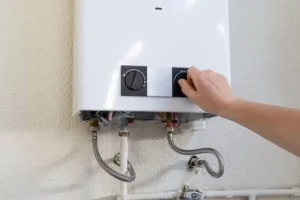
If you are leaving your home for an extended period, set the thermostat to vacation mode or turn the unit off entirely. For gas units, turn the control dial to the pilot position. This keeps the pilot light on without actively heating the tank, which reduces risk and saves energy.
When you return, inspect the unit before turning it back to full operation.
Emergency Situations: What To Do
If you believe your water heater is about to fail or you notice a sudden warning sign, act quickly and calmly.
Step 1: Turn off the power or gas supply. Flip the breaker for electric units. For gas units, turn the gas supply valve to the off position.
Step 2: Turn off the cold water inlet. The supply valve is usually above or beside the unit. Turning it off stops new water from entering under pressure.
Step 3: Open a hot water tap somewhere in the house. This relieves pressure from the system gradually and safely.
Step 4: Call a licensed plumber. Do not attempt to inspect or repair a unit you believe is under stress. A professional can assess the situation safely.
Step 5: If you smell gas, leave immediately. Do not use any switches, phones, or appliances inside. Call your gas company from outside the building.
Conclusion
Can water heater explode if turned off? It is much less likely, but not impossible if the unit already has a serious fault. Turning it off is the right move when you suspect trouble. But that should be followed up with a professional inspection, not a wait-and-see approach.
Most water heater explosions are preventable. Annual maintenance, prompt attention to warning signs, and replacing aging units on time are the best defenses.
If you are in the Los Angeles area and need a professional inspection or replacement, Derks Plumbing offers expert Water Heater Installation in Eagle Rock and nearby communities. Their licensed plumbers assess your current unit honestly and help you decide whether a repair or replacement is the right call for your home and budget.

FAQs
Can water heater explode if turned off completely?
Mostly no, but not entirely. Turning off the unit stops new heat from building up. However, if the tank already has high pressure and a faulty T&P valve, the risk does not disappear immediately. The tank takes hours to cool and depressurize.
Can water heaters explode without any warning?
Rarely. Most water heater explosions are preceded by warning signs like rumbling noises, leaking relief valves, rust-colored water, or a tank over 10 years old. Paying attention to these signs gives you time to act before failure occurs.
How long can water heater explode if turned off?
The risk window depends on how compromised the unit is. A tank with high pressure and a stuck T&P valve remains under stress for several hours after being turned off. Do not assume immediate safety just because the power or gas is cut.
Can hot water heaters explode from sediment buildup alone?
Yes. Heavy sediment insulates the tank bottom from the burner, causing overheating, metal warping, and pressure spikes. Annual flushing prevents this from becoming a serious risk.
What causes a hot water heater exploding in older homes?
The most common causes in older homes are a depleted anode rod that leads to internal corrosion, a T&P valve that has not been tested in years, and sediment buildup from hard water. Tank age is the biggest risk factor overall.
Is a water heater explosion the same as a gas explosion?
No. A tank pressure explosion is caused by uncontrolled pressure inside the tank. A gas explosion is caused by leaked gas igniting. Both can happen with a gas water heater but for different reasons and require different responses.