If you’ve ever poured a drain cleaner down a clogged sink and wondered what’s actually happening inside that pipe, you’re not alone. These products work through chemistry and understanding that chemistry helps you use them safely and pick the right one for the job. Not all drain cleaners are the same, and the difference matters.
So, is drain cleaner acidic or basic? Most common household drain cleaners are basic (also called alkaline), with a pH of 11 to 14. But some professional-grade products are strongly acidic. Knowing which type you have and how each one works protects your pipes, your health, and your home. This guide explains it all in plain language.
What Does Acidic or Basic Mean?
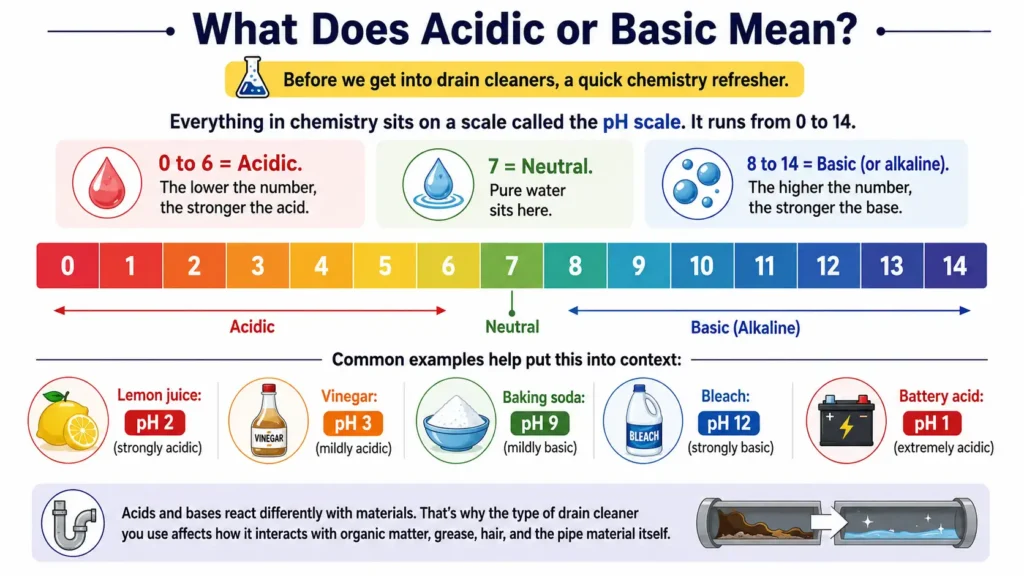
Before we get into drain cleaners, a quick chemistry refresher.
Everything in chemistry sits on a scale called the pH scale. It runs from 0 to 14.
- 0 to 6 = Acidic. The lower the number, the stronger the acid.
- 7 = Neutral. Pure water sits here.
- 8 to 14 = Basic (or alkaline). The higher the number, the stronger the base.
Common examples help put this in context:
- Lemon juice: pH 2 (strongly acidic)
- Vinegar: pH 3 (mildly acidic)
- Baking soda: pH 9 (mildly basic)
- Bleach: pH 12 (strongly basic)
- Battery acid: pH 1 (extremely acidic)
Acids and bases react differently with materials. That’s why the type of drain cleaner you use affects how it interacts with organic matter, grease, hair, and the pipe material itself.
Most Drain Cleaners Are Basic
The majority of drain cleaners you’ll find at a hardware store or supermarket are basic, not acidic. Brands like Drano, Liquid-Plumr, and most store-brand products fall into this category.
Their pH typically ranges from 11 to 14. That puts them in the strongly alkaline range similar to oven cleaner or industrial bleach.
Why so alkaline? Because basic chemistry is very effective at breaking down the organic materials that cause most household clogs. Hair, soap scum, grease, and food particles are all organic matter. Strong bases attack these materials through a chemical reaction that breaks them apart.
Is a drain cleaner an acid or base for everyday household use? In almost every case, it’s a base. The exceptions are specific products designed for very specific clog types.
Common alkaline active ingredients in drain cleaners:
- Sodium hydroxide (lye) — The most common. Extremely caustic. Breaks down fats and proteins rapidly.
- Potassium hydroxide — Similar to sodium hydroxide. Found in some liquid formulas.
- Sodium hypochlorite (bleach) — Mildly alkaline. Found in some drain maintenance products.
- Sodium carbonate — Gentler alkaline option. Found in some “natural” or low-chemical drain cleaners.
How Basic Drain Cleaners Work
When you pour an alkaline drain cleaner into a clogged drain, several things happen fast.
Step 1: Saponification. The sodium hydroxide reacts with fats and grease in the clog. It converts them into soap in a process called saponification. That soap dissolves in water and washes down the drain.
Step 2: Hydrolysis. The base attacks protein-based materials like hair. It breaks the chemical bonds that hold hair fibers together. Hair that was once tangled and solid turns into a soft, water-soluble paste.
Step 3: Heat generation. This is the part most people don’t know about. When sodium hydroxide mixes with water, it generates heat, sometimes significant heat. That warmth helps speed up the chemical reactions and can help dissolve grease that’s hardened in the pipe.
Step 4: The clog clears. Once the clog material breaks down, the loosened debris washes through with water. Most basic drain cleaners take 15 to 30 minutes to work on minor clogs.
This is why these products work well on hair, soap, and grease. But they’re less effective on non-organic blockages like dirt, sand, small objects, or tree root intrusions.
You can read about: How Much pH Does Drain Cleaner Have
Some Drain Cleaners Are Acidic
So if most drain cleaners are basic, when does drain cleaner acid or base tip toward the acid side?
Acidic drain cleaners exist but they’re less common in the average household and much more dangerous to handle.
Sulfuric acid drain cleaners are the most powerful. They’re sold at plumbing supply stores and sometimes in hardware stores in limited quantities. pH is often below 1. These products work differently from alkaline cleaners; they dissolve blockages through oxidation and protonation rather than saponification.
Sulfuric acid drain cleaners are effective against:
- Paper and tissue blockages
- Soap buildup
- Certain food clogs
- Grease (though alkaline cleaners often do this better)
They’re also the product of choice for extremely stubborn clogs that alkaline cleaners can’t break through. But the trade-off is significant: sulfuric acid generates intense heat, can cause violent reactions with other chemicals, and can severely damage skin, eyes, and mucous membranes on contact.
Hydrochloric acid (muriatic acid) is another acidic option, primarily used for dissolving mineral deposits and scale inside drains and toilets. It’s not a true “drain cleaner” in the clog-clearing sense, but it belongs to the acid or base drain cleaner conversation because it’s used in plumbing maintenance.
Acidic Drain Cleaners vs. Basic Drain Cleaners
Here’s a direct comparison to help you understand the difference:
| Feature | Acidic Drain Cleaner | Basic (Alkaline) Drain Cleaner |
| pH range | 0 – 3 | 11 – 14 |
| Common chemicals | Sulfuric acid, hydrochloric acid | Sodium hydroxide, potassium hydroxide |
| Best for | Paper, severe clogs, scale | Hair, grease, soap scum |
| Found at | Plumbing stores, hardware stores | Supermarkets, hardware stores |
| Risk level | Extremely high | High |
| Pipe safety | Risky for older pipes | Risky for repeated use |
| Fume danger | Severe | Moderate to severe |
| Mixing risk | Never mix with anything | Never mix with acids or bleach |
Is drain cleaner a acid or base for the toughest jobs? Professionals sometimes reach for acidic options when alkaline products fail. But for everyday household clogs, alkaline is the standard and much safer for a non-professional to handle.
What Is the pH of Common Drain Cleaners?
It helps to see real products on the pH spectrum:
- Drano Max Gel: pH approximately 13 to 14 (strongly alkaline)
- Liquid-Plumr Pro Strength: pH approximately 12 to 13 (strongly alkaline)
- Roebic Crystal Drain Opener (sulfuric acid): pH below 1 (strongly acidic)
- Green Gobbler (enzymatic): pH approximately 8 to 9 (mildly alkaline)
- Baking soda + vinegar: Starts at pH 9 and 3 respectively, neutralizes to near 7
Drain cleaner an acid or base at the grocery store is almost certainly strongly alkaline. If you’re buying something from a plumbing supply store, it’s more likely to be acidic and should be handled with much more caution.
Are Drain Cleaners Safe for Pipes?
This is a question that comes up often and the honest answer is: it depends on how often you use them and what your pipes are made of.
PVC pipes: Generally resistant to single uses of alkaline drain cleaners. But repeated use or high-heat reactions can soften PVC over time.
Metal pipes (copper, iron, galvanized steel): Alkaline drain cleaners can corrode older metal pipes with repeated use. Acidic cleaners are especially corrosive to metal.
Older clay or cast iron pipes: These are the most vulnerable. Chemical drain cleaners can accelerate corrosion in already-aging systems.
The heat problem: Sodium hydroxide products generate heat when they contact water. In some cases, this heat can warp PVC or worsen minor cracks in older pipes.
The standing water problem: If a drain cleaner sits in a completely blocked pipe with standing water, the chemicals concentrate at the blockage and can cause pipe damage or erode joints over time.
A single, occasional use of a quality alkaline drain cleaner on a mild clog is unlikely to cause meaningful pipe damage. Repeated use pouring drain cleaner monthly is where real damage accumulates.
Signs You Should Avoid Chemical Drain Cleaners
Not every clog is a good candidate for a chemical drain cleaner. Here are situations where you should skip the bottle:
You have old or corroded pipes. Chemical heat and caustic reactions accelerate corrosion in pipes already showing wear.
You’ve already tried one type of drain cleaner. Never add a second product on top of one that didn’t work. Mixing alkaline and acidic drain cleaners can cause violent, dangerous chemical reactions with toxic fumes and extreme heat.
The clog is a solid object. A toy, bottle cap, or piece of food that physically blocks the drain won’t respond to chemistry. Only mechanical removal works.
You have a septic system. Strong alkaline drain cleaners kill the beneficial bacteria in a septic tank. Those bacteria break down waste without them, the system fails. Use enzyme-based products designed for septic systems instead.
The drain backs up slowly but repeatedly. Recurring slow drains often signal a deeper issue: root intrusion, pipe misalignment, or significant buildup far down the line. Drain cleaner won’t fix a structural problem.
You have children or pets nearby. The fumes from strong drain cleaners are dangerous. If ventilation is limited, don’t use chemical products.
Natural Alternatives to Chemical Drain Cleaners
If you’d rather avoid harsh chemicals, these options work well for minor clogs:
Boiling water. Works on grease and soap buildup. Pour slowly in stages. Don’t use PVC pipes; the heat can warp them.
Baking soda and vinegar. Pour half a cup of baking soda down the drain, followed by half a cup of white vinegar. Cover the drain for 15 minutes, then flush with hot water. The fizzing reaction loosens minor buildup. Note: this doesn’t work on serious blockages.
Dish soap and hot water. A squirt of grease-fighting dish soap followed by hot water can help dissolve greasy buildup.
Drain snake (hand auger). A manual snake is the most effective DIY tool for hair clogs. It physically grabs and pulls out the blockage. No chemistry, no pipe risk.
Enzyme drain cleaners. Products like Bio-Clean or Green Gobbler’s enzyme formula use bacteria to digest organic matter. Safe for all pipe types, safe for septic systems. They work slowly (hours to overnight) but are the gentlest option.
Plunger. For simple clogs close to the drain opening, a good plunger is still one of the most reliable tools. Cup plungers for sinks; flange plungers for toilets.
When to Call a Professional Plumber
Chemical drain cleaners whether acidic or basic drain cleaner are temporary solutions for minor problems. When these situations come up, it’s time to call a professional:
The clog doesn’t clear after two attempts. If two different approaches haven’t worked, the problem is likely deeper or more serious than surface buildup.
Multiple drains are slow at once. This points to a main line issue, not a single drain clog. That requires a sewer inspection or main line snaking not a bottle of cleaner.
You smell sewer gas. A sewer odor coming up through drains indicates a venting or trap problem that no drain cleaner will resolve.
Water is backing up into other fixtures. If flushing the toilet causes water to rise in the shower, you have a main line blockage or a serious venting problem.
You have a septic system showing signs of failure. Slow drains combined with wet spots in the yard, sewage odors outside, or gurgling sounds throughout the house are all red flags.
In the Eagle Rock area, Derks Plumbing handles everything from stubborn clogs to full sewer line inspections. Our Drain Cleaning Services in Eagle Rock use professional-grade equipment hydro-jetting, video inspection, and mechanical augering to clear blockages that no store-bought product can touch. If the drain isn’t clearing, call us before the problem gets worse.

Final Thoughts
So, is drain cleaner acidic or basic? The answer depends on the product but most household drain cleaners are strongly basic, with pH levels of 11 to 14. Acidic options exist for tougher clogs but come with significantly higher risk and should be handled with care.
Understanding whether a drain cleaner is an acid or base helps you use these products correctly, protect your pipes, and know when to stop pouring chemicals and call a professional instead. For minor, occasional clogs a basic drain cleaner used once is usually fine. For recurring blockages or main line problems, chemistry isn’t the answer.
FAQs
Is drain cleaner acidic or basic?
Most household drain cleaners are basic (alkaline), with a pH of 11 to 14. Some professional-grade products are acidic, using sulfuric or hydrochloric acid. For typical home use, the answer is basic.
Is a drain cleaner an acid or base for hair clogs?
Alkaline (basic) drain cleaners work best on hair clogs. Sodium hydroxide breaks down the protein structure of hair, dissolving it into a water-soluble paste that flushes away.
Can you mix acidic and basic drain cleaners?
Never. Mixing an acid drain cleaner with an alkaline one causes a violent reaction of intense heat, toxic fumes, and potential pipe damage. Always wait and flush thoroughly between different products.
What is the pH of Drano?
Drano Max Gel has a pH of approximately 13 to 14 strongly alkaline. This is why it’s effective on grease and hair, which break down in high-pH environments.
Is drain cleaner an acid or base when it’s the “enzyme” type?
Enzyme drain cleaners are mildly basic, usually pH 8 to 9. They’re much gentler than chemical options and safe for septic systems and all pipe types.
Why do drain cleaners get hot?
Sodium hydroxide (lye) reacts exothermically with water meaning the reaction generates heat. This heat helps dissolve grease and speeds up the chemical breakdown of organic clogs.




