How Much Does It Cost to Install a Water Heater? In 2026, a standard tank water heater installation typically costs about $1,600 to $2,400, while tankless installation can cost around $2,400 to $5,400. Your actual price depends on the heater type, size, fuel source, labor, and any plumbing, electrical, gas-line, or venting work required.
A simple replacement using the same type of heater and existing connections usually costs less. A new installation or tankless upgrade can cost more because additional equipment and modifications may be needed. Understanding these costs before hiring a plumber helps you compare estimates and plan your budget.
Average Water Heater Installation Cost in 2026
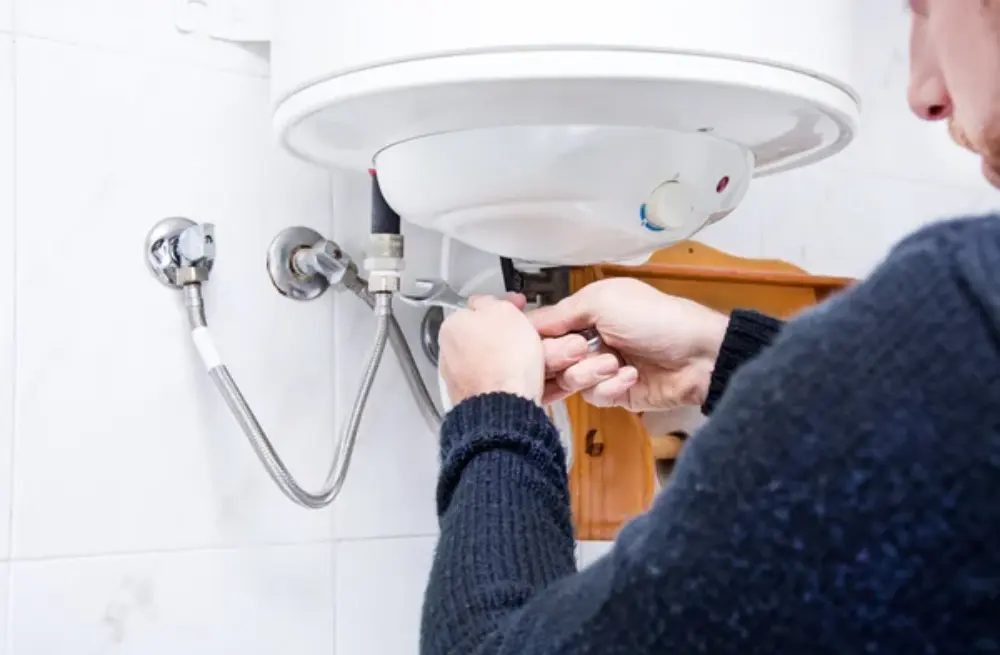
There is no single price that applies to every home.
Home Depot currently reports an average total of about $1,950 for standard tank installation, with a typical range of $1,600 to $2,400. Its current tankless installation range is about $2,400 to $5,400, with an average of $4,300.
Other 2026 sources report different ranges. This Old House lists overall water heater installation costs from about $1,600 to $5,400, while Angi reports a lower range for many tank-style replacements.
These differences are normal because installation projects are not identical.
A simple replacement in the same location can be relatively straightforward. A new installation may require new plumbing, electrical work, gas piping, venting, or changes to the installation area.
For that reason, use national cost ranges as a starting point rather than a guaranteed price for your home.
Water Heater Cost by Type
The type of water heater you choose has a major effect on your total installation cost.
Traditional Tank Water Heater
A traditional storage tank keeps a supply of hot water ready for use. These systems are available in several sizes and can run on electricity, natural gas, or propane.
They are usually less expensive to install than tankless systems.
Current national estimates put many standard tank installations around $1,600 to $2,400, although smaller or simpler replacements can cost less.
A direct replacement is generally less complicated when the new heater uses the same fuel type and fits the existing location.
Tankless Water Heater
Tankless systems heat water when you need it instead of storing a large volume in a tank.
The upfront tankless water heater installation cost is usually higher than a basic tank replacement. Current 2026 estimates range from roughly $1,400 to $3,900 in many projects, while Home Depot reports a broader $2,400 to $5,400 range for tankless purchase and installation.
The difference depends heavily on the existing setup.
A gas tankless system may need gas-line and venting changes. An electric model may need additional circuits or electrical capacity. These upgrades can make the installation much more expensive than simply purchasing the unit.
Heat Pump Water Heater
Heat pump water heaters use electricity to move heat from surrounding air into the water.
They usually have a higher purchase price than basic tank models but can use less energy during operation.
This type also needs an appropriate installation space and electrical connection. Current installation guides describe heat-pump water heater installation as a project that can require professional work, especially when plumbing or electrical changes are needed.
You can read about: How to Install a Water Heater
What Is Included in Water Heater Installation?
When you receive a quote, the equipment itself is only one part of the project.
A complete installation may include:
- Water heater
- Plumbing connections
- Installation labor
- Shutoff valves
- Required safety components
- Gas or electrical connections
- Venting for applicable gas systems
- Removal of the old heater
- Disposal
- Installation materials
- Permit fees
- Inspection costs
The exact list depends on your home and the selected water heater.
For example, Home Depot’s tankless installation estimate includes the heater, permits, installation materials, labor, and removal of the old unit.
Always ask what is included before comparing two quotes. A lower quote may leave out work that another contractor has already included.
What Factors Affect Water Heater Installation Cost?
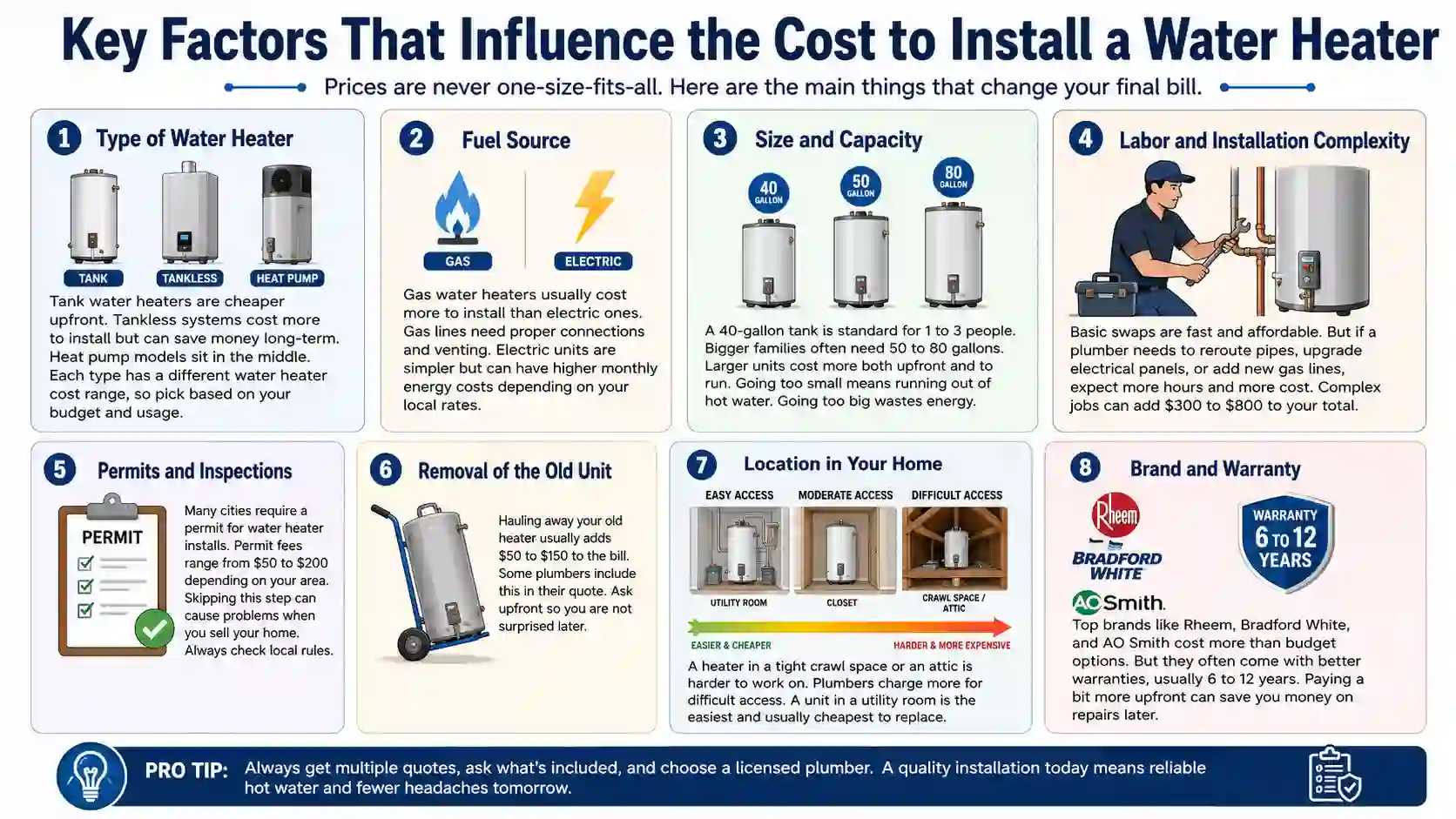
Several factors can change your final water heater installation cost.
Water Heater Size
The size of your heater should match your household’s hot-water demand.
For tank systems, capacity is measured in gallons. Common residential sizes include 40, 50, 75, and 80 gallons.
Larger tanks generally cost more and may require more space.
For tankless systems, sizing is based on flow rate and temperature rise rather than storage capacity.
Choosing the correct size helps prevent two common problems: paying for more capacity than you need or buying a system that cannot meet your peak demand.
Fuel Source
Electric and gas water heaters have different installation requirements.
An electric heater needs suitable electrical service and wiring.
A gas heater needs an appropriate gas supply and safe venting.
Changing from one fuel source to another can add substantial work. This may involve new wiring, gas piping, breakers, venting, or other modifications.
Installation Location
Location can have a major impact on labor.
A heater in an open garage or accessible utility room may be easier to replace than one inside a narrow closet, attic, crawlspace, or difficult-to-reach area.
Moving the heater can also require longer water lines, new electrical connections, gas piping, or venting.
Existing Plumbing
Old connections may not fit the new equipment.
The plumber may need to replace shutoff valves, modify water lines, repair corroded connections, or reposition piping.
These smaller changes can add to the final project cost.
Venting
Gas water heaters need proper venting for safe operation.
If the new unit uses a different venting system from the old heater, additional materials and labor may be required.
Tankless gas systems can have especially different venting requirements, depending on the model.
Permits and Code Requirements
Permit requirements depend on your local jurisdiction and the type of installation.
A project may also require an inspection after the work is completed.
Ask your plumber whether required permits and inspections are included in the estimate.
How Much Does Water Heater Labor Cost?
Labor can make up a significant portion of the total project.
The amount depends on the type of heater and the amount of work required.
A basic replacement may involve:
- Shutting off water and fuel or power
- Draining the old unit
- Disconnecting the existing connections
- Removing the old heater
- Installing the new heater
- Reconnecting plumbing and utilities
- Testing the system
A more complex installation can take longer because of gas-line work, electrical upgrades, venting, relocation, or plumbing modifications.
Current 2026 cost research shows professional rates can vary considerably by location and project complexity. This Old House reports plumber rates ranging from roughly $40 to $200 per hour in its national research.
That is why comparing the complete project price is usually more useful than comparing hourly rates alone.
Additional Costs to Budget For
Your quote may include several expenses beyond the heater and basic labor.
Old Water Heater Removal
The existing heater has to be disconnected and removed.
Some contractors include disposal in the installation price. Others list it separately.
Permit and Inspection Fees
Depending on local requirements, you may need a permit and inspection.
Ask who will obtain the permit and whether its cost is included.
Expansion Tank
Some plumbing systems require a thermal expansion tank.
Whether one is needed depends on the system and applicable code requirements.
Gas-Line Upgrades
A new gas water heater may require a larger or properly sized gas supply.
This is especially important when replacing a conventional unit with a high-input tankless model.
Electrical Upgrades
An electric water heater may require new wiring, breakers, or additional electrical capacity.
Tankless electric systems can have particularly high electrical demands, so the existing panel should be evaluated before selecting a model.
Venting Changes
Gas equipment may require new or modified venting.
The amount of work depends on the heater, vent route, and existing installation.
Wall or Flooring Repairs
If the new installation requires moving pipes or changing the installation area, some drywall, flooring, or other minor repair work may be necessary.
Water Heater Cost by Size
For storage tank systems, size is one of the most important pricing factors.
A 40-gallon heater may suit a smaller household, while a 50-gallon unit is common for many families. Larger households may need 75- or 80-gallon capacity.
Current national estimates from This Old House place installation ranges at roughly:
- 40 gallons: $600–$1,200
- 50 gallons: $700–$1,800
- 75 gallons: $900–$2,300
- 80 gallons: $1,000–$3,000
These are national planning figures, not guaranteed local prices.
Tankless systems are sized differently. Their capacity is discussed in gallons per minute, or GPM.
A professional should consider peak household demand, incoming water temperature, and the number of fixtures that may run at the same time.
Water Heater Replacement Cost vs. New Installation
Replacing an existing heater is usually less complicated than installing a water heater where none existed before.
With a direct replacement, the home may already have suitable:
- Water lines
- Electrical connections
- Gas piping
- Venting
- Drainage
- Installation space
A new installation may require some or all of these components.
The same is true when converting from a tank water heater to tankless.
A tankless conversion may require new gas lines, electrical work, venting, and plumbing modifications. Home Depot notes that changing fuel sources or switching from a tank to tankless can increase the project price.
Repair or Replace a Water Heater?
Replacing a water heater is not always the first answer.
A newer system with a minor problem may be worth repairing.
For example, a faulty heating element, thermostat, valve, or other replaceable component may not justify replacing the entire heater.
Replacement becomes more reasonable when the unit is older, leaking from the tank, producing rusty water, making unusual noises, or requiring repeated repairs.
A storage tank that has developed an internal leak generally cannot be repaired permanently because the tank itself has deteriorated.
Look for these warning signs:
- Water around the heater
- Rust-colored hot water
- Loud popping or rumbling
- Frequent loss of hot water
- Visible corrosion
- Repeated repairs
- Increasing operating problems
If you are uncertain, an inspection can help determine whether repair or replacement makes more financial sense.
Can You Install a Water Heater Yourself?
Water heater installation is more complicated than connecting a few pipes.
Depending on the equipment, the job can involve gas, electricity, hot pressurized water, combustion, venting, and local building requirements.
A mistake can result in leaks, electrical hazards, gas leaks, fire risks, or unsafe exhaust.
This is why professional installation is generally the safer option. Current guidance from Angi also recommends professional installation because of permitting, code compliance, fuel connections, and safety concerns.
DIY installation may also affect manufacturer warranty requirements or insurance coverage, so check the applicable terms before attempting the work.
How to Save Money on Water Heater Installation
You can control some project costs through careful planning.
Get More Than One Estimate
Ask qualified plumbing contractors for detailed written estimates.
Compare the same items in each quote instead of choosing based only on the lowest number.
Choose the Right Size
Do not automatically buy the largest heater.
An oversized system can increase the equipment cost without solving a real household need.
An undersized system can leave you without enough hot water.
Keep the Existing Location When Practical
Installing the new heater near existing water, gas, and electrical connections can reduce modification work.
However, the location still needs to meet equipment requirements and applicable codes.
Plan Upgrades Together
If your home needs electrical, plumbing, or gas upgrades, completing related work during the same project may be more efficient than handling separate jobs later.
Check Current Rebates
High-efficiency equipment may qualify for rebates or incentives depending on the model, utility, location, and current program rules.
Always verify eligibility before counting a rebate toward your budget.
What Should a Water Heater Estimate Include?
Before approving a project, ask the plumber to explain the complete price.
A detailed estimate should identify:
- Water heater type
- Brand and model
- Tank size or tankless capacity
- Fuel type
- Labor
- Installation materials
- Plumbing modifications
- Gas or electrical work
- Venting
- Permit fees
- Inspection
- Old-unit removal
- Disposal
- Warranty information
- Possible additional charges
This makes it much easier to compare estimates.
For example, Contractor A may quote $1,900 but exclude an electrical upgrade. Contractor B may quote $2,400 but include the required electrical work, permit, and disposal.
The second quote may actually be the better value.
Water Heater Installation in Eagle Rock
The cost of a water heater project in Eagle Rock depends on the existing system, heater type, fuel source, access, and work needed for the installation.
Older homes may have different plumbing, gas, electrical, or installation conditions than newer properties.
If you need Water Heater Installation in Eagle Rock, the team at Derks Plumbing can evaluate the existing setup and help determine what type and size of water heater is appropriate for your home.
A proper assessment can identify potential installation issues before the work begins and give you a clearer idea of the total project requirements.

Final Thoughts
How Much Does It Cost to Install a Water Heater depends on much more than the price printed on the water heater. The total can change based on the type and size of the system, fuel source, labor, installation location, plumbing condition, permits, and required upgrades.
Current 2026 estimates show that standard tank installations often fall around the low-thousands, while tankless systems can cost considerably more.
The best way to plan your budget is to get a detailed estimate that separates the equipment from the installation work. That gives you a clearer picture of what you are paying for and helps you compare quotes fairly.
Frequently Asked Questions
How much does it cost to install a water heater?
Varies by system type, size, fuel source, labor, and required modifications. Current 2026 national estimates put many standard tank installations around $1,600 to $2,400, while tankless installation can range from about $2,400 to $5,400.
How much does a 50-gallon water heater cost to install?
The price depends on the unit, fuel source, location, labor, and existing connections. Current national estimates from This Old House place 50-gallon installation around $700 to $1,800, but actual local pricing can be higher or lower.
Is tankless installation more expensive than a traditional water heater?
Usually, yes. The equipment can cost more, and the installation may require gas-line, electrical, plumbing, or venting modifications. Current 2026 estimates show tankless systems generally cost more to install than standard tank systems.
How long does it take to install a water heater?
A straightforward replacement can often be completed within several hours. More complicated projects take longer when the plumber needs to modify plumbing, gas lines, electrical connections, venting, or the installation location.
Do I need a permit to install a water heater?
Permit requirements depend on the local jurisdiction and the type of work. Many water heater installations require permits and inspections, so your plumber should confirm the requirements for your property.
Should I repair or replace my water heater?
Repair may make sense when the heater is relatively new and has a minor component problem. Replacement is usually worth considering when the tank is leaking, the system is older, or repair costs are becoming frequent.
What makes water heater installation more expensive?
Gas-line upgrades, electrical work, new venting, plumbing modifications, difficult access, moving the heater, permits, and replacing damaged connections can all increase the final price.
How can I get an accurate water heater installation cost?
The best approach is an on-site evaluation. A professional can inspect your current heater, connections, installation location, household demand, and required upgrades before providing a detailed estimate.




