Draining your water heater helps remove built-up sediment that can affect its performance. Over time, minerals from your water settle at the bottom of the tank. This buildup can cause popping sounds, slow heating, and extra wear. A proper drain can help keep your unit working well.
Learning How to Drain a Hot Water Heater starts with turning off the power or gas, letting the water cool, and connecting a garden hose to the drain valve. Follow the steps below to drain your tank safely, avoid common mistakes, and refill it correctly before restoring power.
Why Do You Need to Drain a Hot Water Heater?
Most tank-style water heaters collect minerals, sand, and other small particles over time. These materials settle at the bottom and form sediment. Draining the tank helps remove loose buildup before it causes bigger problems.
Here are the main benefits of draining your water heater:
- Better heating: Thick sediment can slow heat transfer from the burner or heating element to the water.
- Less noise: Popping and rumbling sounds can occur when water gets trapped beneath sediment.
- Reduced wear: Removing loose debris may help protect parts from unnecessary strain.
- Cleaner tank water: Flushing can remove some loose particles that collect inside the tank.
- Better maintenance: Regular checks can help you spot leaks, rust, and valve problems early.
Draining is not a cure for every water heater problem. It cannot repair a damaged tank, a faulty thermostat, or a worn heating element. Older tanks with heavy mineral buildup may also need professional care.
Tools and Materials You’ll Need
Gather your supplies before starting the job. This helps prevent spills and delays during the draining process.
- A garden hose long enough to reach a safe drain location
- A bucket for small amounts of water
- Work gloves and safety glasses
- A flathead screwdriver, if your drain valve requires one
- A flashlight for checking connections
- The water heater’s manual
Make sure the hose fits the drain valve securely. Direct the water to a floor drain or another approved location that can handle hot water. Keep children and pets away from the discharge area.
How to Drain a Hot Water Heater Step by Step
These steps apply to most standard storage-tank water heaters. Your model may have different valve controls, so check its manual before starting.
Step 1: Turn Off the Energy Supply
For an electric water heater, switch off the correct circuit breaker. For a gas unit, follow the manufacturer’s instructions to turn off the burner or set the gas control to the required off setting.
Never leave an electric heating element powered while the tank drains. An exposed element can burn out when it is no longer covered by water.
Step 2: Let the Water Cool
Water inside a heater can cause serious burns. Allow the tank to cool before draining it. Waiting several hours may help, depending on the tank size and starting temperature.
Do not rely on the faucet handle position to judge water temperature. Test the discharge carefully from a safe distance.
Step 3: Turn Off the Cold Water Supply
Find the cold-water inlet valve above the tank. Close it to stop fresh water from entering while you drain the tank.
Do not force a stuck valve. A damaged shutoff valve can cause leaks or prevent you from stopping the water supply when needed.
Step 4: Connect the Garden Hose
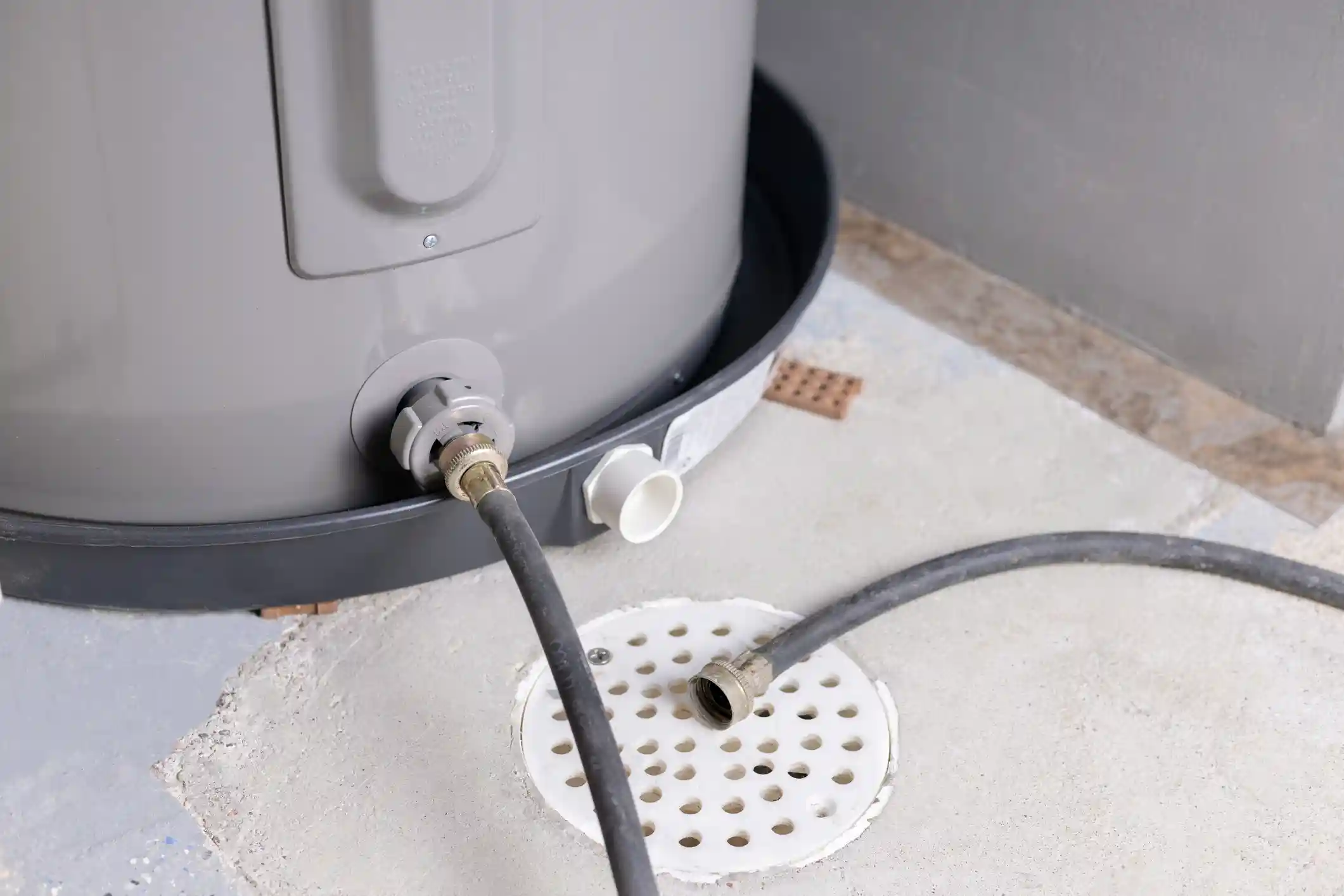
Locate the drain valve near the bottom of the tank. Attach the garden hose firmly, then place its other end at a suitable drain point.
Check that the hose is not kinked or loose. The water may contain sediment, so avoid directing it onto plants or surfaces that could be harmed by heat or minerals.
Step 5: Open a Hot Water Faucet
Open a hot water faucet in a nearby sink or tub. This allows air to enter the plumbing and helps water flow from the tank.
Keep the faucet open while draining. If water does not flow, check that the hose is positioned correctly and that the drain valve is open.
Step 6: Open the Drain Valve
Slowly open the tank’s drain valve. Use a screwdriver only if your valve design requires one. Water should begin flowing through the hose.
Keep clear of the discharge. If the valve leaks around its handle or the hose connection, close it if safe and address the leak before continuing.
Step 7: Let the Tank Empty
Allow the water to drain into the chosen location. The flow may slow as the water level drops. This is normal.
If your goal is to remove loose sediment, you may need to flush the tank with a small amount of fresh water. Do this only if the drain valve works properly and the discharge remains controlled.
Step 8: Check the Water Flow
Watch the discharge for signs of sediment. Cloudy water or small particles may appear at first. The water may become clearer as loose debris leaves the tank.
Do not poke tools into the drain opening to break up a blockage. If the valve is clogged or the tank will not drain, follow the troubleshooting steps below.
You can read about: How to Hide Tankless Water Heater
How to Drain an Electric Water Heater
Electric water heaters need extra care because their heating elements can be damaged if they run without water.
- Switch off the water heater’s circuit breaker.
- Confirm that the cold-water supply is closed.
- Let the tank cool before connecting the hose.
- Open a hot water faucet to allow air into the plumbing.
- Open the drain valve and let the water flow out.
- Close the drain valve when draining is complete.
Before restoring power, refill the tank completely. Open a hot water faucet and wait until water flows steadily without spurting air. Check the tank and drain valve for leaks.
Never turn the breaker back on while the tank is empty or partly filled. Doing so can destroy the heating element.
How to Drain a Gas Water Heater
Gas models use a burner to heat the water. Follow the control instructions printed on your unit or provided in its manual.
- Turn the gas control to the specified off setting.
- Close the cold-water inlet valve.
- Allow the water to cool.
- Attach a garden hose to the drain valve.
- Open a hot water faucet.
- Open the drain valve and allow the tank to empty.
After draining, close the valve and refill the tank. Check for leaks before restarting the burner according to the manufacturer’s directions.
Do not disconnect gas lines or remove burner parts to complete this job. If you smell gas, avoid flames and electrical switches, leave the area, and contact your gas utility or emergency service from a safe location.
How to Refill and Restart a Water Heater
Refilling the tank correctly is just as important as draining it. Follow these steps before turning the heater back on.
- Close the drain valve and remove the hose.
- Open the cold-water supply valve.
- Keep a hot water faucet open while the tank fills.
- Wait until water flows steadily from the faucet without air sputtering.
- Check the drain valve, inlet connections, and nearby pipes for leaks.
- Confirm the tank is full before restoring energy.
For an electric model, switch the breaker back on only after confirming the tank is full. For a gas model, follow the manufacturer’s relighting instructions.
If the drain valve continues to drip, do not ignore it. A worn valve may need replacement. Contact a plumber if you cannot stop the leak safely.
How Long Does It Take to Drain a Hot Water Heater?
Most tank water heaters take around 20 to 60 minutes to drain. The exact time depends on the tank size, valve condition, water pressure, and amount of sediment.
A small tank with a clear drain valve may empty faster. A large tank with heavy buildup may take much longer. Allow extra time for cooling, flushing, refilling, and leak checks.
If no water comes out after opening the drain valve, sediment may be blocking the opening. A faulty valve can cause the same problem.
How Often Should You Drain a Hot Water Heater?
Many manufacturers recommend flushing a tank-style water heater about once a year. However, the best schedule depends on water hardness, local water quality, and the instructions for your model.
Homes with hard water may need more frequent flushing. Homes with low mineral levels may need less frequent maintenance.
Check your owner’s manual before setting a schedule. If the tank is old, has never been flushed, or contains heavy sediment, ask a plumber to inspect it first. Draining an older tank can expose an existing valve or tank problem.
What to Do If Your Water Heater Won’t Drain
A tank that will not drain often has a blocked valve or a problem with the water supply setup.
Try these checks:
- Check the hose: Make sure it is not bent, kinked, or blocked.
- Check the valve: Confirm it is open according to its design.
- Allow air into the tank: Keep a hot water faucet open while draining.
- Look for leaks: Stop if the valve or hose connection leaks heavily.
If sediment has clogged the drain opening, do not force it with a sharp tool. You could damage the valve or cause a sudden release of hot water.
If these checks do not help, close the valve if possible and call a qualified plumber. A professional can clear or replace the valve without causing unnecessary damage.
Common Mistakes to Avoid When Draining a Water Heater
Avoid these mistakes to protect your equipment and prevent injuries.
- Draining hot water: Water can cause serious burns. Let the tank cool first.
- Leaving an electric heater powered: An exposed heating element can fail when the tank empties.
- Restarting before refilling: Always confirm that the tank is full before restoring power or gas operation.
- Using a weak hose: A loose connection can spill water across the floor.
- Forcing a stuck valve: This can break the valve and cause a leak.
- Ignoring the owner’s manual: Different models may use different controls and valve designs.
- Skipping leak checks: Inspect the connections before leaving the heater running.
Is Draining a Water Heater the Same as Flushing It?
Draining removes water from the tank. Flushing adds a controlled flow of fresh water to help wash loose sediment out through the drain valve.
Some maintenance jobs need only a drain. Others benefit from flushing, depending on the amount of buildup and the manufacturer’s instructions.
Can You Drain a Water Heater Without a Hose?
A bucket may catch small amounts of water, but it is not suitable for most full-tank drains. A typical tank holds many gallons, which can overflow a bucket quickly.
Use a properly connected garden hose and a safe drain point. If you cannot route the hose safely, contact a plumber.
What About a Hot Water Boiler?
A boiler is different from a storage-tank water heater. Boilers heat water for a heating system, and their drain points may be part of a closed loop.
If you are learning how to drain a hot water boiler, consult the boiler manual first. Do not drain the system without understanding its pressure, fill valve, and restart requirements. Incorrect draining can damage equipment or affect heating performance.
Conclusion
Knowing How to Drain a Hot Water Heater helps you remove loose sediment and keep up with routine tank care. Turn off the energy supply, let the water cool, connect a suitable hose, and open the drain valve carefully. Refill the tank fully and check for leaks before restarting it.
If the valve is clogged, the tank is heavily scaled, or you notice leaks, professional help is the safer choice. For plumbing support and related maintenance, contact Derks Plumbing. You can also explore our service of Drain Cleaning in Eagle Rock for help with drain problems.
Regular checks and proper care can help you spot small issues before they turn into costly repairs.

Frequently Asked Questions
Should I turn off the water heater before draining it?
Yes. Turn off the electricity or set the gas control to the required off position. Let the water cool before opening the drain valve.
Do I need to turn off the main water supply?
Usually, no. Close the cold-water inlet valve feeding the heater. You normally do not need to shut off water to the entire house.
Can I drain my water heater myself?
Many homeowners can drain a standard tank heater if they follow the manual and safety steps. Call a plumber if the valve is stuck, the tank leaks, or the setup is unfamiliar.
Will draining remove all the sediment?
No. Draining and flushing can remove loose sediment, but hardened mineral scale may remain. Heavy buildup may need professional service.
How do I know when the tank is full again?
Open a hot water faucet after restoring the cold-water supply. When water flows steadily without spurting air, the tank is generally full. Check for leaks before restarting the heater.
Can draining an old water heater cause a leak?
Draining does not normally cause a sound tank to leak. However, an old or corroded valve may fail during use, and existing damage may become clear. Have a plumber inspect a tank with signs of corrosion or heavy leaks.
Does every water heater need yearly draining?
Many tank-style models benefit from annual flushing, but the right schedule depends on the manufacturer’s advice and local water conditions. Tankless models follow different maintenance steps.
What should I do if the water stays cloudy after draining?
Some cloudiness may come from loose minerals or particles. If it continues after flushing, or you see rust-colored water, unusual debris, or a change in smell, arrange an inspection to find the cause.


