Your water heater has a part inside it that most homeowners have never heard of but it’s the reason the tank doesn’t rust through in three years. It’s called an anode rod, and it does a quiet but critical job every single day the heater runs. When it wears out and nobody replaces it, the tank corrodes from the inside and fails early.
So what does an anode rod do exactly? It sacrifices itself to protect the steel tank. The rod corrodes so the tank doesn’t have to. This guide explains how it works, what types exist, when to replace it, and what happens if you ignore it.
Understanding an Anode Rod
Before getting into the science, here’s the simple version.
A water heater tank is made of steel. Steel and water together create rust fast. To slow that down, manufacturers coat the inside of the tank with a layer of glass. But that lining develops microscopic cracks over time. Water gets in through those cracks and starts attacking the steel underneath.
That’s where the anode rod comes in. What is an anode rod in a water heater? It’s a long metal rod typically 3 to 5 feet long and about an inch in diameter suspended inside the tank. It screws into the top of the heater and sits submerged in the stored water.
The rod is made from a metal that corrodes more easily than steel. So when water attacks, it attacks the rod first, not the tank. The tank stays protected as long as the rod has material left.
Once the rod is depleted, the tank is on its own.
What Does an Anode Rod Do in a Water Heater?
The anode rod purpose is to act as a sacrificial protector. This isn’t a marketing term, it’s exactly how chemistry works.
Every metal has what’s called an electrochemical potential. Some metals corrode faster than others when submerged in water. Manufacturers make anode rods from metals that sit higher on the corrosion scale than steel. When the rod and the tank are both submerged in water, the rod corrodes first pulling the corrosive activity away from the tank walls.
This process is called galvanic protection or cathodic protection. The rod is the “anode” in an electrochemical reaction; it gives up electrons to the water and the surrounding metal, neutralizing the corrosive forces that would otherwise attack the tank.
What does an anode rod do in simple terms: it takes the hit so your $1,500 water heater doesn’t have to.
Without it, a steel tank would typically fail within 3 to 5 years from internal corrosion. With a healthy rod and regular replacement, the same tank lasts 10 to 15 years or longer.
You can read about: What Does a Water Hammer Arrestor Do
How Does an Anode Rod Work?
The chemistry is straightforward once you understand the basics.
Water, especially hard water contains dissolved minerals and gases. These create a mildly corrosive environment inside the tank. Left unchecked, this environment breaks down metal surfaces through oxidation.
The anode rod works because of a property called electrode potential. Magnesium, aluminum, and zinc, the metals used in anode rods, all have a higher electrode potential than steel. That means they oxidize (corrode) more readily in the same water environment.
When the rod is submerged alongside the steel tank, the corrosive forces in the water target the rod instead. The rod slowly dissolves over months and years, releasing electrons that stabilize the surrounding steel. The tank walls stay chemically protected.
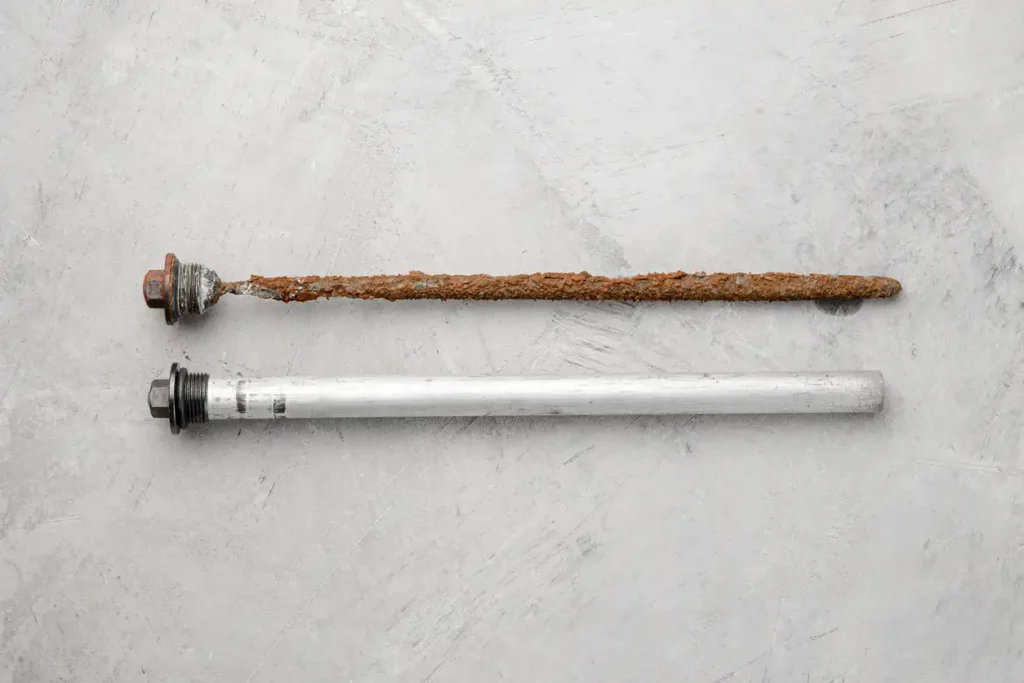
This reaction continues until the rod material is consumed. A fully depleted rod looks like a thin wire covered in calcium deposits with nothing left but the steel core.
At that point, the protection stops. The tank is now exposed to the same corrosive water that the rod absorbed for years.
Types of Anode Rods
What is a water heater anode made of? Most rods use one of three metals. Each has different performance characteristics.
Magnesium Anode Rods
Magnesium is the most reactive of the three. It offers the strongest protection and works best in soft water or water with low mineral content.
In hard water, magnesium rods deplete faster sometimes within 2 to 3 years. They’re also the most common type found in new water heaters from the factory.
Best for: Soft water areas, households that want maximum protection.
Aluminum Anode Rods
Aluminum rods are more durable than magnesium. They last longer in hard water environments and are less expensive to replace.
The downside: aluminum is a softer metal that can develop a coating of aluminum hydroxide over time. This white gel coating can slow the protective reaction if it builds up heavily.
Best for: Hard water areas, households looking for longer service intervals.
Zinc Anode Rods
Zinc rods are typically aluminum rods with a small percentage of zinc added, usually about 10%. The zinc addition helps control sulfur-related odors that some water heaters develop. If your hot water smells like rotten eggs, a zinc/aluminum rod is worth trying.
Pure zinc rods are rare. Most “zinc” rods are aluminum-zinc alloys.
Best for: Households with sulfur smell in hot water, well water systems.
Powered (Impressed Current) Anode Rods
These are a newer option. Instead of using a sacrificial metal, powered rods use a small electrical current to create the same protective effect. They don’t deplete, they last indefinitely as long as the power source works.
What is an anode rod of this type worth? Powered rods cost $50 to $150 upfront but eliminate the need for periodic replacement. They’re a good option for hard-to-access water heaters where rod replacement is difficult.
Signs Your Anode Rod Needs Replacement
Most homeowners never check the anode rod until there’s already a problem. These are the signs the rod is depleted or close to it:
Rotten egg smell from hot water. Sulfur bacteria thrive when there’s no active anode rod controlling the water chemistry. A strong sulfur smell in hot water but not cold is a classic sign the rod is gone or heavily depleted.
Rusty or discolored hot water. When the tank itself starts corroding, rust particles enter the water supply. Orange or brown tint in hot water is a warning that the tank lining is failing.
Popping or rumbling sounds during heating. Sediment builds up at the tank bottom when water chemistry isn’t controlled. Overheating of that sediment creates the familiar popping noise. A failing rod accelerates sediment buildup.
Hot water tastes metallic. Metal particles from corroding tank walls show up as a metallic taste or smell in hot water.
Water heater older than 6 years with no rod inspection. If the heater has never been serviced and is 6 or more years old, the rod is likely at or near depletion regardless of visible symptoms.
You can read about: What Is an Expansion Tank
How Often Should an Anode Rod Be Replaced?
The standard recommendation is every 3 to 5 years for most households. But the real answer depends on your water quality and heater usage.
Soft water: Replace every 4 to 5 years. Soft water is less corrosive, so rods last longer.
Hard water: Replace every 2 to 3 years. Hard water depletes rods faster because of the higher mineral content.
Well water: Inspect annually. Well water chemistry varies widely and can be aggressive toward both the rod and the tank.
High-use households: More hot water usage means the rod is exposed to more corrosive water volume. Check every 2 years.
How to check the rod yourself:
- Turn off the power or gas to the heater and the cold water inlet
- Locate the rod it screws into the top of the tank, often under a plastic cap
- Use a 1-1/16 inch socket wrench to unscrew it
- If the rod is thinner than 1/2 inch diameter, heavily coated in calcium, or down to the steel core wire replace it immediately
Replacement rods cost $20 to $80 depending on type and length. Installation takes 20 to 30 minutes with the right tools.
How to Choose the Right Replacement Anode Rod
Not every rod fits every heater. Here’s what to confirm before buying:
Length and diameter. Rods come in standard lengths of 44 and 54 inches. Combo rods (two sections joined by a flexible link) work in heaters with low overhead clearance. Match the diameter to the existing hex fitting usually 1-1/16 inches.
Material. Match the rod type to your water quality. Hard water gets aluminum. Soft water gets magnesium. The sulfur odor problem gets zinc/aluminum.
Brand compatibility. Some manufacturers use proprietary fitting sizes. Check the heater’s manual or look up the model number before ordering.
Benefits of a Healthy Anode Rod
Keeping the rod fresh delivers direct, measurable benefits:
Extended tank life. A water heater with a maintained rod lasts 10 to 15 years. One without can fail in 4 to 6. That’s $800 to $2,000 in replacement cost and labor avoided.
Clean hot water. An active rod controls water chemistry and suppresses sulfur bacteria. Hot water stays clear and odor-free.
Lower repair costs. A depleted rod leads to tank corrosion, sediment buildup, and eventually tank failure. Every one of those stages involves repair or replacement costs that a $30 rod replacement would have prevented.
Maintains manufacturer warranty. Most water heater warranties require routine maintenance — including anode rod replacement to stay valid. Ignoring the rod can void coverage on a heater that fails early.
Improved heating efficiency. Sediment buildup from a failing rod insulates the heating element at the bottom of the tank. The heater works harder and uses more energy. A clean tank with a healthy rod runs at full efficiency.
Can a Water Heater Operate Without an Anode Rod?
Technically yes but not safely, and not for long.
Removing the rod or letting it deplete entirely exposes the tank interior to direct corrosion. How quickly the tank fails depends on water chemistry, temperature setting, and usage. In aggressive water (high mineral content, low pH), a tank without rod protection can develop rust through the walls in 2 to 3 years.
Some homeowners remove the rod intentionally to reduce sulfur smell, a misguided fix that trades a minor odor issue for a tank that corrodes rapidly. The right solution is switching to a zinc/aluminum rod or a powered rod, not removing protection entirely.
There is one exception: tankless water heaters. These don’t store water, so there’s no standing tank to protect. What is an anode rod needed for in a tankless unit? It isn’t that tankless heaters don’t use them.
How Much Does Anode Rod Replacement Cost?
This is a question homeowners ask once they know the rod needs changing.
DIY replacement: $20 to $80 for the rod itself. Tools needed: a 1-1/16 inch socket, a breaker bar, and plumber’s tape. Time: 20 to 30 minutes for an accessible heater.
Professional replacement: $100 to $200 total including parts and labor. A plumber handles the rod check, replacement, and a basic heater inspection at the same visit.
Annual water heater servicing from a licensed plumber typically includes anode rod inspection along with tank flushing and T&P valve testing all in one visit for $80 to $150.
Final Thoughts
What does an anode rod do? It protects your water heater from the inside out day after day, silently sacrificing itself so the tank walls stay intact. It’s one of the cheapest maintenance items in your home and one of the most overlooked.
Check it every 3 years. Replace it when it’s depleted. That one habit extends your water heater’s life by years and keeps your hot water clean and reliable.
If your water heater is overdue for a service visit or if you’re hearing noises, smelling sulfur, or noticing discolored water get it inspected before a worn rod turns into a failed tank.
For homeowners the services of Water Heater Installation in Eagle Rock is worth calling for full water heater care. Derks Plumbing provides licensed inspections, anode rod replacement, tank flushing, and complete water heater installation with upfront pricing and a workmanship guarantee on every visit.

FAQs
Q: What does an anode rod do if my water smells like sulfur?
A depleted or magnesium rod can allow sulfur bacteria to grow in the tank. Switching to a zinc/aluminum anode rod the zinc content suppresses sulfur-producing bacteria and eliminates the odor at the source.
Q: What is a water heater anode rod made of?
Most are made from magnesium, aluminum, or a zinc/aluminum alloy. Each corrodes more readily than the steel tank, drawing corrosive activity away from the tank walls. Powered rods use an electrical current instead of a sacrificial metal.
Q: How do I know if my anode rod is still good?
Pull it out and inspect it. If it’s still close to its original diameter (about 1 inch) with minimal coating, it’s fine. If it’s thinner than 1/2 inch, heavily calcified, or you can see the steel core wire replace it immediately.
Q: What is an anode rod replacement cost in 2026?
The rod itself costs $20 to $80. Professional installation including a basic heater inspection runs $100 to $200. It’s one of the most cost-effective maintenance items for extending water heater life.
Q: Can I use any anode rod in my water heater?
Not exactly. Match the rod length and hex fitting size to your heater’s specs. Choose the material based on your water type magnesium for soft water, aluminum for hard water, zinc/aluminum if you have sulfur odor. Check your heater’s manual or model number before purchasing.




