Most homeowners never think about their plumbing until something goes wrong. But behind every wall in your home runs a system of pipes that quietly handles every flush, every drain, and every drop of wastewater 24 hours a day. The plumbing stack is the backbone of that system.
So what is a plumbing stack exactly? It is the main vertical pipe that runs from your basement or foundation all the way up through your roof. Every drain in your home sinks, toilets, tubs, and showers connects to it. This guide explains how it works, what can go wrong, and when to call a plumber.
What Is a Plumbing Stack?
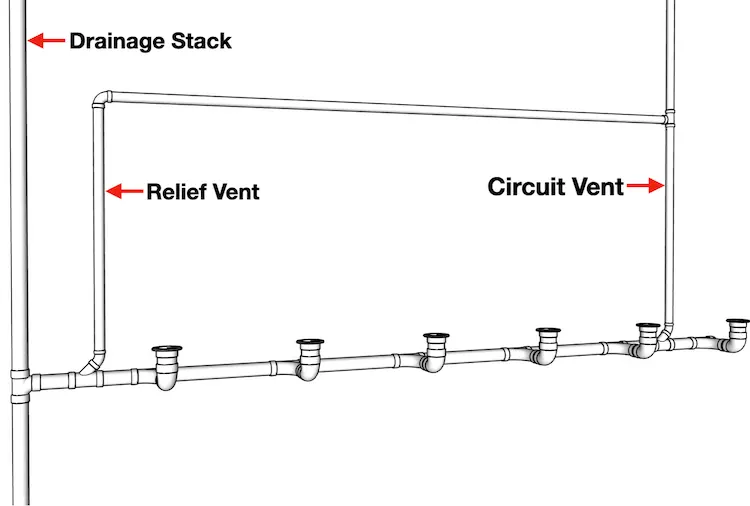
A plumbing stack is a large vertical pipe that serves as the central drainage and venting system in your home. It collects wastewater from every fixture on every floor and carries it down to the main sewer line beneath your foundation.
The stack pipe typically runs straight up through the interior of the building through walls, floors, and the roof. At the bottom, it connects to the building drain that leads to the city sewer or your septic system. At the top, it opens above the roofline as a vent pipe that lets air into the system.
Without a functioning plumbing stack, your entire drainage system fails. Toilets would not flush properly. Sinks would drain slowly or not at all. You would smell sewer gas inside the home. Every fixture depends on this single pipe to function correctly.
Most homes have one main stack. Larger homes or multi-bathroom properties sometimes have a secondary stack for a far-end bathroom or kitchen that is too distant from the main line.
Why Is a Plumbing Stack Important?
The stack does two critical jobs at the same time and both have to work together.
Job 1: Drain wastewater. Every time you flush a toilet or drain a sink, the wastewater drops down through the stack by gravity. The pipe is sized large enough typically 3 to 4 inches in diameter to handle the combined flow from all fixtures simultaneously.
Job 2: Vent the system. This is the part most homeowners do not know about. As water drains down the stack, it creates negative air pressure behind it. Without a way to equalize that pressure, the water would siphon the P-traps dry. P-traps are the curved sections of pipe under your sinks and behind your toilets that hold a small amount of water to block sewer gas. If they dry out, sewer gas enters your home directly.
The stack pipe extends above the roof to let outside air into the system continuously. This keeps pressure balanced so water drains smoothly and traps stay full. It is the reason your toilet flushes quietly and your sink does not gurgle.
How Does a Plumbing Stack Work?
Picture your home from the side as a cross-section. The plumbing stack runs vertically through the center, like a spine.
Every fixture drain the toilet in the upstairs bathroom, the kitchen sink on the ground floor, the utility tub in the basement connects to the stack through a horizontal branch drain. These branch drains slope slightly downward toward the stack so gravity moves the waste without pumps.
When you flush a toilet upstairs, the waste drops down the stack at speed. The vertical momentum carries it all the way to the building drain at the bottom, which slopes toward the street. Simultaneously, air enters through the vent at the top of the roof stack, preventing any vacuum from forming behind the falling water.
The whole system runs on two forces only: gravity and air pressure. No motors, no pumps, no power required. When it works, it is invisible. When something blocks the airflow or the drain path, every fixture in the house feels it.
Types of Plumbing Stacks and Their Functions
Soil Stack
The soil stack is the main drain stack that carries human waste from toilets. It is the largest pipe in the system usually 4 inches in diameter in residential homes because it needs to handle solid waste without blocking. The soil stack connects directly to the sewer main.
Waste Stack
A waste stack carries gray water only meaning wastewater from sinks, showers, bathtubs, dishwashers, and washing machines. It does not carry toilet waste. In older homes, waste stacks were sometimes separate from the soil stack. In most modern homes, they combine into one main stack.
Vent Stack
The vent stack is the upper portion of the main stack that extends above the roof. Its only job is to let air in. It has no wastewater running through it it is purely for pressure equalization. In some configurations, a separate vent pipe called a dry stack runs from fixtures to the roof without connecting to a drain.
Stack Vent
A stack vent is different from a vent stack. It is the top section of the main soil or waste stack, above the highest drain connection, that continues up through the roof. It does double duty part of it carries waste, and the upper section vents the system.
Understanding what is a stack in plumbing means understanding that “stack” refers to the complete vertical assembly not just one section.
Components of a Plumbing Stack System
The stack plumbing system has several key components that work together:
Stack pipe: The main vertical pipe. In older homes, this is cast iron. In homes built after the 1970s, it is typically ABS or PVC plastic.
Branch drains: Horizontal pipes that connect individual fixtures to the stack. Each branch drain slopes at a minimum 1/4 inch per foot toward the stack.
P-traps: The curved pipe sections under sinks and at the base of other fixtures. They hold water to block sewer gas and connect to branch drains.
Cleanout: A removable cap installed at the base of the stack usually near floor level in the basement or utility room. Plumbers use this to access the stack for blockage clearing without removing walls.
Roof vent: The open pipe extending above the roof. Covered with a screen to keep debris and animals out but open to the atmosphere at all times.
Building drain: The horizontal pipe at the bottom of the stack that carries all waste from the building to the sewer main under the yard.
Where Is the Plumbing Stack Located?
In most homes, the main stack runs inside an interior wall not an exterior wall. This is intentional. Interior walls stay warmer, reducing the risk of freezing in cold climates. The stack is usually positioned near the center of the home where it can collect drains from multiple bathrooms efficiently.
You can often identify the stack location from outside by looking at your roofline. The vent pipe sticking up through the roof is the top of your main stack. Directly below that point, running straight down through the wall to your basement or crawl space, is the stack.
In older two-story homes, the main bathroom is almost always positioned directly above the ground-floor bathroom. The shared wall between them contains the stack both floors drain into the same pipe.
How Long Does a Plumbing Stack Last?
Stack pipe lifespan depends entirely on the material.
Cast iron: Found in homes built before the 1970s. Cast iron stacks last 50 to 100 years under normal conditions. The main failure mode is rust and corrosion from the inside especially in areas with acidic water or high mineral content. Hairline cracks from age are common in stacks over 60 years old.
ABS plastic: Used from the 1970s through the 1990s. ABS stacks typically last 50 to 70 years. They are resistant to rust but can become brittle with age, particularly in homes that went through temperature extremes over decades.
PVC plastic: The current standard. PVC stacks last 70 to 100 years under normal use. They are chemical-resistant, smooth on the inside (which reduces buildup), and structurally stable across a wide temperature range.
Common Plumbing Stack Problems and Maintenance Tips
Blockages
The most frequent stack plumbing problem is a partial or full blockage. A slow-building clog in the main stack affects every fixture in the house at once unlike a single sink drain clog that affects only that fixture.
Common causes: wipes labeled as flushable (they are not), paper towel, feminine hygiene products, grease buildup in kitchen branch lines, and in older cast iron stacks rust scale that flakes off the interior walls and accumulates at bends.
Maintenance tip: Have the stack snaked and inspected every 3 to 5 years if you have cast iron plumbing or a history of slow drains. Annual enzyme treatments poured down the main cleanout keep organic buildup from accumulating.
Vent Blockages
The roof vent can become blocked by leaves, bird nests, or in rare cases ice in extreme cold. A blocked vent causes the same symptoms as a drain blockage slow drains and gurgling sounds but from the top of the system rather than the bottom.
Maintenance tip: Have the roof vent inspected annually. A plumber can clear it with a snake from the rooftop or from the cleanout at the base.
Root Intrusion
Tree roots from nearby landscaping can crack the building drain at the base of the stack and grow into the pipe. Roots follow water and moisture. Your drain line is a permanent source of both. Roots inside the pipe catch toilet paper and waste, creating a mass blockage.
Maintenance tip: Know the location of trees within 20 feet of your home’s foundation. Have a camera inspection done if you have mature trees and recurring slow drains.
Cast Iron Corrosion
Older cast iron stacks corrode from the inside over decades. The rust creates rough interior surfaces that catch debris. Eventually the pipe wall thins to the point of pinhole leaks or full section failure.
Maintenance tip: If your home is 40 or more years old and has never had a stack inspection, book a camera inspection. Catching corrosion before it fails prevents water damage inside walls.
Signs Your Plumbing Stack May Have a Problem
Watch for these symptoms they are the most reliable early warnings:
- Multiple drains in the house running slow simultaneously
- Gurgling or bubbling sounds from toilets when you run a sink nearby
- Sewer gas smell inside the home especially near floor drains or infrequently used toilets
- Water backing up in the tub or shower when you flush the toilet
- A toilet that takes multiple flushes to clear solid waste
- Wet spots on walls near where the stack runs, with no obvious supply line leak nearby
Any one of these alone might be a minor issue. Two or more together almost always point to the stack.
Can a Plumbing Stack Be Repaired?
Yes in most cases, stack problems are repairable without replacing the entire pipe.
Partial blockages are cleared with a professional drain snake or hydro-jetting. Hydro-jetting blasts water at 3,500 PSI through the pipe, stripping buildup from the interior walls completely. It is the most thorough method for cast iron stacks with scale buildup.
Vent blockages are cleared from the roof or from the cleanout no wall opening required.
Pinhole leaks in cast iron can be repaired with epoxy pipe lining, a trenchless technique that coats the interior of the pipe with a new structural layer without opening walls.
Root intrusion requires cutting the roots with a specialized auger, followed by camera confirmation that the pipe is clear. If the root damage caused a crack, repair or section replacement may be needed.
Section replacement when a specific segment of the stack is damaged involves opening the wall at that location, cutting out the bad section, and replacing it. Modern plumbers can couple new PVC sections to existing cast iron using no-hub couplings, which creates a tight mechanical seal without welding.
You can read about: what does fip mean in plumbing
When Does a Plumbing Stack Need Replacement?
Full stack replacement becomes necessary when:
- Cast iron corrosion has thinned the pipe walls beyond safe repair
- Multiple sections have failed or are leaking simultaneously
- Root intrusion has caused structural pipe damage over a long section
- The stack is over 70 years old and camera inspection shows deterioration throughout
- Recurring blockages return within weeks of professional clearing indicating the pipe interior is too rough and compromised for cleaning to hold
Full stack replacement in a two-story home typically takes 2 to 3 days. The wall is opened at strategic points, the old pipe is removed in sections, and new PVC is installed with all branch connections re-made. The cost ranges from $3,000 to $8,000 depending on home size and pipe access.
How Professionals Inspect Plumbing Stacks
A proper stack inspection uses a drain camera, a flexible cable with a waterproof camera head that transmits live video to a monitor. The plumber feeds the camera down the stack through the roof vent or through the cleanout at the base.
The camera shows:
- Interior pipe condition rust, scale, cracks, and corrosion
- Root intrusion at the building drain
- Offset joints where pipe sections have shifted
- Buildup patterns that indicate recurring blockage risks
- Any section where the pipe wall has thinned significantly
After the inspection, the plumber provides footage and a written assessment with recommended action. This is not guesswork; the camera shows exactly what is in the pipe. Skip any plumber who recommends full replacement without offering camera inspection first.
Preventing Plumbing Stack Problems
Most stack problems are preventable with consistent habits:
Never flush wipes — ever. Even products labeled “flushable” do not break down in pipes the way toilet paper does. They accumulate at bends and connections and build blockages over months.
Keep grease out of kitchen drains. Cooking grease coats the interior of branch lines and eventually reaches the stack. It combines with soap and food particles to create hard deposits. Dispose of grease in a container and throw it in the trash.
Run water after using any drain. Running cold water for 30 seconds after using the kitchen disposal or washing dishes helps push debris fully into the stack and down to the sewer, rather than leaving it sitting in the branch drain.
Have a drain camera inspection every 5 years if your home is over 25 years old. This catches developing problems before they become emergencies.
Mark your cleanout location. Know where your main stack cleanout is. If a plumber arrives for an emergency call, a known cleanout location saves 20 minutes and reduces the emergency service cost.
Professional Plumbing Stack Services
Stack problems are not DIY territory. The pipe runs through walls, floors, and your roof. Accessing it requires professional tools, drain cameras, hydro-jets, pipe lining equipment, and no-hub coupling systems that most homeowners never encounter.
Derks Plumbing provides complete Plumbing Services in Los Angeles including drain camera inspections, hydro-jetting, stack blockage clearing, pipe lining, and full stack replacement for homes throughout the LA area. Our technicians carry drain cameras on every service call so we diagnose accurately before recommending any repair.
If your drains are gurgling, multiple fixtures are running slow, or you are getting sewer smells inside the house, those are stack signals. Contact us before a partial blockage becomes a complete backup or a slow leak becomes water damage inside your walls.

Conclusion
What is a plumbing stack? It is the central vertical pipe that connects every drain in your home to the sewer main and vents the entire system through the roof. It runs on gravity and air pressure alone, and when it works correctly it is completely invisible. When something goes wrong, every fixture in the house feels it at once.
Understanding your stack plumbing helps you catch warning signs early gurgling drains, slow fixtures across multiple rooms, and sewer smells are all signals worth taking seriously. Most stack problems are repairable without a full replacement. A camera inspection is always the right first step.
Frequently Asked Questions
What is a plumbing stack and how is it different from a regular drain pipe?
A regular drain pipe is a branch line that connects one fixture to the main system. A plumbing stack is the main vertical pipe that all branch drains connect to. It runs from the foundation to the roof and handles drainage and venting for the entire house simultaneously.
What is a stack in plumbing for a two-story home?
In a two-story home, the stack runs vertically from the basement through the first floor, second floor, and up through the roof. Branch drains from bathrooms and kitchens on each floor connect to it at their respective levels. The same pipe handles waste from every floor by gravity.
How do I know if my plumbing stack is clogged vs a single drain clog?
A single clogged drain affects one fixture. A stack problem affects multiple fixtures at the same time: toilets that gurgle when you run a sink, tubs that back up when you flush, or all drains running slow simultaneously. If more than one fixture is affected, the issue is in the main stack.
How long does a cast iron waste stack last?
Cast iron stacks typically last 50 to 100 years. The main failure mode is interior corrosion, which roughens the pipe surface, causes scale buildup, and eventually leads to pinhole leaks or full section failure. A camera inspection tells you the exact condition of your cast iron stack regardless of age.
Can I replace a cast iron stack pipe with PVC myself?
This is not a DIY project for most homeowners. It requires opening walls at multiple levels, safely removing heavy cast iron sections, making proper no-hub couplings between old and new pipe, and re-connecting all branch drains. A mistake creates hidden leaks inside walls that cause mold and structural damage. Licensed plumbers complete this work safely and with proper permits.




