Ever stared at a pipe fitting and had no idea what “FIP” stamped on it means? You’re not alone. Most homeowners run into this term during a repair or a trip to the hardware store. It sounds technical, but it’s pretty simple once you know what to look for.
So, what does fip mean in plumbing? FIP stands for Female Iron Pipe. It’s a type of threaded pipe fitting where the threads are on the inside. Think of it like a nut that screws around a bolt. That’s exactly how FIP works with male pipe threads.
What Does FIP Mean in Plumbing?
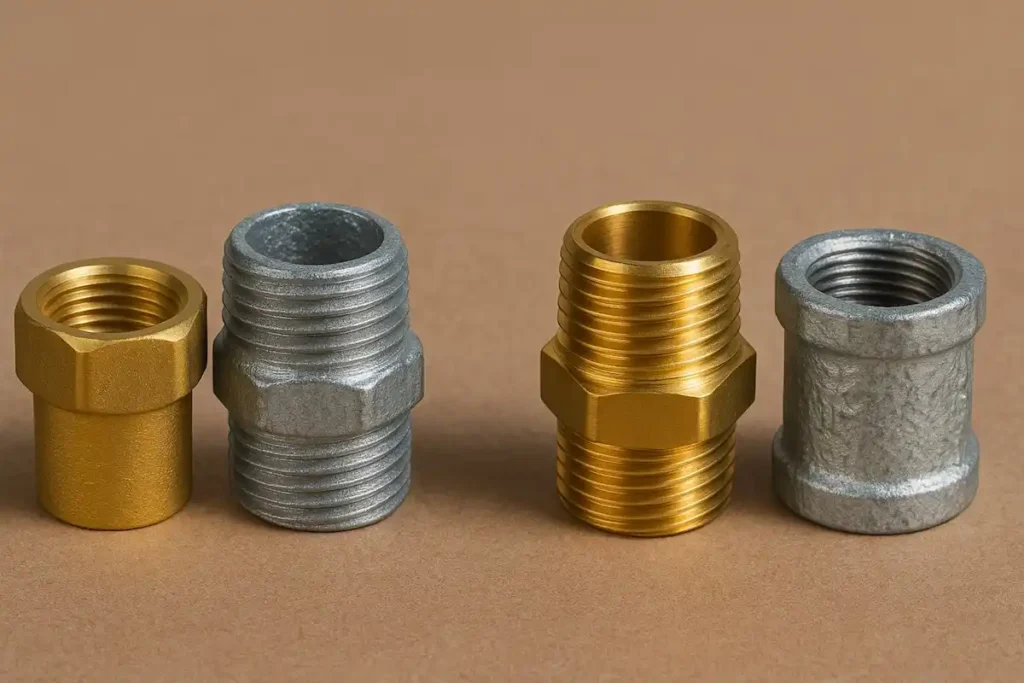
FIP means Female Iron Pipe. It refers to a fitting with internal threads. These threads sit on the inside of the fitting and wrap around the outside threads of a male pipe.
When plumbers talk about FIP plumbing meaning, they’re referring to this internal thread design. The “iron pipe” part comes from the original use of iron pipes in older plumbing systems. Today, FIP fittings are made from brass, stainless steel, PVC, and other materials. But the name stuck.
So when you’re shopping for parts and see “FIP” on the label, it simply means the threads are inside the fitting.
Here’s a quick breakdown:
- FIP = Female Iron Pipe = threads on the inside
- MIP = Male Iron Pipe = threads on the outside
These two work together. MIP goes inside FIP. Just like a bolt screws into a nut.
You can read about: What Is PRV in Plumbing
Real-Life Example: Learning the Hard Way
A homeowner in Los Angeles once tried replacing a leaky valve under the kitchen sink. He grabbed the first fitting that looked right at the hardware store. When he got home, he realized the threads didn’t match. The new fitting had external threads. The pipe he needed to connect to had internal threads.
He had bought MIP when he needed FIP.
After a second trip to the store, he got the right part. What does fip mean in plumbing? He now knows. It means the threads are on the inside. That simple detail cost him an extra hour and another trip to the store.
This happens all the time. Knowing the difference between FIP and MIP before you shop saves time and frustration.
Why Understanding FIP Matters
Using the wrong fitting can cause leaks. A bad connection can lead to water damage, mold, or pressure loss. None of those are cheap to fix.
Understanding FIP plumbing meaning helps you:
- Buy the right parts the first time
- Avoid leaky connections
- Communicate clearly with a plumber
- Save money on callbacks and repairs
If you’re doing a DIY repair, this knowledge is basic but critical. If you’re hiring a plumber, knowing these terms helps you follow the conversation and ask better questions.
Common Places You’ll Find FIP Plumbing Fittings
FIP fittings show up in many spots around the house. Here are the most common places:
Under the kitchen sink — Shutoff valves and supply lines often use FIP connections.
Bathroom faucet supply lines — Most bathroom faucets connect to shutoff valves using FIP threads.
Water heaters — The hot and cold inlet/outlet ports on most water heaters are FIP.
Irrigation systems — Garden hose valves and irrigation manifolds often use FIP fittings.
Washing machine hookups — Supply hoses for washers typically thread into FIP ports on the wall.
Outdoor hose bibs — Many hose bibs are installed using FIP connections to the main supply pipe.
If you’re working on any of these areas, check whether the connection is FIP or MIP before buying parts.
FIP vs. NPT: Are They the Same?
This is a question that trips a lot of people up. So let’s clear it up.
NPT stands for National Pipe Taper. It’s a standard for how pipe threads are shaped and sized in the United States. The threads on NPT fittings are tapered, meaning they get slightly narrower toward the end. This taper helps create a tight seal as you tighten the fitting.
So where does FIP fit in?
FIP fittings follow the NPT standard. They use the same tapered thread design. The difference is just direction: FIP has the threads on the inside, while MIP has them on the outside. Both are NPT-compliant.
Think of it this way:
- NPT = the thread standard (like ISO or metric standards)
- FIP = female version of NPT threads
- MIP = male version of NPT threads
So FIP and NPT are related, but not exactly the same thing. FIP is a subset of NPT. When a product says “NPT threads,” check whether it’s FIP or MIP before assuming compatibility.
Quick Tip: Use Teflon Tape
Whenever you’re connecting FIP threads to MIP threads, use Teflon tape. It’s also called PTFE tape or thread seal tape.
Wrap the tape around the male threads before screwing them in. Go clockwise, and wrap two to three times. This fills in any tiny gaps between the threads and prevents leaks.
Skipping Teflon tape is one of the most common DIY plumbing mistakes. Even a small leak at a threaded connection can cause big problems over time.
Is FIP Only Used in Metal Pipes?
No. Despite the name “Iron Pipe,” FIP fittings are used with many types of pipe material today.
The term comes from history. When these threading standards were first developed, most pipes were made of iron. The name never changed, even as the industry moved to newer materials.
Today, you’ll find FIP fittings made from:
- Brass — most common for water supply applications
- Stainless steel — used in high-pressure or corrosive environments
- PVC — used in drain and irrigation systems
- Chrome-plated brass — common in decorative or visible plumbing
So FIP is more of a thread type than a material type. The “iron” in the name is just a legacy from older times.
What Sizes Do FIP Fittings Come In?
FIP fittings come in standard sizes. The most common ones you’ll find at a hardware store are:
| FIP Size | Common Uses |
| 1/4 inch | Ice maker lines, small appliance connections |
| 3/8 inch | Faucet supply lines, toilet fill valves |
| 1/2 inch | Main water supply connections, hose bibs |
| 3/4 inch | Water heater inlets/outlets, irrigation mains |
| 1 inch | Commercial applications, main service lines |
The size listed on an FIP fitting refers to the nominal pipe size, not the actual measured diameter of the fitting. This is a common point of confusion. If you measure a 1/2-inch FIP fitting with a ruler, it won’t measure exactly 1/2 inch. That’s normal. Always match the size to the existing pipe size, not to a ruler measurement.
How to Identify an FIP Fitting
You can identify an FIP fitting without looking at the label. Here’s how:
- Look inside the fitting — If you see threads on the inside, it’s FIP.
- Check the label — FIP, FPT (Female Pipe Thread), or FNPT will be printed on the packaging.
- Try to thread something in — FIP accepts male threads from the outside.
One more thing: FIP and FPT (Female Pipe Thread) mean the same thing. Some manufacturers use FPT, others use FIP. Both refer to internal NPT threads. So don’t let the different labels confuse you.
When Should You Use FIP Plumbing?
Use FIP fittings when you need to connect a male-threaded pipe or fitting to your system. If a pipe has external threads (MIP), you need an FIP fitting to connect to it.
Use FIP when:
- Replacing a shutoff valve under a sink
- Connecting supply lines to a water heater
- Installing a new hose bib or outdoor valve
- Adding a tee or elbow to an existing threaded pipe
- Connecting a pressure gauge or filter housing to a supply line
Avoid mixing thread standards. Don’t try to connect NPT threads to BSP (British Standard Pipe) threads. They look similar but don’t seal properly. Always verify the thread standard before connecting.
You can read about: How Much to Fix Burst Pipe
FIP vs. Compression Fittings: What’s the Difference?
Since we’re on the topic, it helps to know one more fitting type: compression fittings.
Compression fittings don’t use threads at all. Instead, a small ring (called a ferrule) compresses around the pipe as you tighten a nut. This creates a watertight seal without threading.
FIP fittings use threads. Compression fittings use compression force. Here’s when to choose each:
| FIP Fittings | Compression Fittings |
| Best for rigid pipe connections | Best for soft copper or plastic tubing |
| Requires thread sealant (Teflon tape) | No sealant needed |
| Permanent or semi-permanent | Easy to remove and reuse |
| Common on valves and appliances | Common on faucet supply lines |
Both are used in residential plumbing. Knowing the difference helps you pick the right part quickly.
Final Thoughts
FIP is one of those plumbing terms that sounds more complicated than it is. It simply means the threads are on the inside of the fitting. Match it with a male-threaded (MIP) pipe, add some Teflon tape, and you’ve got a solid connection.
Whether you’re a homeowner doing a simple fix or someone who wants to understand a plumber’s quote better, knowing what FIP means saves you time and money.
If you’re dealing with a tricky plumbing situation or just want the job done right the first time, the team at Derks Plumbing is here to help. We offer trusted Plumbing Services In Los Angeles for both homes and businesses. From simple valve replacements to full pipe system work, our licensed plumbers handle it all.
Don’t let confusing fittings slow you down. Call Derks Plumbing today.

FAQs
What does FIP stand for in plumbing?
FIP stands for Female Iron Pipe. It describes a fitting with threads on the inside that accepts a male-threaded pipe or fitting.
What is FIP in plumbing, and how is it different from MIP?
FIP has internal threads. MIP (Male Iron Pipe) has external threads. FIP fits over MIP, just like a nut over a bolt.
Is FIP the same as NPT?
Not exactly. NPT is the thread standard. FIP is the female version of NPT. Both follow the same taper, but FIP specifically refers to the fitting with internal threads.
Can I use FIP fittings with plastic pipes?
Yes. FIP fittings are made in PVC and other plastics. The name “Iron Pipe” only reflects the historical origin, not the material.
What size FIP fitting do I need?
Match the FIP fitting size to your existing pipe’s nominal size. The most common residential sizes are 1/2 inch and 3/4 inch.
Do I need Teflon tape with FIP fittings?
Yes. Always wrap Teflon tape around the male threads before connecting to an FIP fitting. This prevents leaks at the joint.
What does FPT mean? Is it the same as FIP?
Yes. FPT (Female Pipe Thread) and FIP (Female Iron Pipe) mean the same thing. Both refer to a fitting with internal NPT threads.




