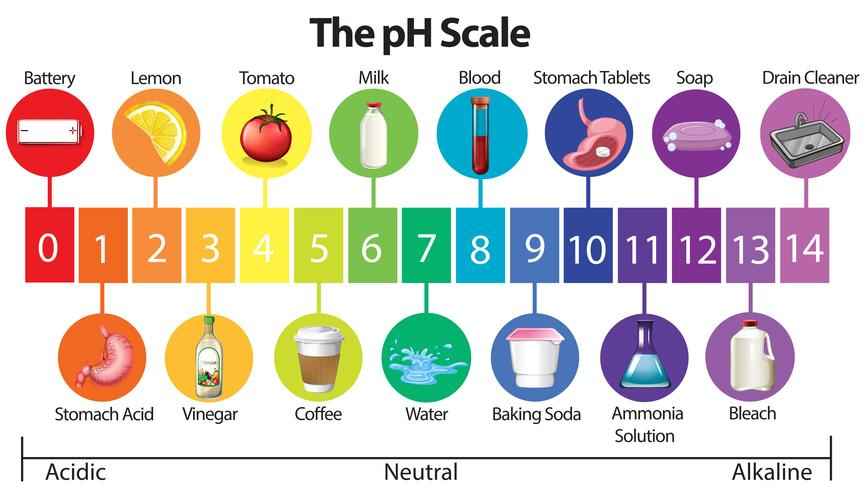
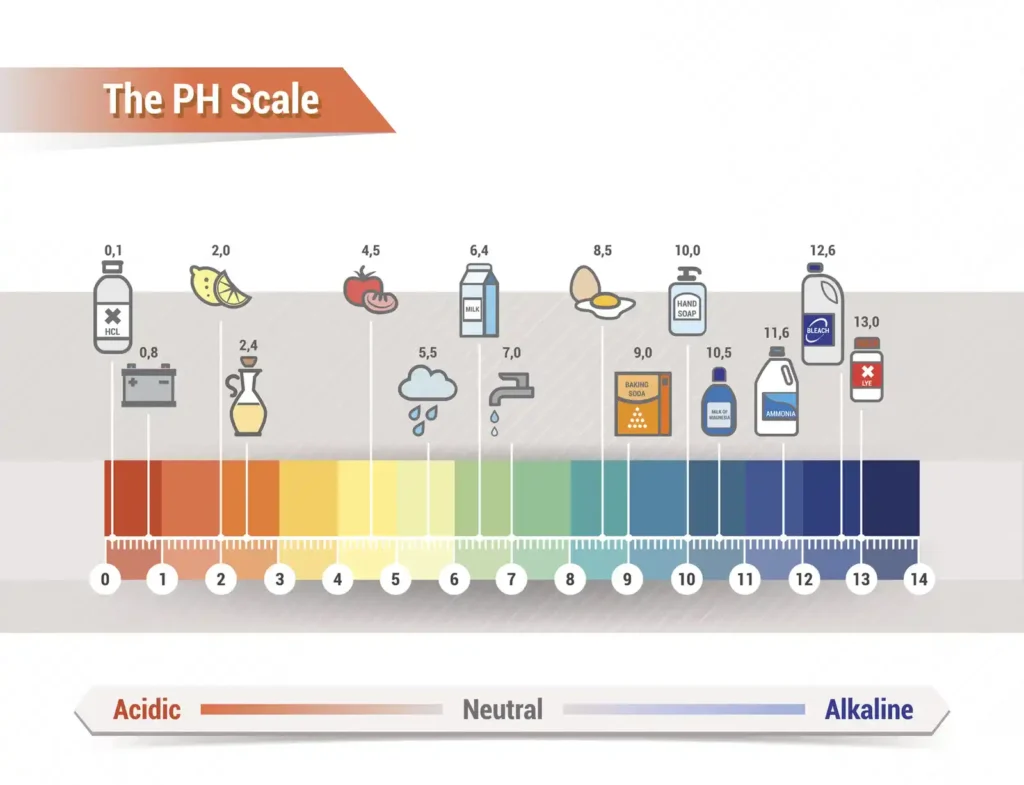
How much pH does drain cleaner have? Most strong chemical drain cleaners are highly alkaline and can have a pH in the upper range of the pH scale, while some acid-based drain cleaners can have a very low pH. The exact drain cleaner pH depends on the product’s ingredients, concentration, and formulation.The pH scale generally ranges from 0 to 14. A pH of 7 is neutral, numbers below 7 are acidic, and numbers above 7 are alkaline.
Many common chemical drain cleaners use strong alkaline ingredients such as sodium hydroxide or potassium hydroxide to help break down organic clog material.However, not every drain cleaner has the same pH. Some products are acidic, while enzyme-based drain treatments work differently and may be closer to neutral. For that reason, the product label and manufacturer information are the best sources for determining the specific drain cleaner pH level.
How Much pH Does Drain Cleaner Have?
There is no single pH value for every drain cleaner.
Many strong alkaline drain cleaners can fall around pH 12 to 14, while some strong acid-based products can fall around pH 0 to 2. Enzyme-based drain cleaners generally use a different cleaning process and may not have an extremely high or low pH.
The exact drain cleaner pH level depends on the product’s formulation. Ingredients such as sodium hydroxide and potassium hydroxide are commonly used in alkaline drain cleaners. Some other products use acids such as sulfuric acid or hydrochloric acid.
Because formulas vary, do not assume that every drain opener has a pH of 14 or that every product works in the same way.
The safest way to determine the pH of a particular drain cleaner is to check the manufacturer’s product information or Safety Data Sheet when available.
It is also important to remember that pH does not tell the entire safety story. Concentration, chemical ingredients, contact time, temperature, and plumbing material can all affect how a product behaves.
Is Drain Cleaner an Acid or Base?
Drain cleaner can be either an acid or a base, depending on the formulation.
Many common chemical drain cleaners are strongly alkaline. They may contain ingredients such as sodium hydroxide, also called lye or caustic soda, or potassium hydroxide. These strong bases can help break down materials such as grease, hair, and other organic debris.
Some drain cleaners use strong acids instead. Sulfuric acid and hydrochloric acid are examples of acidic ingredients that can be found in certain drain-cleaning products.
There are also enzyme-based drain treatments that do not rely on extremely acidic or alkaline chemistry. They use enzymes or microorganisms to break down certain organic material over time.
So, if you are asking is drain cleaner an acid or base, the correct answer is that it depends on the specific product.
How Does pH Affect Drain Cleaner?
The pH of a drain cleaner is important because it tells you whether the product is strongly acidic or alkaline.
A product with a pH close to 7 is relatively neutral. A product with a pH much higher than 7 is strongly alkaline, while a product with a pH much lower than 7 is strongly acidic.
Strong alkaline cleaners can react with organic materials commonly found in drains. Some formulations can also generate heat during the cleaning process.
Strong acidic cleaners work through different chemical reactions and can also be highly corrosive.
This is why pH is not simply a measure of how “powerful” a drain cleaner is. A stronger chemical does not necessarily mean it is the right solution for every clog.
What Is the pH of Different Types of Drain Cleaners?
Different drain cleaners can have significantly different pH levels because they use different active ingredients.
Alkaline Drain Cleaners
Alkaline drain cleaners are common household chemical drain openers.
They often contain sodium hydroxide or potassium hydroxide. Strong alkaline formulations can reach the high end of the pH scale.
These products are commonly designed to work against organic materials such as hair, grease, and oils.
Because strong alkaline chemicals can be corrosive, they should always be used according to the manufacturer’s instructions.
Acid-Based Drain Cleaners
Acid-based drain cleaners use strong acids rather than alkaline ingredients.
Some formulations contain sulfuric acid or hydrochloric acid. These products can have a very low pH and may be highly corrosive.
They should not be treated like ordinary household cleaners. Contact with skin or eyes can cause serious chemical injuries.
If you are unsure whether a product is acidic, alkaline, or compatible with your plumbing, check the product label and safety information before using it.
Enzyme Drain Cleaners
Enzyme drain cleaners work differently from strong chemical drain openers.
They use enzymes or microorganisms to break down certain organic material gradually. They are generally intended for lighter buildup, slow drains, or routine maintenance rather than severe blockages.
Their pH varies by product, so it should not be assumed that every enzyme drain cleaner has the same pH.
What Ingredients Make Drain Cleaners Acidic or Alkaline?
The ingredients used in a drain cleaner largely determine its chemical properties.
Common alkaline ingredients include:
- Sodium hydroxide
- Potassium hydroxide
Common acidic ingredients can include:
- Sulfuric acid
- Hydrochloric acid
Sodium hydroxide is commonly known as lye or caustic soda. It is a strong base that can help break down organic materials.
Potassium hydroxide is another strong alkaline compound used in some drain-cleaning formulas.
On the acidic side, sulfuric acid and hydrochloric acid can provide a very low pH and strong corrosive action.
The important thing is to evaluate the complete product rather than assuming its pH from one ingredient alone. Concentration and the rest of the formulation also matter.
What Is the pH of Drano?
There is no single pH of Drano because Drano has different drain-cleaning products with different formulations.
For example, current manufacturer information for Drano Max Gel lists sodium hydroxide among its ingredients. Drano also provides specific safety and usage instructions for its individual products.
This means you should not assume that every Drano product has exactly the same chemical properties.
If you want to know the pH or chemical characteristics of a particular Drano product, check the information for that exact product rather than relying on a general number found online.
Can High-pH Drain Cleaner Damage Pipes?
A high-pH drain cleaner does not automatically damage every type of plumbing.
The potential risk depends on several factors, including:
- The chemical formulation
- Concentration
- Pipe material
- Contact time
- Temperature
- Condition of the plumbing
- Whether the product is used according to its instructions
Many commercial drain cleaners are designed for use with common plumbing materials when the manufacturer’s directions are followed.
However, repeated or improper use can create problems, particularly when the plumbing is old, damaged, or already weakened.
A chemical cleaner also cannot fix every type of blockage. If a solid object, damaged pipe, tree roots, or a deeper sewer problem is responsible for the blockage, changing the pH of the drain will not necessarily solve the underlying problem.
Can Drain Cleaner Damage PVC Pipes?
PVC is commonly used in residential plumbing, but you should not assume that every chemical drain cleaner is suitable for every PVC system.
Always check the manufacturer’s instructions for compatible plumbing materials.
Temperature can also matter because some chemical drain cleaners generate heat while reacting with water or clog material.
If you have older plumbing or are unsure what type of pipe is installed in your home, avoid guessing about chemical compatibility.
For a recurring blockage, mechanical drain cleaning can be a better approach because it physically removes the obstruction rather than repeatedly exposing the plumbing to chemicals.
Can You Mix Different Drain Cleaners?
Never mix different drain cleaners.
Combining chemical products can cause dangerous reactions, heat, splashing, or hazardous fumes.
You should also avoid combining drain cleaner with bleach, ammonia, toilet cleaner, or other household chemicals unless the manufacturer specifically states that the products are compatible.
If you have already used one drain cleaner, do not add another product because the first one did not work.
Tell a plumber that chemical cleaner was used before they work on the drain. This information is important because chemical residue may still be present inside the plumbing.
How to Use Chemical Drain Cleaner Safely
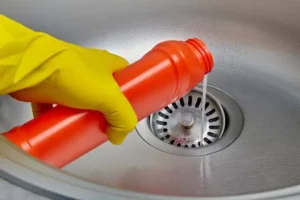
Always read the entire product label before using a chemical drain cleaner.
Basic safety precautions include:
- Wear the protective equipment recommended by the manufacturer.
- Keep the product away from your skin and eyes.
- Avoid leaning directly over the drain opening.
- Use only the recommended amount.
- Never mix it with another cleaning product.
- Keep children and pets away from the area.
- Follow the manufacturer’s instructions about plunging and flushing.
- Store the container securely after use.
More product does not necessarily mean a faster or better result. Using too much can increase chemical exposure without solving the actual blockage.
If the product contacts your eyes or skin, follow the first-aid instructions on the label and seek appropriate medical or poison-control guidance.
When Should You Avoid Chemical Drain Cleaners?
Chemical drain cleaners are not the right solution for every clogged drain.
You should be cautious about relying on them when:
- The same drain keeps clogging.
- Several drains are backing up.
- You suspect a sewer-line blockage.
- Tree roots may be involved.
- A solid object may be stuck in the pipe.
- The plumbing is damaged or weakened.
- You do not know what chemical is already inside the drain.
- You have already tried another chemical cleaner.
A recurring clog is often a sign that something more than surface buildup is causing the problem.
For example, if a kitchen drain repeatedly slows down after chemical treatment, there may be significant grease buildup deeper in the line. If multiple fixtures back up at the same time, the issue may be farther downstream in the drain or sewer system.
What Should You Do If Drain Cleaner Does Not Clear the Clog?
Do not keep pouring more drain cleaner into the pipe.
First, follow the product’s instructions regarding wait time and flushing. If the drain remains blocked, the next step may be mechanical cleaning or professional inspection.
A plumber can use equipment such as a drain snake or auger to physically remove certain blockages. For recurring or difficult problems, a camera inspection may help identify what is happening inside the pipe.
This can be more useful than repeatedly applying chemicals without knowing what is causing the blockage.
If you have already used a chemical drain cleaner, tell the plumber before work begins. They can take appropriate precautions when dealing with the drain.
Is Professional Drain Cleaning Safer Than Chemical Cleaners?
Professional drain cleaning can be a better option when a clog is severe, recurring, or difficult to identify.
Instead of relying only on chemical reactions, a plumber can assess the problem and select an appropriate cleaning method.
Mechanical drain-cleaning equipment can physically remove many types of blockages. For deeper problems, professional inspection can also help determine whether the issue involves the drain line or sewer system.
For homeowners who need Drain Cleaning in Eagle Rock, the team at Derks Plumbing can assess the drain problem and determine an appropriate cleaning approach.
Professional cleaning is particularly useful when a drain continues to clog after repeated DIY treatments or when multiple fixtures are affected.

Conclusion
How much pH does drain cleaner have? The answer depends on the product. Many chemical drain cleaners are strongly alkaline, while some drain cleaners use strong acids. Enzyme-based products use a different approach and may not depend on an extreme pH.
The drain cleaner pH level can affect how the product reacts with clog material and why it requires careful handling. However, a high or low pH does not mean the product is suitable for every blockage or every plumbing system.
Never mix drain cleaners, use more than the label recommends, or repeatedly pour chemicals into a drain that remains blocked.
If a drain is severely clogged, keeps backing up, or does not respond to appropriate treatment, professional cleaning can help identify and remove the actual blockage.
FAQs
How much pH does drain cleaner have?
There is no single pH for every drain cleaner. Chemical drain cleaners can be strongly alkaline or acidic depending on their formulation, while enzyme-based products work differently.
What is the pH of drain cleaner?
The pH of drain cleaner varies by product and ingredients. Strong chemical formulations can be far from neutral, so check the manufacturer’s information for the exact product.
Is drain cleaner an acid or base?
Drain cleaner can be either acidic or alkaline. Many common chemical drain cleaners use alkaline ingredients such as sodium hydroxide, while some products use strong acids.
What is the pH of Drano?
There is no single pH for all Drano products because the product line contains different formulations. Check the information for the exact Drano product you are using.
Can high-pH drain cleaner damage pipes?
It can create a risk when misused, depending on the product, pipe material, concentration, temperature, and exposure time. Always follow the manufacturer’s directions.
Can you mix drain cleaners?
No. Mixing drain cleaners can cause dangerous chemical reactions, heat, or fumes. Never combine different drain cleaners or mix them with other household chemicals.