
Relocating a water heater is never easy. These devices are heavy, unwieldy, and packed with fragile components that can break if they are not handled properly. Among the frequently asked questions asked by homeowners is: Can you lay a water heater on its side?
The short answer is yes, in some cases it can be done, but you need to take a lot of precautions. Most manufacturers advise that water heaters (especially gas ones) be kept upright rather than laid down, as turning the unit on its side can damage the interior lining, the valves, and other critical parts. But there are situations where you have no choice but to take the unit sideways.
In this guide, you’ll get the scoop on when it’s okay to lay a water heater on its side, the risks involved, how to do it safely, and what NOT to do. You will also find some very important information on whether you can transport a water heater lying down without voiding the warranty or reducing its life.
Why Water Heater Orientation Matters During Transport
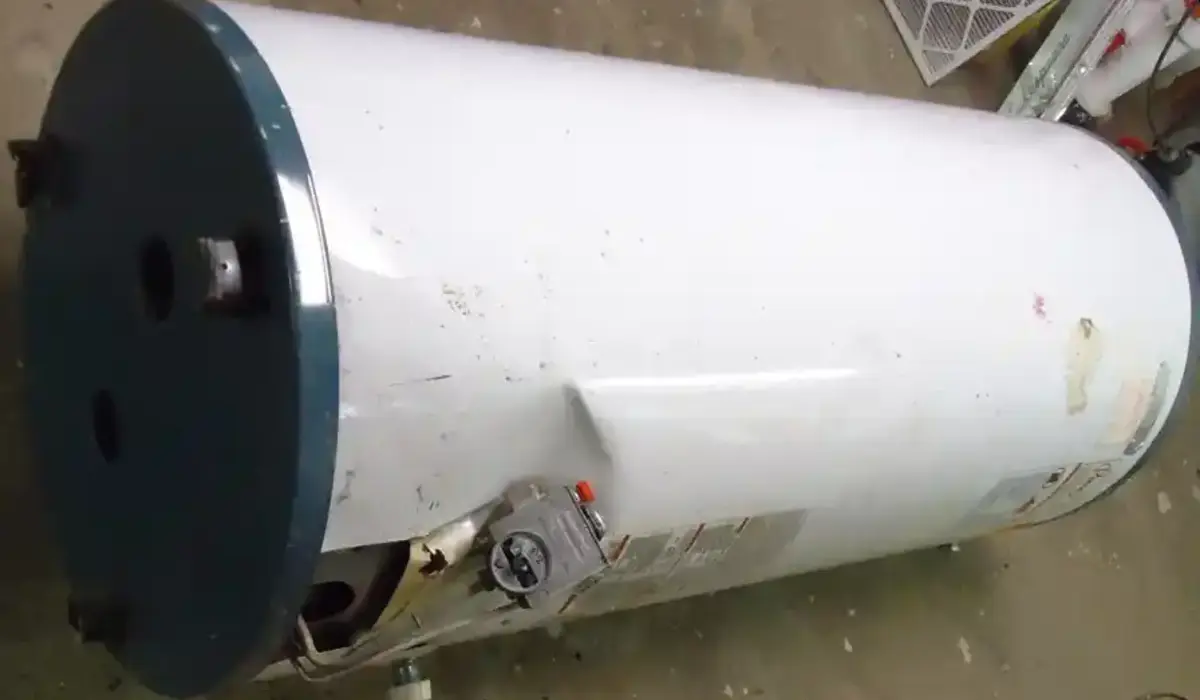
Knowing how a water heater is constructed will help you understand why orientation is so important. Inside what appears to be a humble metal cylinder is a complex system of fragile parts that can only work in one position – upright.
Internal Components That Can Be Damaged
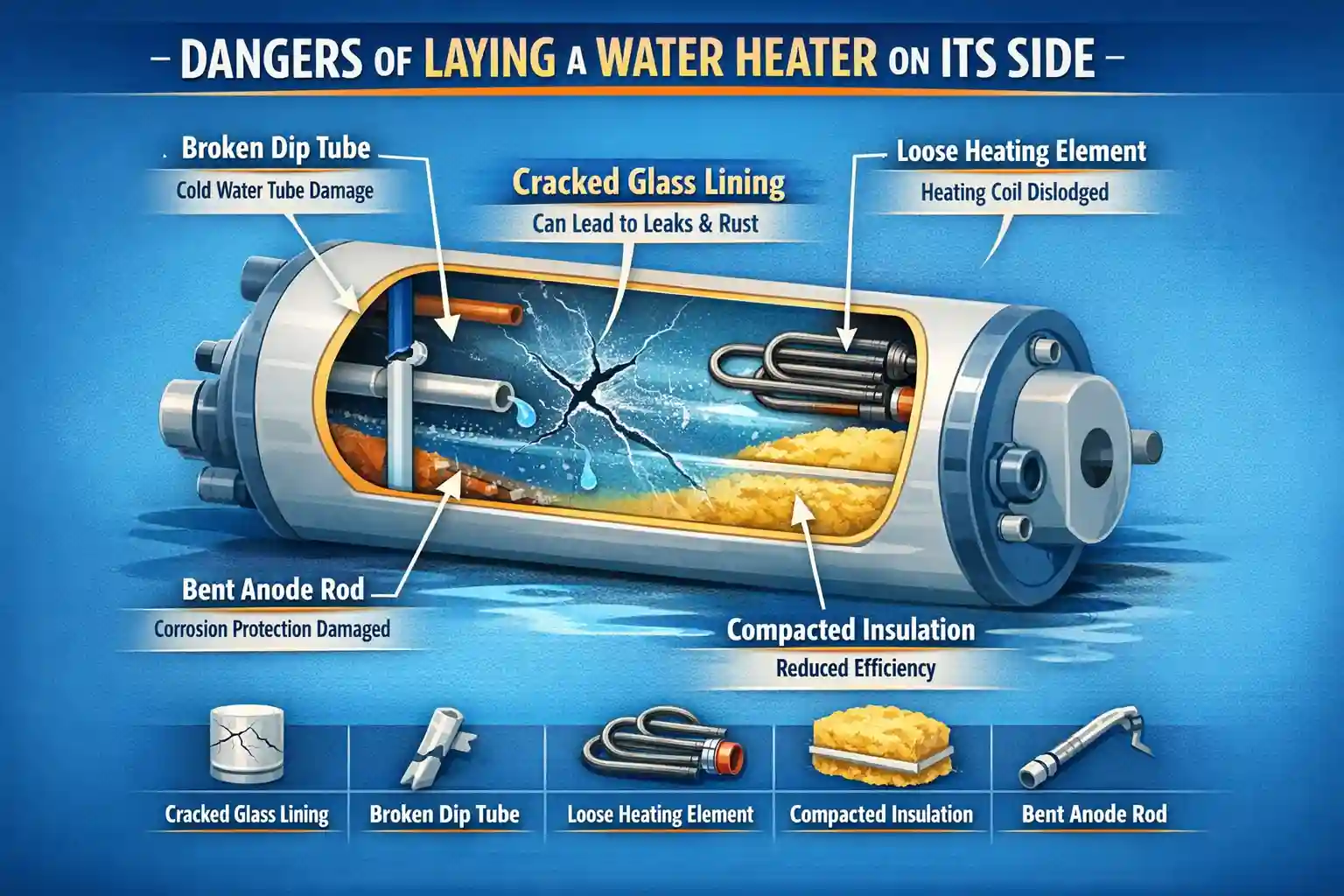
A water heater has a delicate glass-lined tank, which prevents rusting. When you put the tank on its side, the weight distribution in the tank becomes uneven, which results in pressure points that can crack or weaken the lining. Cracks in the lining are frequently initially unnoticed but lead to leaks and rusting.
Many other components are at risk as well:
- The dip tube, which funnels cold water to the bottom of the tank, can break or snap.
- Heating elements in electric models can come loose.
- Insulation in the tank can become compacted or move, causing inefficiency.
- Anode rods can become bent or shaken up.
Those fragile parts are the main concern when you ask can you lay a hot water heater on its side.
Differences Between Gas and Electric Models
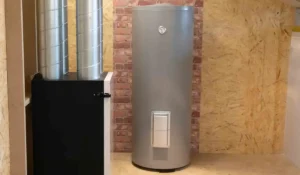
Gas water heaters are far more finicky than their electric counterparts. Their burner assemblies, pilot lights, gas valves, and flue pipes are susceptible to damage. Electric ones are a bit more forgiving, but still not great for sideways shipping.
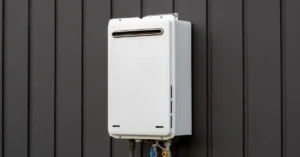
Tankless systems are the most portable because they are safe in any orientation, but you should always check the manufacturer’s instructions.
What Happens When a Water Heater Is Laid Sideways
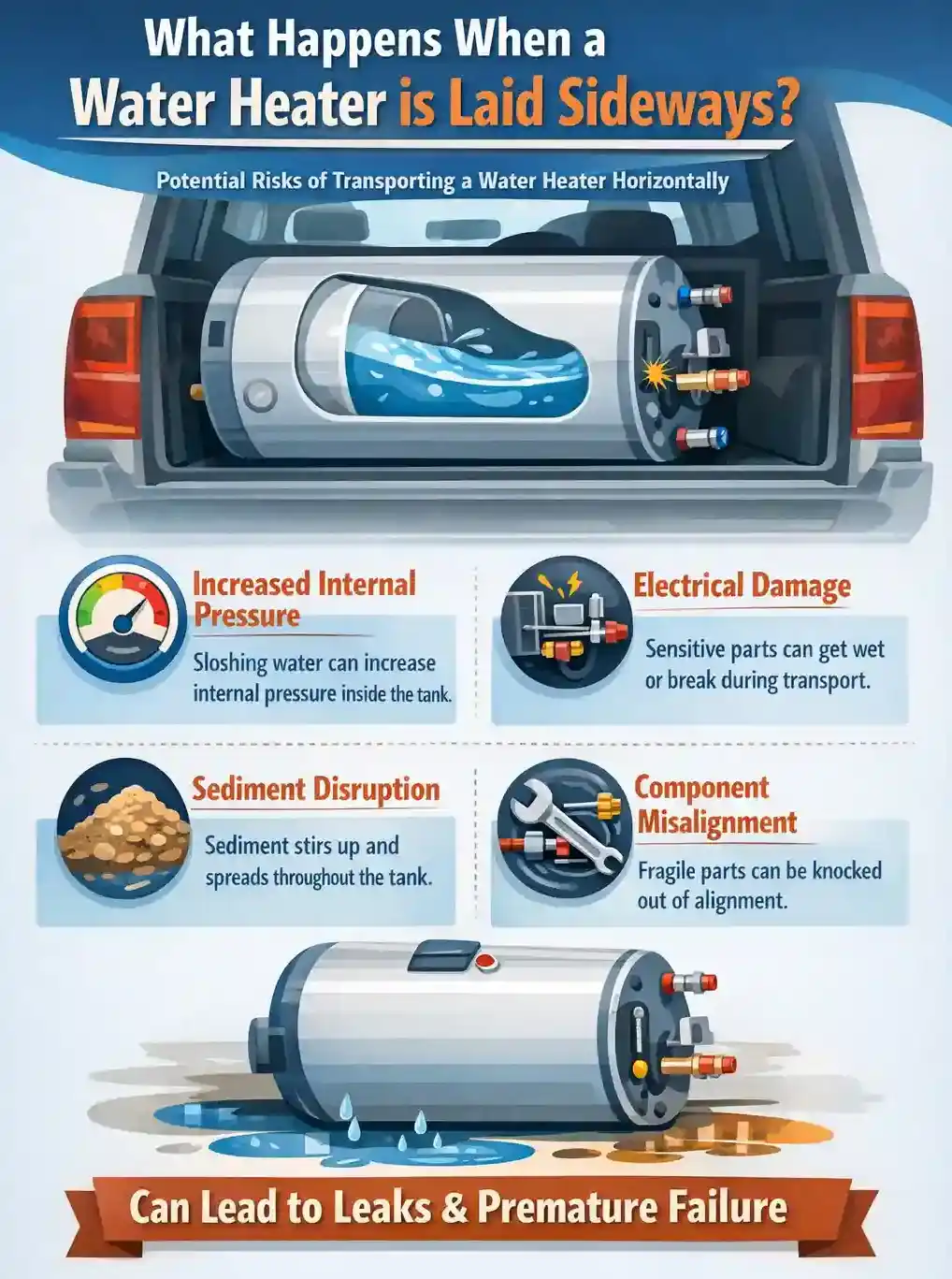
Even a completely emptied unit holds some water. When the tank is in a horizontal position, this water sloshes around while moving. This can:
- Increase pressure internally
- Harmful electrical parts
- Distribute sediment in the tank
- Knock fragile components out of alignment
These issues might not show up right away, but they usually result in leaks or premature failure
Why Manufacturers Advise Against Sideways Transport
While it is a common question amongst homeowners, can you transport a water heater on its side? The arguments from the manufacturers are the same: it’s too risky.
Warranty Concerns
All warranties stipulate that the unit must be transported and installed in an upright position. Pronouncing [that] the laying down of the unit – even for a short while – has the potential to void the warranty. If a leak develops months later due to internal damage, you might be left out in the cold.
Damage to the Glass Lining
The glass lining is thin, and it gets more brittle as it ages. Sideways pressure from laying down the tank can cause micro-cracks , which can lead to early tank failure.
Sediment Problems
Sediment settles to the bottom of the tank normally. When tipped sideways, the unit shakes up that sediment, and it can clog:
- heating elements
- drain valves
- dip tubes
It matters for both how well they run and how long they last.
When Laying a Water Heater on Its Side Is Sometimes Necessary
But upright transportation is not feasible in some situations, risk or not.
Limited Space
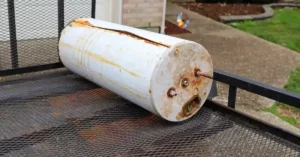
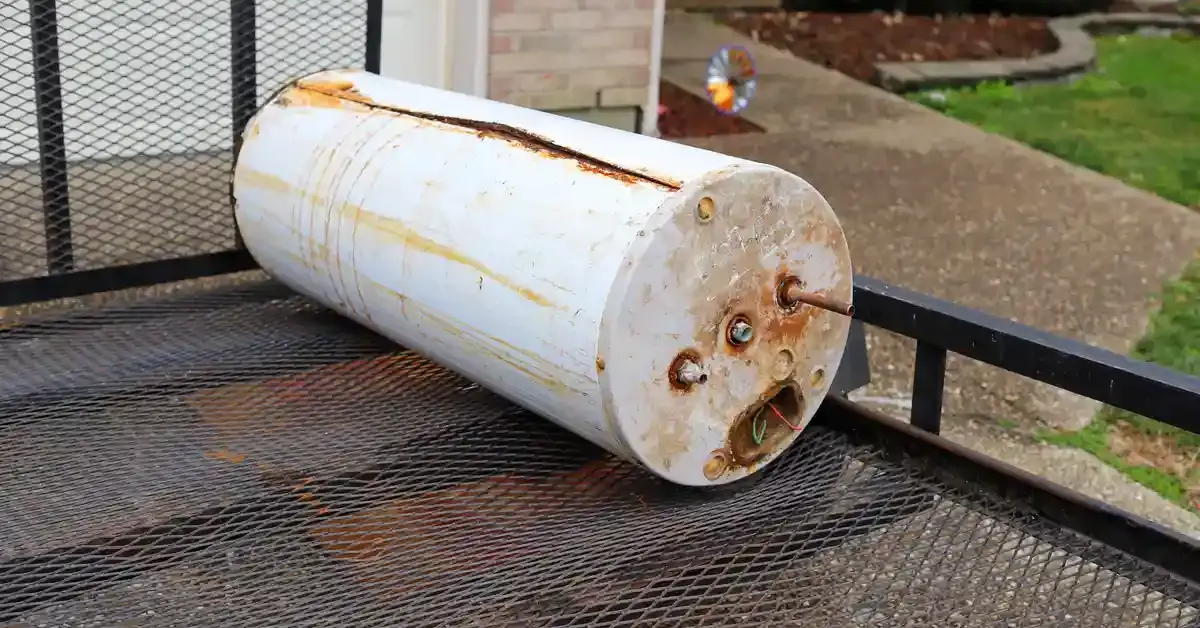
Pickup trucks with camper shells, small cargo vans, or narrow stairwells sometimes preclude placing it upright. In these situations, you can lay a water heater on its side to transport, just take a lot of precautions.
Emergency Situations
You may have to evacuate due to flooding, natural disasters, or you may need an urgent replacement. When there is already damage, long-term protection of the unit might not be the priority.
Cost Considerations
Professional movers may cost more than the old unit is worth. Homeowners on a budget often opt for the do-it-yourself move instead.
How to Safely Transport a Water Heater on Its Side
When lateral transport is the only choice, the risk of damage can be minimized by taking the appropriate precautions.
1. Prepare the Unit Properly
Before relocating any water heater:
- Turn off the gas or electricity
- Let the unit cool
- Drain the tank completely
- Unplug, water, and gas lines to the heater with care.
It’s still 100 to 150 pounds for a fully drained heater, so get help.
2. Provide Proper Padding
Use thick moving blankets to cover the entire unit. Add extra padding around:
- top layer
- bottom
- valves
- connections
Bubble wrap around fragile valves helps prevent breakage.
3. Load It Carefully
Use an appliance dolly with straps. When laying the heater down:
- Place the valves side up
- Do not put the tank on any projection in the tank.
- Use foam, cardboard, or blankets under it.
Then use ratchet straps to ‘X’ the heater so it can’t move or roll.
4. Drive Gently
On the whole, travel over easy highways if you can. Stay clear of sharp turns, sudden stops, and fast starts.
5. Stand Upright Immediately Upon Arrival
Once you unload the heater, stand it up and let it sit for 24 hours. This helps the sediment settle and the internal oils to the bottom.
You can read about: How to Install a Water Heater
Common Mistakes to Avoid When Transporting a Water Heater
A lot of people inadvertently ruin their heater in transit. Don’t make these common mistakes:
Not draining completely
The residual water moves violently when the heater is laid flat.
Using weak straps or no padding
This causes folding, cracking, and breaking of the fitting.
Ignoring manufacturer guidelines
If transporting on its side is prohibited in the manual, insurance and warranty coverage may be void.
Rushing
Haste makes a unit drop, bend a valve, or lift unsafely, and all these things can happen too frequently.
When You Should Call a Professional
Moving a water heater on your own is not always the best choice. When to hire the professionals:
- long-distance moving
- stairs or tight spaces
- requiring a gas water heater to be transported
- equipped with the right tools
- with your own physical limitations
- for full installation service
The cost of proper handling is often far less than fixing or replacing a damaged heater. or replacing a damaged heater. For safe, reliable help, you can always count on Derks Plumbing.

Conclusion
So, can you lay a water heater on its side? Yes, you can – but only if you must and with great precautions. Gas water heaters need to stay right side up as much as possible, but electric models are a little more forgiving. Yet they can be treated like any other piece of equipment and cause internal damage if you’re not careful.
When transporting a heater horizontally, special preparation, cushioning, slow driving, and repositioning in the upright position as soon as possible are a must. When in question, contact a professional installer for safe handling and protection of your investment and home.
FAQs
How long should a water heater stand vertical after being on its side during transportation?
But don’t turn it on for 24 hours. This helps the internal parts to settle, not prematurely fail.
Is it OK to lay a water heater down during shipping without the risk of damage?
Yes, it can be done especially with electric units but there’s always some risk. Appropriate padding, slow driving, and careful loading will limit damage.
Does righting a water heater void it on the wrong side of the warranty?
Often yes. Many manufacturers require upright transportation in order to keep the warranty valid. Consult the instructions for your model.
What water heaters can be safely transported on their side?
Tankless models are the safest. Electric tank-style heaters are fairly accommodating in this regard. Gas units should be kept upright as much as possible.
Remove the anode rod before sideways transport?
No. It’s not to be unscrewed or removed because doing so could strip the threads. Leave it in place and put padding over the tank top.
Does it pay to take an old water heater with you?
If the unit is between 8 and 10 years old, it’s usually more cost-effective to replace it at your new home rather than take it with you.