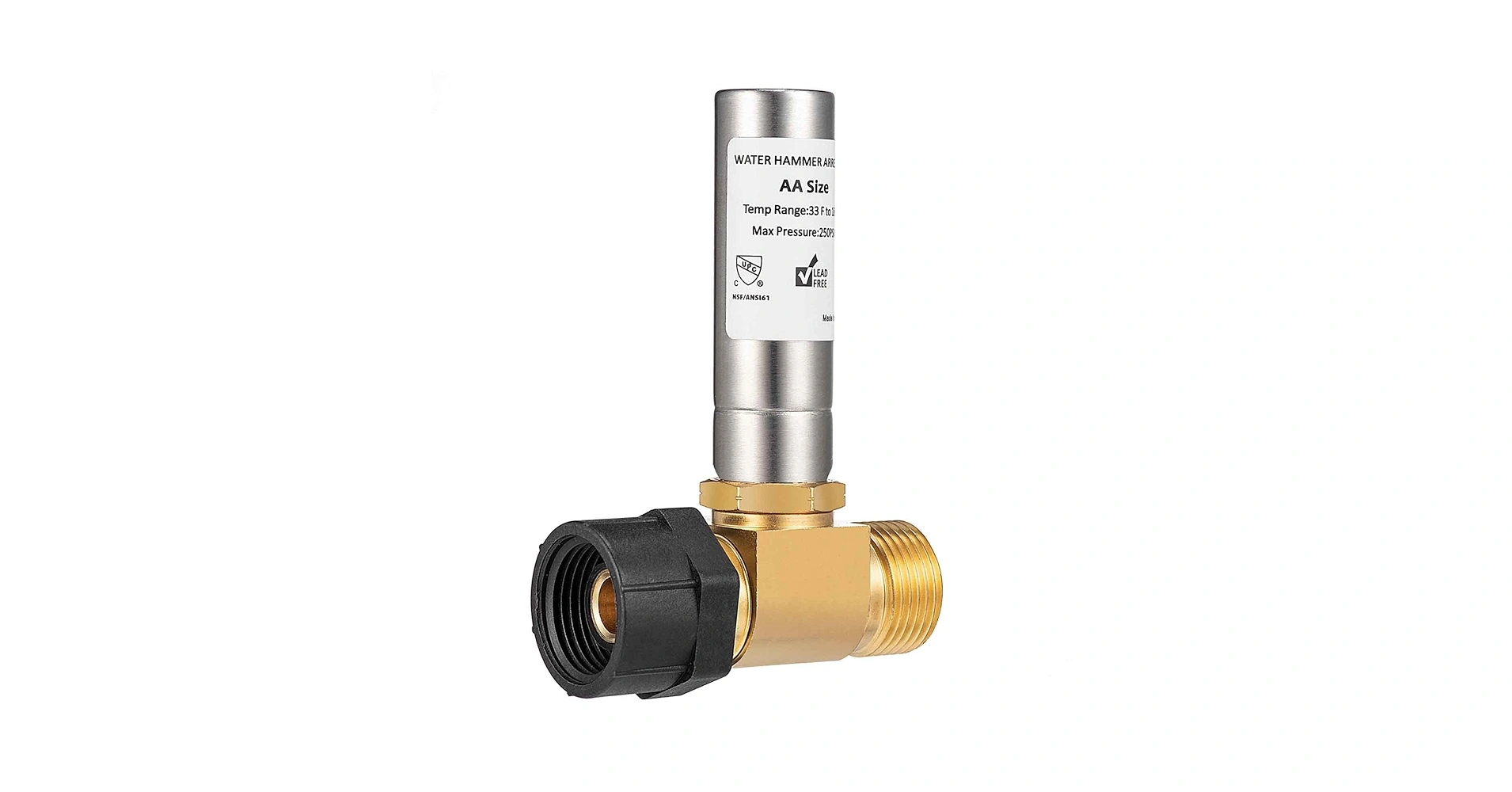
Ever heard a loud banging noise from your pipes when you turn off a faucet? That’s a water hammer, and it’s not just annoying. It can damage your plumbing over time. The good news is there’s a simple fix.
A water hammer arrestor absorbs shock waves in your pipes. It stops that banging noise and protects your plumbing from potentially damaging pressure spikes. Let’s explore what does a water hammer arrestor do and why your home might need one.
Understanding the Water Hammer Phenomenon
Water hammer happens when water flow stops suddenly in your pipes. Think of it like a car hitting the brakes hard. The water was moving fast, and now it has nowhere to go.
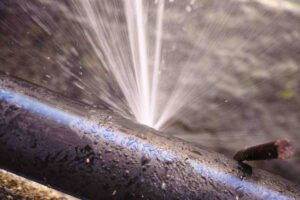
This creates a shock wave that travels backward through your pipes. The pressure spike can reach hundreds of pounds per square inch. Your pipes shake and bang against walls and supports.
Common causes include:
Quick-closing valves: Modern washing machines and dishwashers shut off water instantly. This creates the perfect conditions for a water hammer.
High water pressure: When your home’s water pressure exceeds 80 PSI, you’re more likely to experience problems. The faster the water moves, the harder it hits when stopped.
Long pipe runs: Water traveling through long stretches of pipe builds momentum. When it stops, the impact is stronger.
The banging sound you hear is actually your pipes hitting against framing or other surfaces. Over time, this constant vibration loosens connections and can cause leaks.
So, What Does a Water Hammer Arrestor Do?
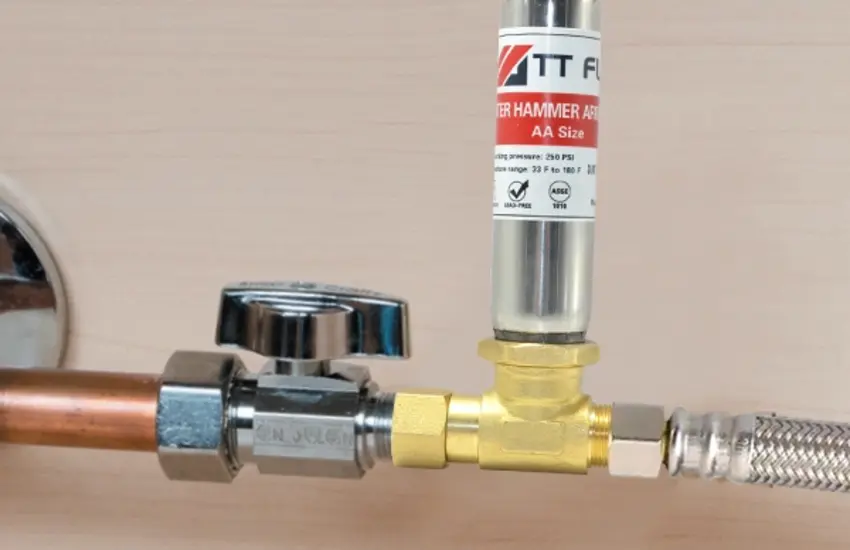
A water hammer arrestor acts like a shock absorber for your plumbing system. When water pressure surges, the device absorbs the impact before it can damage pipes or fittings.
The arrestor creates a cushion of air or gas that compresses when water hits it. This compression absorbs the shock wave’s energy. Instead of banging through your pipes, the pressure dissipates safely.
Think of it like catching a baseball with a glove instead of a bare hand. The glove absorbs the impact and protects your hand. A plumbing hammer arrestor does the same thing for your water lines.
These devices install directly into your plumbing at problem areas. They work automatically every time you turn off a faucet or an appliance shuts off water flow.
How a Water Hammer Arrestor Works
The mechanics are simple but effective. Inside the hammer arrestor valve, there’s a sealed chamber containing air or gas. A piston or diaphragm separates this chamber from your water supply.
When water flow stops suddenly, the pressure surge pushes against the piston. The air or gas compresses, absorbing the shock. Once the pressure normalizes, the piston returns to its starting position.
The process happens in milliseconds. You won’t notice anything except the absence of that annoying bang.
Key components include:
The sealed air chamber maintains consistent pressure over time. Unlike old-fashioned air chambers that can become waterlogged, modern hammer arrestors use a permanent seal.
The piston mechanism allows for repeated compression cycles without wearing out. Quality units can handle thousands of pressure spikes without losing effectiveness.
The threaded connection makes installation straightforward. Most models use standard pipe sizes that fit existing plumbing configurations.
Why Water Hammer Arrestors Are Important
Protecting your plumbing investment should be a top priority. A water hammer creates stress on every joint and connection in your system.
Prevents pipe damage: Repeated shock waves weaken pipe walls and joints. Small cracks can develop into major leaks. The repair costs far exceed the price of prevention.
Protects appliances: Your washing machine, dishwasher, and other water-using appliances have internal valves. Water hammer can damage these components and shorten appliance lifespan.
Reduces noise pollution: The constant banging disrupts your peace. It’s especially problematic at night when someone uses the bathroom.
Maintains water pressure: Damaged pipes and fittings can affect water pressure throughout your home. An air hammer arrestor keeps everything working as designed.
Extends system life: Your entire plumbing system lasts longer when protected from shock damage. This means fewer repairs and lower maintenance costs over time.
Building codes in many areas now require water hammer arrestors on certain fixtures. This reflects growing recognition of their importance in modern plumbing systems.
Types of Water Hammer Arrestors
Several designs serve different applications and budgets. Choosing the right type depends on your specific needs.
Piston-type arrestors use a spring-loaded piston against a sealed air chamber. They’re durable and reliable for high-pressure applications. These work well for washing machines and dishwashers.
Diaphragm-type arrestors feature a flexible rubber diaphragm separating water from air. They’re compact and affordable. Perfect for installations with space constraints.
Bladder-type arrestors contain a sealed bladder filled with gas. They offer excellent performance and long service life. Often used in commercial applications.
Mini arrestors install directly at fixtures like toilets and sinks. They’re small enough to fit behind walls or under cabinets. Great for targeted problem-solving.
Whole-house systems install at the main water line. They protect your entire plumbing system with one device. Best for homes with widespread water hammer issues.
Size matters when selecting hammer arrestors. Larger devices handle higher flow rates and provide more cushioning capacity. Match the arrestor size to your pipe diameter and water pressure.
Signs You Need a Water Hammer Arrestor
Pay attention to these warning signals from your plumbing system.
Loud banging noises: This is the most obvious sign. If your pipes bang when you shut off water, you need protection.
Rattling pipes: Even without loud bangs, vibrating or rattling pipes indicate pressure problems. The shaking can loosen connections over time.
Leaking joints: Water hammer gradually weakens pipe connections. Slow leaks often start at joints and fittings subjected to repeated shock.
Appliance problems: If your washing machine or dishwasher valve malfunctions frequently, water hammer might be the culprit. The pressure spikes damage internal components.
Visible pipe movement: Pipes shouldn’t move when water turns off. If you can see them jumping or shaking, the pressure surge is severe.
Recently installed fast-closing valves: Modern appliances and fixtures close quickly. This increases water hammer risk even in systems that never had problems before.
Don’t wait for major damage to occur. Address water hammer at the first signs to protect your investment.
Installation of a Water Hammer Arrestor
Professional installation ensures proper function and code compliance. The process varies based on your plumbing configuration.
Location selection is critical. Install arrestors as close as possible to problem fixtures. This maximizes effectiveness by stopping shock waves at their source.
Common installation points include:
- Behind washing machines on hot and cold supply lines
- Under sinks near quick-closing faucets
- At dishwasher connections
- Near toilets with fast-fill valves
- On outdoor hose bibs
The installation process typically involves:
Shutting off water supply to the work area. Drain pipes completely before starting work.
Cutting into the supply line at the chosen location. Use proper pipe cutting tools for clean cuts.
Installing a tee fitting to create a branch for the arrestor. Secure all connections properly.
Maintenance and Lifespan of Water Hammer Arrestors
Quality hammer arrestors require minimal maintenance. The sealed design prevents common problems that plagued older air chamber systems.
Modern units typically last 10-15 years with normal use. Some high-quality models can function for 20 years or more. The sealed air chamber doesn’t require recharging or service.
Watch for these signs of wear:
Gradual return of water hammer noise indicates the arrestor is losing effectiveness. The air chamber seal may have failed.
Visible corrosion on the exterior suggests internal problems may develop. Replace before complete failure occurs.
Leaking from the arrestor body means immediate replacement is necessary. Don’t attempt repairs on sealed units.
Periodic inspection helps:
Check mounting brackets remain secure. Vibration over time can loosen connections.
Verify no visible damage or corrosion exists. Early detection prevents system failures.
Test for proper function by listening for a water hammer. If noise returns, investigate promptly.
No routine maintenance is required for most modern arrestors. The sealed design eliminates the need for servicing or recharging.
Attaching the water hammer arrestor to the tee fitting. Follow manufacturer specifications for orientation.
Testing the system for leaks. Turn water back on slowly and check all connections.
For whole-house protection, install arrestors near the main shutoff valve. This requires more extensive work but provides comprehensive coverage.
What Does a Water Hammer Arrestor Do for Your Plumbing System?
Beyond stopping noise, these devices provide comprehensive system protection. The benefits extend throughout your entire plumbing network.
Pressure regulation: Arrestors smooth out pressure fluctuations that stress all components. Your fixtures and appliances experience consistent, safe water pressure.
Connection protection: Threaded connections and solder joints stay tight longer. The constant shock waves that loosen fittings are eliminated.
Appliance longevity: Washing machines, dishwashers, and ice makers last longer when protected from water hammer. Their internal valves and components aren’t subjected to damaging pressure spikes.
Peace and quiet: Your home remains peaceful without startling pipe bangs. This improvement in quality of life shouldn’t be underestimated.
Property value: A properly protected plumbing system adds value to your home. Potential buyers appreciate well-maintained infrastructure.
Energy efficiency: Damaged pipes and leaking connections waste water and energy. Prevention saves money on utility bills.
The small investment in water hammer arrestors pays dividends through reduced repair costs and extended system life. Every homeowner with modern quick-closing valves should consider this essential protection.
You can read about: What Is the Safest Water Piping Material
Trust Derks Plumbing for Professional Installation
When it comes to protecting your plumbing system, professional expertise makes all the difference. Derks Plumbing specializes in water hammer solutions for Los Angeles area homes.
Our experienced technicians assess your specific situation and recommend the right type and placement of arrestors. We understand local building codes and ensure compliant installations.
Derks Plumbing offers comprehensive Plumbing Services In Los Angeles including water hammer arrestor installation, pipe repair, and complete system evaluations. We use only quality components backed by solid warranties.
Our team has installed thousands of arrestors in homes throughout the region. We know which products perform best in different applications and pressure conditions.
Contact Derks Plumbing today for a free consultation. We’ll evaluate your system, explain your options, and provide transparent pricing. Your plumbing deserves expert care from licensed professionals who stand behind their work.
FAQs
How much does a water hammer arrestor cost?
Individual arrestors range from $20-$80 for the device. Professional installation adds $150-$300 per location depending on accessibility and local rates. Whole-house systems cost more but protect your entire plumbing network.
Can I install a water hammer arrestor myself?
Basic plumbing skills allow DIY installation in accessible locations. However, professional installation ensures proper sizing, placement, and code compliance. Mistakes can lead to leaks or ineffective protection.
Do water hammer arrestors work on all types of pipes?
Yes, they work with copper, PEX, CPVC, and galvanized steel pipes. Choose arrestors with connections matching your pipe type and diameter. Modern designs accommodate virtually all residential plumbing configurations.
How many arrestors does a house need?
This depends on your specific water hammer problems. Typically, homes need one arrestor per problem fixture or appliance. Severe cases may benefit from multiple units or a whole-house system.
Will a water hammer arrestor reduce my water pressure?
No, properly sized arrestors don’t affect normal water pressure or flow. They only activate during pressure surges. Your faucets and appliances work exactly as before, just without the damaging shock waves.