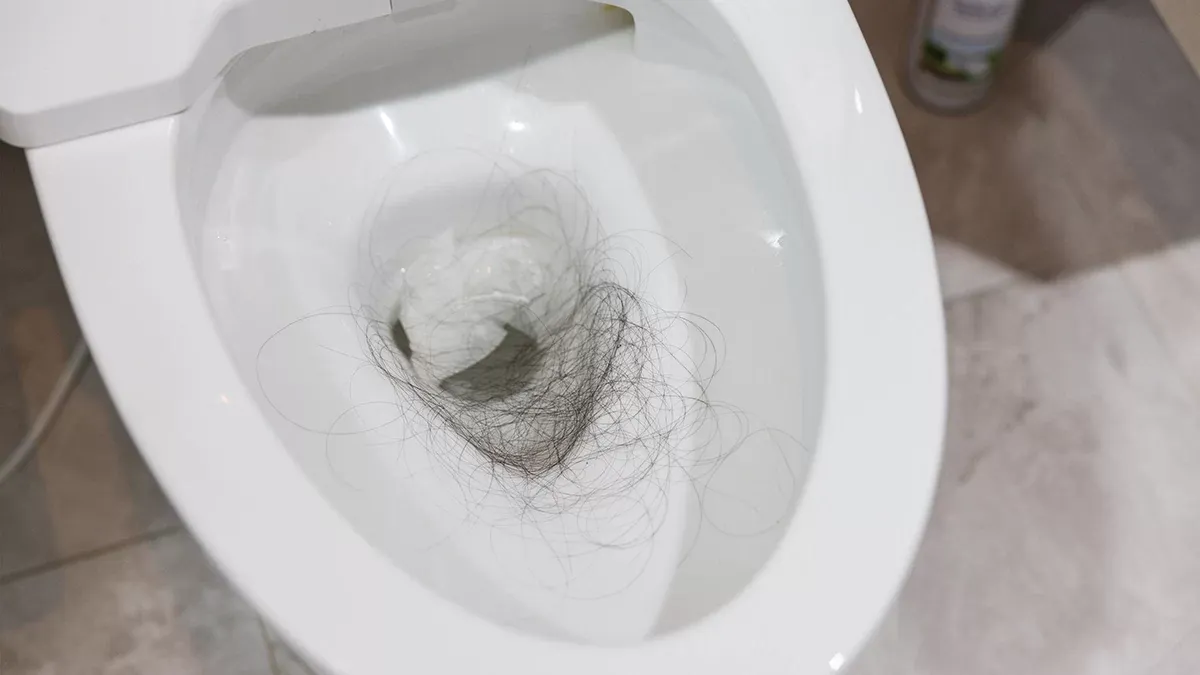
You’ve probably seen hair strands floating in the toilet bowl and wondered if it’s fine to just flush them away. It seems harmless enough. After all, hair is natural and breaks down eventually, right? Wrong. Flushing even small amounts of hair can lead to serious plumbing headaches.
Is It Bad to Flush Hair Down the Toilet? Yes, it’s bad. Hair doesn’t dissolve in water and can create stubborn clogs that damage your pipes and cost hundreds in repairs. The smart move is to always throw hair in the trash instead.
Can You Flush Hair Down the Toilet?
Technically, you can flush anything small enough to go down. But that doesn’t mean you should. Your toilet wasn’t built to handle hair, no matter how little it seems.
Hair behaves differently than toilet paper. While toilet paper breaks apart quickly in water, hair stays intact. It wraps around other debris in your pipes and forms dense clumps that block water flow.
Many people flush hair without thinking twice. They figure it’s just a few strands. But those few strands add up over weeks and months. Before you know it, you’re dealing with a backed-up toilet or slow drains throughout your home.
The answer is clear: toilets are made for human waste and toilet paper only. Everything else, including hair, belongs in the garbage.
Is It Ever Okay to Flush Any Hair?
No type of hair is safe to flush. This includes hair from your head, beard trimmings, pet fur, or hair from shaving. All hair causes the same problems in your plumbing system.
Some folks think short hairs are fine because they’re small. That’s a myth. Short hairs actually tangle together more easily and create tight knots in your pipes. Long hairs wrap around pipe joints and catch other materials passing through.
Pet hair is especially problematic. Dog and cat fur tends to clump together when wet. If you groom your pets near the toilet or rinse brushes in the bowl, you’re asking for trouble.
Even a single hair won’t dissolve. It might make it through your home’s pipes, but it could cause issues further down in the municipal sewer system. Be a good neighbor and keep all hair out of your drains.
Why Is It Bad to Flush Hair Down the Toilet?
Hair creates multiple problems for your plumbing. Understanding why helps you avoid expensive mistakes.
First, hair doesn’t break down. Unlike waste and toilet paper that dissolve within hours, hair can last years in your pipes. It sits there collecting other materials that flow past it.
Second, hair is sticky when wet. It clings to pipe walls and catches on rough spots or joints. Once stuck, it acts like a net that traps grease, soap scum, and other debris.
Third, flushing hair down the toilet compounds over time. One flush might not cause instant problems. But regular flushing builds up gradually. You won’t notice until water backs up or drains slowly.
Fourth, hair clogs are stubborn. Chemical drain cleaners often can’t dissolve them. You’ll need professional help to clear severe blockages, which means paying for a plumber’s time and equipment.
Finally, hair damage isn’t always visible. It can create partial clogs deep in your system where you can’t see them. These hidden blockages reduce water flow and put stress on your entire plumbing network.
What Happens When You Flush Hair?
When you flush, hair travels through your toilet’s trap and into your home’s drain pipes. The trap is the curved section under your toilet that holds water to block sewer gases. Hair often gets stuck here first.
If it makes it past the trap, the hair moves through your main drain line. This pipe carries waste from all your fixtures to the sewer or septic system. Along the way, hair can snag on pipe connections, tree roots that have invaded the line, or existing buildup.
Hair in toilet pipes doesn’t float freely. It tumbles and twists in the water flow. This motion causes strands to wrap around each other and form larger clumps. These clumps catch on anything rough inside the pipe.
Over time, the hair ball grows. It collects toilet paper, waste, grease from your kitchen sink, and soap from showers. This mixture hardens into a solid mass that water can barely pass through.
Eventually, you’ll notice symptoms. Your toilet might flush weakly or require multiple flushes. You might hear gurgling sounds from other drains. In severe cases, sewage backs up into your home.
Hair in Toilet: What Kind of Hair Causes Issues?
All hair types cause problems, but some are worse than others. Understanding the differences helps you stay alert.
Human head hair is long and strong. A single strand can stretch across your entire drain pipe. When multiple strands intertwine, they create a rope-like clog that’s incredibly difficult to remove.
Facial hair from shaving seems innocent. But beard and mustache trimmings are coarse and stiff. They don’t bend easily, so they poke into pipe walls and anchor themselves firmly.
Body hair from legs, arms, or other areas has a similar texture to facial hair. While individual strands are shorter, they often come off in large quantities during shaving. That volume creates instant clog potential.
Pet fur deserves special mention. Animal hair has a different structure than human hair. It’s designed to shed water, which means it doesn’t break down even slightly. Cat and dog fur also comes with oils that make it extra sticky.
Synthetic hair from wigs or extensions is particularly nasty. These fibers are made from plastic materials that will never decompose. They’re also smooth, which helps them slide deep into your plumbing before getting stuck.
Why Toilets Aren’t Designed to Handle Hair
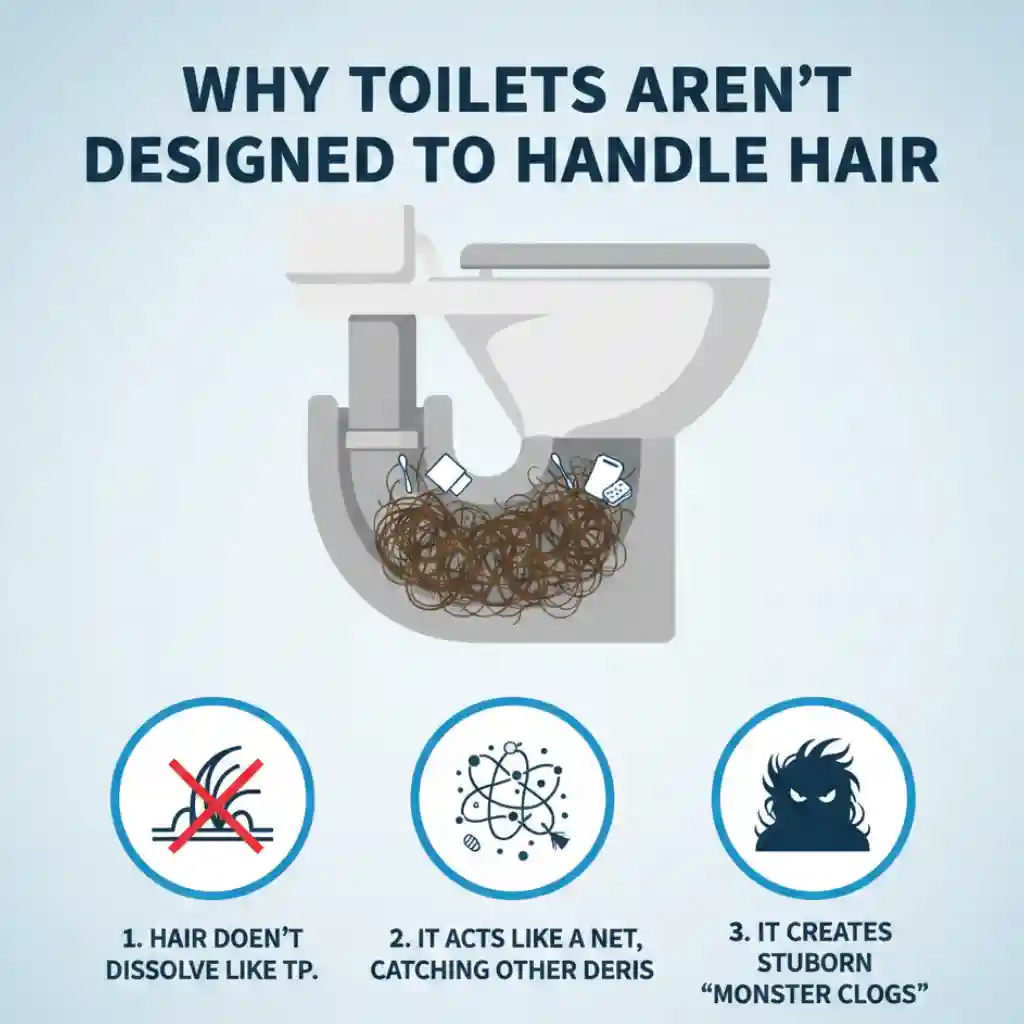
Your toilet has a specific job: remove human waste and toilet paper. Engineers design them with this purpose in mind.
The flushing mechanism creates a powerful surge of water. This surge pushes waste through the trap and into your drain line. But the force isn’t meant to move materials that don’t dissolve.
Toilet paper is specially made to fall apart in water. Within seconds of getting wet, it begins breaking into tiny pieces. This disintegration is crucial for preventing clogs.
Hair has the opposite quality. It stays whole no matter how long it sits in water. You could soak hair for months and it would look nearly the same as when it went in.
The trap design also matters. That S-shaped curve prevents sewer gas from entering your home. But it creates a spot where hair easily catches. Once trapped there, hair rarely moves on its own.
Municipal sewer systems aren’t built for hair either. Treatment plants filter out solids, but hair can clog their equipment. When everyone flushes hair, it creates problems for the whole community.
How Flushing Hair Leads to Bigger Problems
A hair clog in a toilet rarely stays small. It grows and creates a chain reaction of issues throughout your home.
Slow drains are usually the first sign. Your toilet takes longer to empty after flushing. You might not worry at first, but the problem worsens each day.
Next, other fixtures start acting up. Your shower drains slowly because the main line is partially blocked. Your bathroom sink gurgles when you flush the toilet. These are warning signs that pressure is building in your pipes.
Water damage becomes a risk. If a clog causes sewage to back up, it can overflow onto your bathroom floor. This contaminated water damages flooring, walls, and anything it touches. Cleanup costs add up quickly.
You might try fixing it yourself with a plunger or drain snake. Sometimes this works for minor clogs. But hair tangles around snake cables, making removal difficult. You could end up pushing the clog deeper instead of clearing it.
Professional plumbers often need to use hydro-jetting equipment. This high-pressure water stream blasts through hair clogs. The service typically costs several hundred dollars, depending on the severity.
In extreme cases, hair clogs damage pipes themselves. Constant pressure from backups can crack older pipes. You might need partial pipe replacement, which involves digging and even more expense.
What to Do If Your Toilet Is Already Affected by Hair?
If you suspect hair in your toilet pipes, act fast. Early intervention prevents minor issues from becoming disasters.
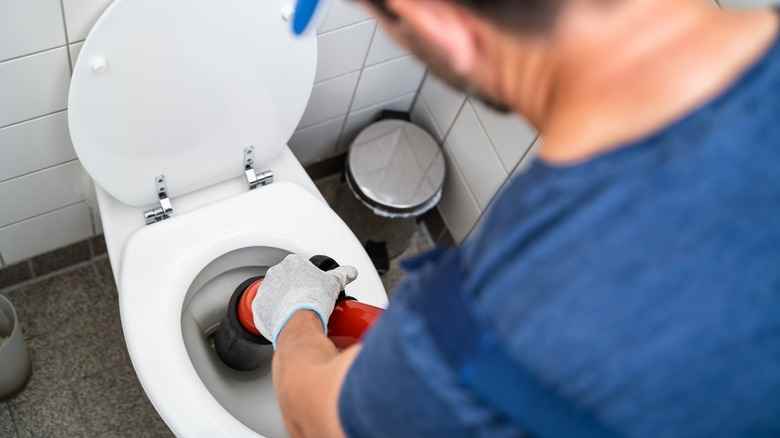
Start with a plunger. Use a flange plunger designed for toilets, not a cup plunger meant for sinks. Create a tight seal and pump vigorously. This might dislodge fresh hair clogs.
If plunging fails, try a toilet auger. This specialized snake tool reaches deeper into the drain. Insert it carefully and turn the handle to break up or hook the clog. Pull slowly to avoid compacting the blockage.
Avoid chemical drain cleaners for hair clogs. These products work on organic material but struggle with hair. They can also damage your pipes and create toxic fumes when mixed with standing water.
How to dissolve hair in toilet pipes is a common question. The truth is, you can’t easily dissolve hair at home. Some enzyme-based cleaners claim to break down hair, but results are mixed and take days to work.
Hot water alone won’t help either. Hair doesn’t melt or break apart from heat that your pipes can safely handle.
If DIY methods don’t work within an hour, call a professional plumber. They have camera equipment to locate the exact clog position. They also have powerful tools like motorized snakes and hydro-jetters that clear stubborn blockages.
Don’t wait until sewage backs up. That creates a health hazard and emergency situation. Address slow drains immediately.
You can read about: What Happens If You Flush a Clorox Toilet Wand ?
Preventing Plumbing Problems From Flushed Hair
Prevention is always cheaper than repair. These simple habits keep hair out of your toilet and drains.
Place a small trash can next to every toilet. Make it easy to dispose of hair properly. When you spot strands in the bowl, grab them with toilet paper and throw them away.
Clean hairbrushes and combs over a trash can, not the sink or toilet. Those pulled-out strands add up quickly.
Install drain catchers in all your sinks and showers. These inexpensive mesh screens trap hair before it enters your pipes. Clean them weekly to maintain good flow.
Teach everyone in your household about proper disposal. Kids especially need to learn that toilets aren’t trash cans. Make it a family rule that nothing except waste and toilet paper goes down the toilet.
If you groom pets at home, do it outside or in a tub with a hair catcher. Never rinse pet fur down any drain. Collect it and put it in the garbage.
Schedule regular plumbing inspections. A professional can spot early signs of buildup before they become full clogs. Annual or biannual checkups catch problems when they’re still cheap to fix.
Consider your home’s age too. Older homes with cast iron or galvanized pipes are more prone to hair clogs. These rough interior surfaces catch hair more easily than modern PVC pipes.
Need Toilet Repairs in Los Angeles? We Can Help
Dealing with a toilet clog from hair? Derks Plumbing offers fast, reliable solutions for homeowners throughout Los Angeles. Our experienced technicians handle everything from simple clogs to complex pipe repairs.
We understand that plumbing emergencies don’t wait for business hours. That’s why we offer prompt service when you need it most. Our team arrives with professional equipment to diagnose and fix your problem right the first time.
Don’t let a hair clog damage your home or disrupt your daily routine. Our Plumbing Services In Los Angeles include toilet repairs, drain cleaning, pipe inspections, and preventive maintenance. We’ll clear your clog and check your entire system to prevent future issues.
We also educate homeowners on proper plumbing care. After fixing your toilet, we’ll share tips to keep it running smoothly for years to come.

Conclusion
Is It Bad to Flush Hair Down the Toilet? Absolutely. Hair doesn’t belong in your plumbing system, period. It creates clogs, damages pipes, and leads to expensive repairs that are completely preventable.
Every strand matters. Whether it’s from your head, face, body, or pet, all hair causes the same problems. It doesn’t dissolve, it tangles with other materials, and it builds up over time until your toilet stops working properly.
The solution is simple: throw hair in the trash, not the toilet. Keep a trash can nearby, use drain catchers, and teach your household to do the same. These small actions save you from big headaches down the road.
If you’re already dealing with slow drains or weak flushing, don’t wait. Address the problem before it gets worse. Professional help is available when you need it.
Protect your plumbing by treating your toilet with respect. It’s designed for a specific purpose, and hair isn’t part of that equation.
FAQs
Can hair clog a toilet?
Yes, can hair clog a toilet is a valid concern. Hair wraps around itself and catches other debris, forming dense blockages in your pipes. Even small amounts build up over time and restrict water flow.
How long does hair take to decompose in pipes?
Hair can last years in your plumbing system without breaking down. It’s made of keratin, a protein that’s very resistant to decomposition, especially in the dark, wet environment inside pipes.
Can I use Drano on hair clogs?
Drano and similar chemical cleaners aren’t effective on hair. They work better on organic matter and grease. For hair, mechanical removal with a snake or professional hydro-jetting is more reliable.
Is pet hair worse than human hair for toilets?
Pet hair is generally worse because it comes off in larger quantities and has oils that make it stickier. However, all hair types cause problems and should be kept out of your toilet.
How much does it cost to fix a hair clog?
Simple plunger-fixed clogs cost nothing. Professional snake service runs $100-$300. Severe clogs requiring hydro-jetting can cost $300-$600 or more, depending on location and severity.
What’s the best way to dispose of hair?
Put hair in a trash can. For large amounts from haircuts or pet grooming, collect it in a plastic bag before throwing it away. Some people even compost human hair in outdoor compost piles.