Broken sewer lines are one of the most stressful and costly problems a homeowner can encounter , and that damage can escalate very quickly. When a sewage backs up, the drain stops flowing, or you get unexpected soggy yard patches, your first question is likely: How much does it cost to repair sewer line? Knowing the range of cost, what affects the total, and how to make smart decisions about repairs will help you keep your head and your checkbook in good shape.
Most homeowners report spending between $2,500 and $7,000 Undoing the Destruction Caused by trees. Numerous trees in and around your property could also be a factor. Preparations Repairs Minor repairs are around three times as expensive as merchandise packaging repairs; full replacements can surpass $10,000. Because no two homes are the same, it’s important to understand what factors play into the total cost before deciding on a repair.
Average Costs for Sewer Line Repair
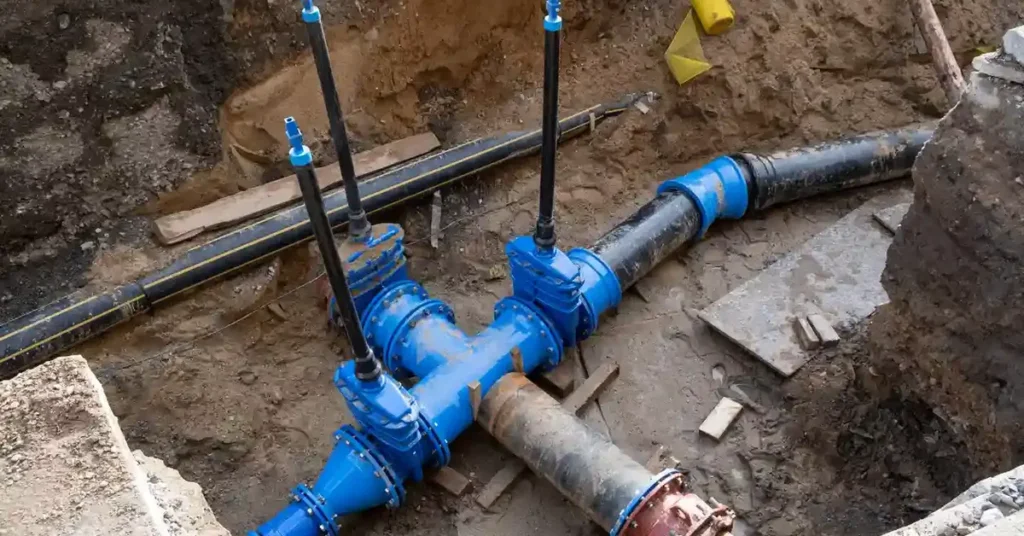
Sewer line repair may be a simple patching job or a complete replacement of the pipe. The national average is about $3,800, but your circumstances may be unusual or extreme.
Cost Breakdown by Repair Type
Spot Repairs ($1,500–$3,000)
Spot Repairs This type of repair reflects a focused, spot repair on a section of damaged pipe. These repairs treat a small area of pipe that has been compromised by a crack, leak, or localized root intrusion. They’re designed for problems detected early and are much less expensive than full replacements.
Partial Repairs ($3,000–$7,000)
If a small section of your sewer is damaged, you may be able to fix it with a partial repair, which will save you money. Partial repairs are required when 10-30 feet of the sewer line is damaged. Tree roots and old iron pipes are common in older and increasingly-rare homes, but this may also be seen over time in newer homes.
Full Replacement ($8,000–$15,000+)
Broken sewer lines should be replaced with a new one when full. What the experts would term as complete sewer line replacement may become required for ‘collapsed pipes or major structural failures.’ Full replacements are expensive, but they will put an end to regular repairs and provide years of stability.
Cost Breakdown by Repair Method
Traditional Excavation ($50–$200 per linear foot)
This methodology consists of digging down to the pipe being replaced, trench by trench. It’s this way: while no-dig pipe repair has advantages such as less inconvenience and disruption, it often requires additional restoration costs when it is necessary to repair landscaping, driveways, or sidewalks.
Trenchless Repair ($80–$250 per linear foot)
Around 60% of commercial sewer line repairs are performed using the trenchless method. Pipe bursting and pipe lining are trenchless repairs. That reduces the amount of digging and shortens the time for the project, but they typically have a higher materials cost up front.
Hydro Jetting ($300–$600)
This technique removes debris and buildup within the walls of your pipes. Although it’s not a permanent solution to structural problems, it works well for small blockages.
Video Inspection ($200–$500)
Plumbers will now use video inspections to identify cracks, breaks, and obstructions before any repair. This step allows for a precise repair design.
Key Factors That Influence Sewer Line Repair Cost
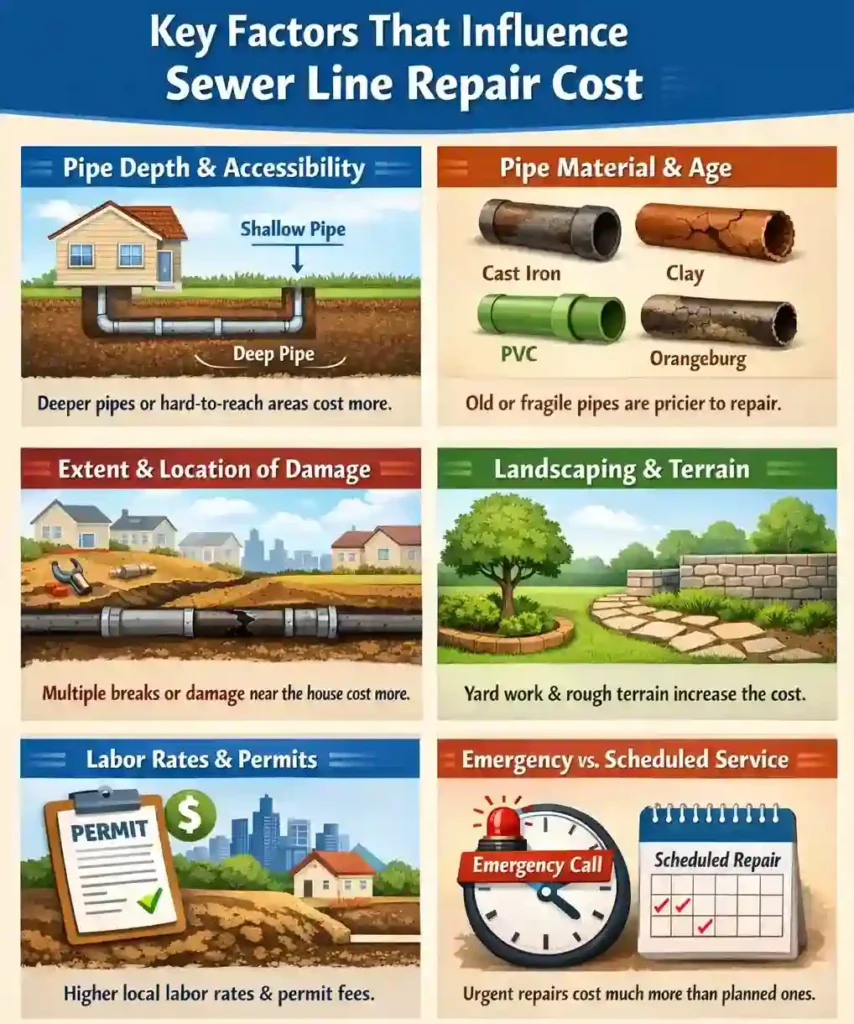
Several factors influence your total sewer line repair cost and knowing what they are can help you anticipate a more accurate quote.
Pipe Depth and Accessibility
Pipes at just a few feet below the surface need less work than those that are six feet deep. Plumbing under driveways, patios, or retaining walls is an additional expense.
Pipe Material and Age
The type of pipe material also determines the type of repairs possible and their cost:
- Cast Iron: Was widely used before the 1970s; susceptible to external rusting and internal scaling.
- Clay: Has to be replaced after being invaded by tree roots; replaced.
- PVC: Modern, sturdy, and simpler to fix.
- Orangeburg: Made from fiber, this pipe is present in mid-century homes; it
decomposes rapidly and must always be replaced.
Repair solutions for outdated pipe materials are generally more expensive.
Extent and Location of Damage
A single broken section costs far less than several broken sections in the same line. Issues that are closer to your home’s foundation or city property line are more precise, require more permits, and take longer.
Landscaping, Terrain, and Property Layout
Adding $500 to $3,000 or more for tree removal, shrubs, pavement, or ornaments. Sloped or rough ground also needs special tools.
Local Labor Rates and City Permits
The prices for plumbing labor are dramatically different depending on the region. Most service rates are higher in cities and urban regions with a high cost of living. Fees for permits, which are required in many areas.
Emergency vs. Scheduled Service
You may pay two or three times the weekday rates for emergency service if you have a critical sewage backup. Simple: Plan when you can to avoid these fees.
Signs You May Need Sewer Line Repair
Early detection of sewer line problems is a great way to save thousands of dollars in repairs. Ignoring these signs is something you should never do.
Slow or Gurgling Drains Throughout Your Home
When more than one drain slows down at the same time, it’s usually a sign of a main line clog, rather than a single drain clog. Gurgling noises in the fixtures are a result of the trapped air, which is the effect of blockage or pipe malfunction.
Sewage Backups in Lower Drains
If waste is rising in basement drains or in toilets on a lower level, the trouble is usually extensive. This is also when they first ask about the cost to fix a sewer backup because the longer repairs are delayed, the greater the potential for costly home damage.
Foul Odors Indoors or Outdoors
Sewer gas has a sulfur or rotten egg odor. Cracked lines are a point of release of gases into your home or yard, telling you it’s time to fix them.
Lush or Sunken Areas in the Yard
Sewage leaks act as fertilizer and can make some areas of your lawn greener. Sunken, soggy, or caving-in areas are signs of major problems in underground pipes.
Foundation Damage or Pest Activity
Because of the shifting ground caused by a leaking sewer line, your foundation can crack. Rodents and insects can even get into your house through broken pipes.
How to Save Money on Sewer Line Repairs
Although sewer repair is costly, there are a few ways to help you cut down on those costs.
Get Multiple Estimates
Always get and compare three or more estimates from licensed plumbers. Request detailed breakdowns that contain:
- Labor costs
- Equipment fees
- Restoration work
- Permit costs
- Method of repair
Stay clear of those extremely cheap bids; they may be hiding extra charges.
Consider Trenchless Repair Options
While trenchless repairs may involve a greater up-front cost, they generally pay off by preventing the removal and replacement of landscaping. Pipe lining can add decades to the life of your system.
Address Issues Early
Small fixes today can save you from a big sewer line replacement cost tomorrow. Have regular inspections every year or two, particularly if you live in an older house.
Check Insurance Coverage
Though normal policies exclude normal wear and tear, a few plans cover unexpected damage. Sewer line coverage riders can be purchased for an amount between $50 and $250 per year.
Schedule Repairs During Regular Hours
Avoid scheduling appointments outside of business hours if you can, to minimize markup fees on emergency services.
When to Call a Sewer Line Professional
Don’t try to fix a sewer line on your own. When you have either sewage backup or hints of underground leaks on your property, a call to the experts is sure to get you the right diagnosis and most effective repairs. Specialists apply specialized equipment to determine the fastest and least costly solution.
If you’re still shaking from the nerves after a sewage overflow, knowing the cost to fix a sewer backup can help you get a realistic budget and allow you to make an informed decision on what to do next.
For reliable service and peace of mind, you can always count on Derks Plumbing to handle the job safely and efficiently.

Conclusion
Now that you know how much does it cost to repair sewer line, you can tackle the problem with a clear head, not a panicked one. Most repairs are in the $2,500-$7,000 range, although prices vary according to the pipe material and the location of the problem, as well as the repair method being employed. Full replacements are significantly more expensive but might be necessary in older homes.
With the help of early warning signs, quotes, and trenchless options, you can stay ahead of the problem and avoid paying too much to preserve your home in the long run. Contact us only experienced, trained professionals to fix your sewer system and do so safely and correctly.
FAQs
What is the duration for repairing a sewer line?
Minor spot repairs may be completed in one day, waist to floor replacements may take three to five days, depending on depth and accessibility.
What is the average cost to replace a sewer line?
But for some homeowners, the cost to replace a failed sewer line can still be prohibitively expensive.
Most homeowners can pay anywhere between $8,000 to $15,000, although complex jobs may cost more than that.
HowDo I Know If It’s Covered By Homeowners Insurance?
Typically, policies do not cover regular wear and tear, but some will cover unexpected, accidental damage. Other sewer line riders may be purchased.
Will trenchless repair work for all sewer line issues?
Trenchless methods won’t work if the pipe has completely collapsed, is grossly misaligned, or has an incorrect slope.
What causes Sewer Line Failure So Soon?
Tree roots, soil shifting, aging pipe materials, fat deposits, and bad pipework are the common reasons for early failure.
How do I stop my sewer lines from breaking?
Stop flushing wipes, keep cutting roots out of your drain lines, and get camera inspections to catch problems before they get big every year.
Is the cost of “ sewer backup repair” different than normal sewer line repair?
Yes. Purchase cleanup is a different matter and may run anywhere from $500 to $5,000, depending on the degree of contamination and damage within the home.