Backflow testing is a mandatory inspection process that checks whether unsafe, dirty water is flowing backward into your clean municipal water supply. Plumbers use precise gauge equipment to verify that your backflow preventer works properly and protects your drinking water from dangerous contamination.
Knowing what is backflow testing helps homeowners and business managers protect their water quality and avoid costly municipal fines. Clean water should always flow in one direction through your pipes. When pressure changes happen, dirty water can reverse its course and enter clean plumbing lines. Regular checks stop this hazard before it starts.
What Is a Backflow Prevention Device?
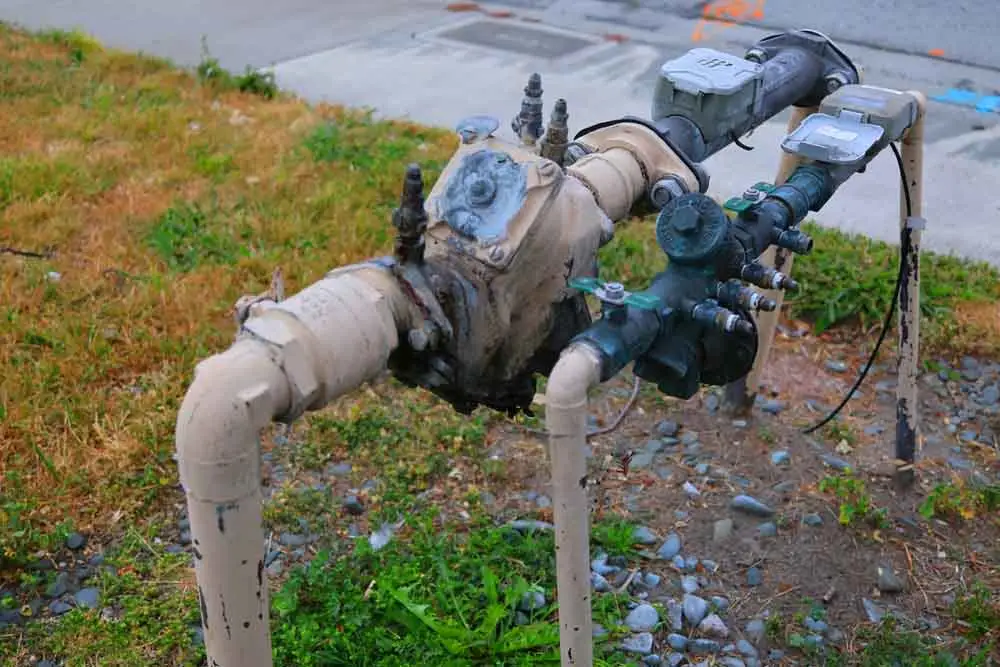
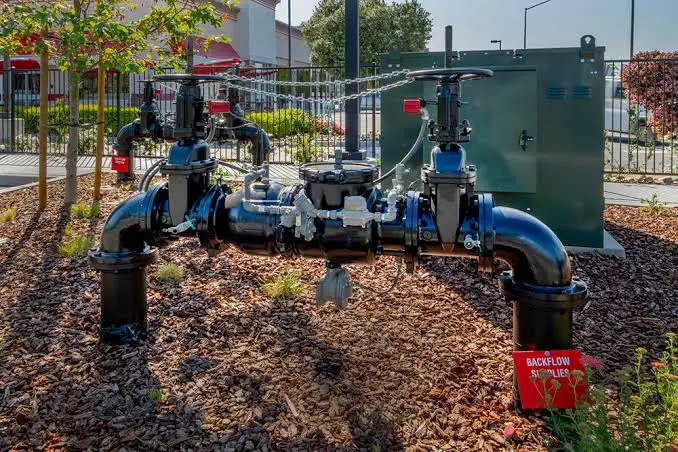
A backflow prevention device is a specialized valve assembly installed on your water line. It acts as an automatic safety barrier that permits water to flow in only one direction. Under normal water pressure, the valves stay open and let fresh water pass through into your home or commercial building.
If the municipal main pressure drops suddenly, these spring-loaded valves snap shut immediately. This mechanism prevents polluted water from reversing direction and mixing with safe drinking water. Common types include double-check valve assemblies and reduced pressure zone assemblies. Each type offers targeted protection based on the hazard level of the building setup.
You can read about: How Does a PRV Valve Work
How Does Backflow Testing Work?
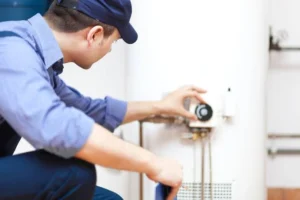
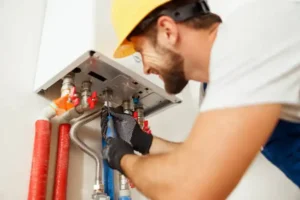
Backflow testing works by isolating your valve assembly and applying calibrated pressure to check every internal component. A licensed technician connects a specialized testing kit directly to the small test cocks on your backflow preventer. This gauge kit reads the exact pressure differentials across each internal valve.
The tester controls water flow through the device while reading the differential pressure gauges. By observing how well the check valves hold back water under artificial pressure changes, the technician determines if the assembly meets strict local water safety codes.
What Happens During a Backflow Test?
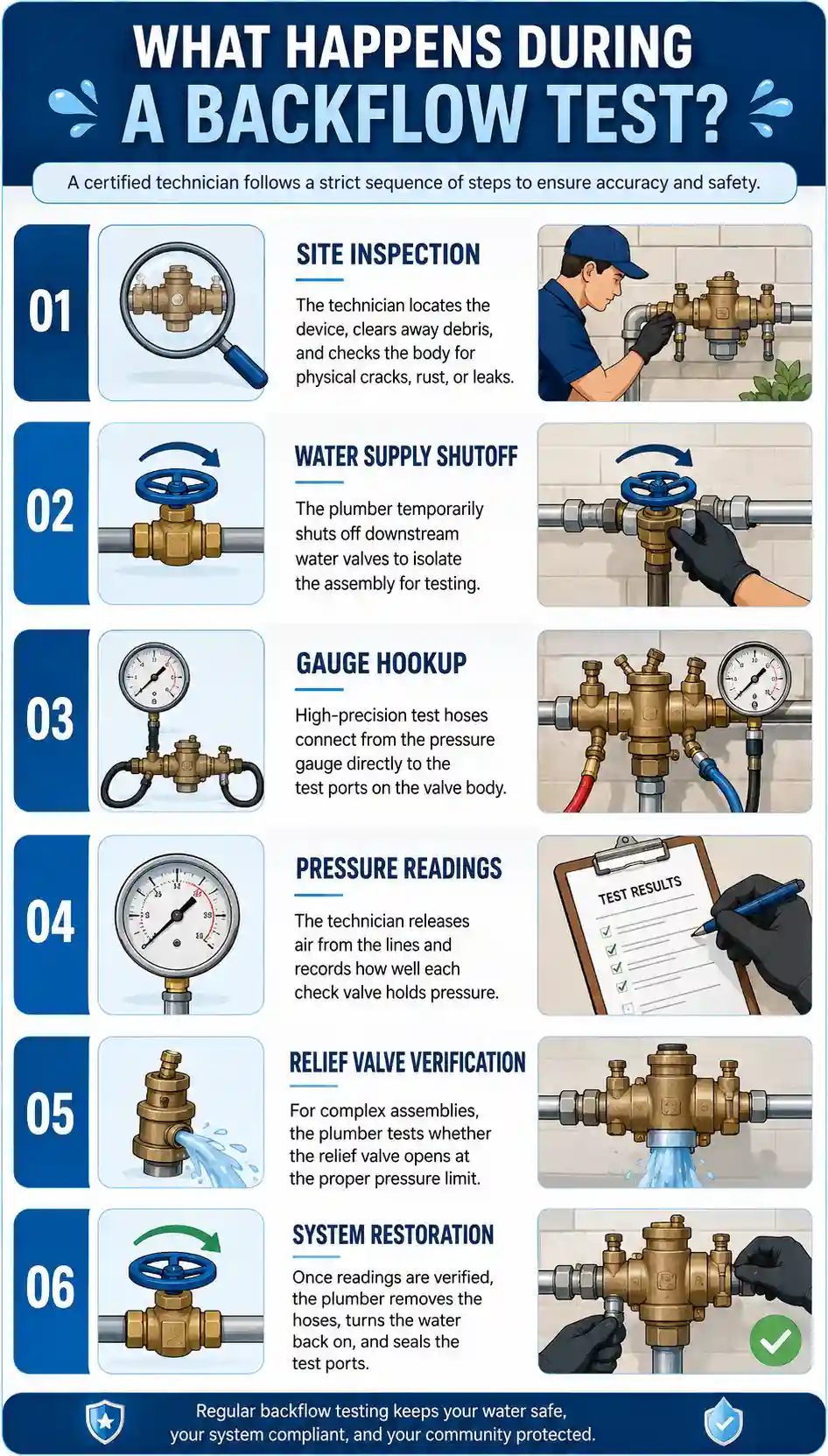
During a backflow test, a certified technician follows a strict sequence of steps to ensure accuracy:
Site Inspection: The technician locates the device, clears away debris, and checks the body for physical cracks, rust, or leaks.
Water Supply Shutoff: The plumber temporarily shuts off downstream water valves to isolate the assembly for testing.
Gauge Hookup: High-precision test hoses connect from the pressure gauge directly to the test ports on the valve body.
Pressure Readings: The technician releases air from the lines and records how well each check valve holds pressure.
Relief Valve Verification: For complex assemblies, the plumber tests whether the relief valve opens at the proper pressure limit.
System Restoration: Once readings are verified, the plumber removes the hoses, turns the water back on, and seals the test ports.
What Do Technicians Check During a Backflow Test?
Technicians inspect key internal mechanics to confirm the device works under real-world pressure drops. They check these core items:
First Check Valve: Verifies that the primary valve closes tightly and stops reverse water flow.
Second Check Valve: Ensures a secondary safety layer functions properly if the primary valve fails.
Air Gap and Relief Valve: Confirms that the automatic relief valve discharges excess pressure correctly before dirty water can cross over.
Internal Seals and Springs: Inspects rubber discs and stainless steel springs for wear, sediment buildup, or corrosion.
Shut-Off Valves: Confirms that control valves close completely without letting water bypass the test area.
What Happens If a Backflow Test Fails?
If a backflow test fails, your technician will diagnose the root cause immediately. Small pieces of sand, rust, or debris often get trapped under valve seats, preventing a tight seal. In many cases, cleaning internal parts or replacing worn rubber o-rings restores proper function right away.
If internal springs or valve bodies show heavy corrosion, the technician will replace the worn components or install a brand-new backflow assembly. After repairs are completed, the technician must perform a full re-test. Once the system passes, official compliance reports are submitted to your local water authority.
Why Is Backflow Testing Important?
Backflow testing is important because it shields public health from severe water contamination hazards. When pressure drops occur in main water lines, cross-connections can pull dangerous substances straight into your drinking taps.
Without working backflow preventers, irrigation fertilizers, commercial chemicals, heavy metals, and sewer waste can enter fresh water lines. Regular testing ensures that these barriers operate without flaw, keeping homes, schools, and workplaces safe from waterborne illness.
Real-World Triggers: Backsiphonage vs. Backpressure
Understanding how backflow occurs helps clarify why testing is essential. Backflow happens through two distinct physical mechanisms:
1. Backsiphonage
Backsiphonage occurs when main line pressure drops below atmospheric pressure, creating a vacuum effect. This negative pressure pulls standing water back into clean pipes. Common real-world causes include:
- Severe municipal water main breaks down the street.
- High-volume firefighter water withdrawal from hydrants nearby.
- Heavy seasonal demands on municipal pumping stations.
2. Backpressure
Backpressure happens when pressure inside a building’s plumbing exceeds the incoming municipal supply pressure. Pushing force overcomes incoming supply flow and forces contaminated fluid back into city mains. Common causes include:
- Unregulated booster pumps inside high-rise buildings.
- Heating boilers operating without pressure relief controls.
- High-pressure power washing units tied into domestic supply taps.
Comparing Backflow Assemblies: RPZ vs. DCVA
Different plumbing applications require specific types of backflow prevention devices depending on hazard levels.
Reduced Pressure Zone (RPZ) Assembly
- Hazard Rating: High Hazard (used where toxic chemicals or biological contaminants exist).
- Key Feature: Features two independent check valves plus a central differential relief valve that dumps water onto the ground if checks fail.
- Typical Uses: Commercial kitchens, medical facilities, chemical processing plants, and heavy irrigation systems with fertilizer injectors.
Double Check Valve Assembly (DCVA)
- Hazard Rating: Low to Moderate Hazard (used where water pollutants affect taste or color but do not pose health risks).
- Key Feature: Features two check valves inline inside a single body, without an external relief valve dump port.
- Typical Uses: Residential fire sprinkler systems, indoor lawn sprinkler lines, and standard commercial plumbing feeds.
When Do You Need Backflow Testing?
You need backflow testing under several specific circumstances:
Annual Requirements: Most cities require mandatory annual testing for all commercial buildings and residential irrigation lines.
New Valve Installation: Any newly installed backflow preventer must pass a certified test before turning on service.
System Repairs: If a valve assembly undergoes repair or relocation, it requires immediate testing.
Property Ownership Changes: Real estate transactions often trigger mandatory plumbing safety inspections.
Notice From Water Utilities: Municipal authorities issue formal inspection notices with firm compliance deadlines.
How Often Should Backflow Testing Be Done?
Backflow testing should be done at least once every 12 months. Local health codes and municipal utility guidelines mandate this annual schedule for all commercial properties, multi-family units, and homes with automated sprinklers.
High-risk facilities like hospitals, laboratories, and chemical plants may require semi-annual testing. Annual checks catch internal seal wear before a minor pressure failure causes actual contamination.
Local Compliance and Legal Mandates
Local water authorities hold legal power to enforce backflow safety programs. Failing to submit annual test reports leads to swift enforcement actions:
Formal Warning Notices: Utilities issue written warnings giving 30 days to complete required inspections.
Municipal Fines: Daily administrative penalties accumulate for non-compliant properties.
Water Service Shutoff: Cities will shut off incoming water service to eliminate contamination threats to neighboring properties.
Property Liability: Business owners face significant legal liability if unmaintained plumbing systems cause community water contamination.
Conclusion
Regular backflow prevention testing is an essential defense for your water supply, protecting public health and keeping your property fully compliant with municipal codes. Understanding how these safety devices operate helps property owners take proactive steps before small mechanical wear turns into active contamination risks or costly municipal fines.
When you need a reliable Plumbing Service in Los Angeles, trust the certified team at Derks Plumbing to handle your annual backflow test, valve repairs, and plumbing upgrades with total precision. Contact our team today to lock in your annual testing schedule and protect your water supply year-round.
FAQs
What causes backflow in residential pipes?
Backflow occurs due to sudden pressure drops in municipal water mains or excessive pressure inside home systems like boilers and irrigation units.
How long does a standard backflow test take?
A standard backflow test takes 20 to 30 minutes to complete, assuming the assembly is accessible and shut-off valves function properly.
Can I perform a backflow test myself?
No, backflow tests must be performed by certified backflow testers who hold valid licenses and use calibrated testing equipment.
How much does backflow preventer testing usually cost?
Standard backflow testing ranges between $75 and $200, depending on valve size, accessibility, and local municipal filing fees.
What happens if my backflow preventer keeps leaking water?
Continuous water discharge from an RPZ relief valve indicates dirty valve seats or failing internal seals that require professional plumbing repair.