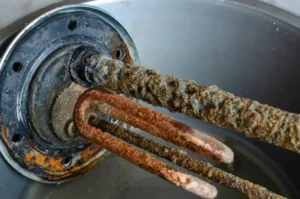
Sediment builds up inside your water heater over time. This buildup reduces efficiency, raises energy bills, and shortens the life of your unit. Draining it once a year keeps it running clean and strong. Most homeowners skip this step and end up paying for early replacements.
Learning how to drain a hot water heater is easier than it sounds. You need basic tools, about an hour, and this guide. We will walk you through every step clearly and safely.
Signs Your Water Heater Needs Draining
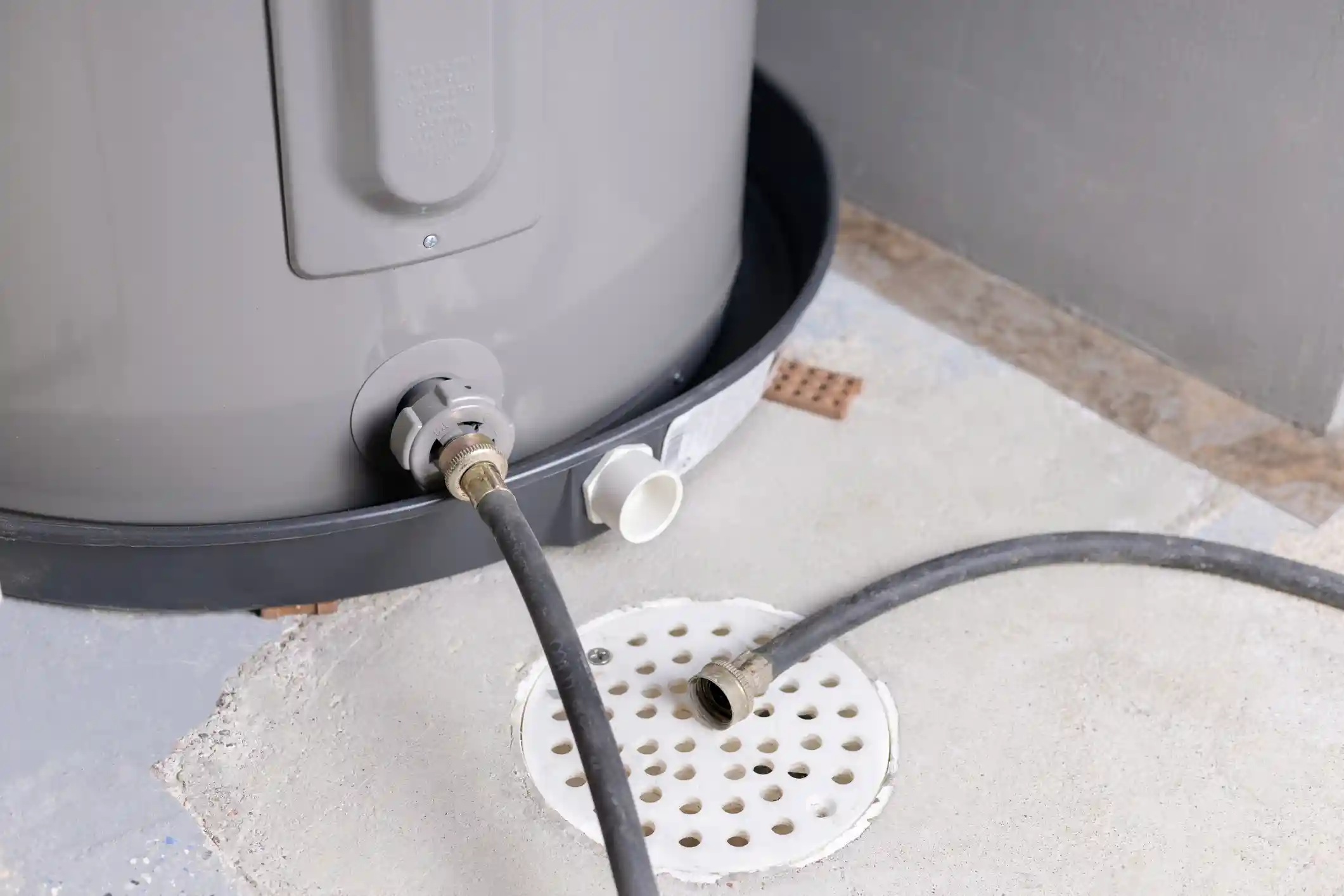
Not sure if it is time? Look for these warning signs:
- Rusty or discolored water coming from your hot tap
- Popping or rumbling sounds when the heater runs (that is sediment at the bottom)
- Slow hot water recovery after showers or dishes
- Higher energy bills without a clear reason
- Water that smells like rotten eggs or metal
- Visible grit or particles in your hot water
If you notice any of these, it is past time to drain hot water heater sediment out.
Benefits of Draining Your Water Heater
Draining your tank is not just maintenance. It is an investment in your home. Here is what you gain:
Longer lifespan. Sediment acts like an insulator at the bottom. It forces the burner to work harder and wear out faster. Removing it regularly can add years to your unit.
Lower energy bills. The U.S. Department of Energy notes that sediment buildup makes water heaters use more energy to heat the same amount of water. Flushing it out keeps efficiency high.
Better water quality. Minerals and rust sitting in standing hot water affect taste and smell. A clean tank means cleaner water at your tap.
Fewer repairs. Sediment creates hot spots on the tank lining. Over time those hot spots crack the tank. Regular hot water tank draining prevents that kind of damage.
Types of Water Heaters
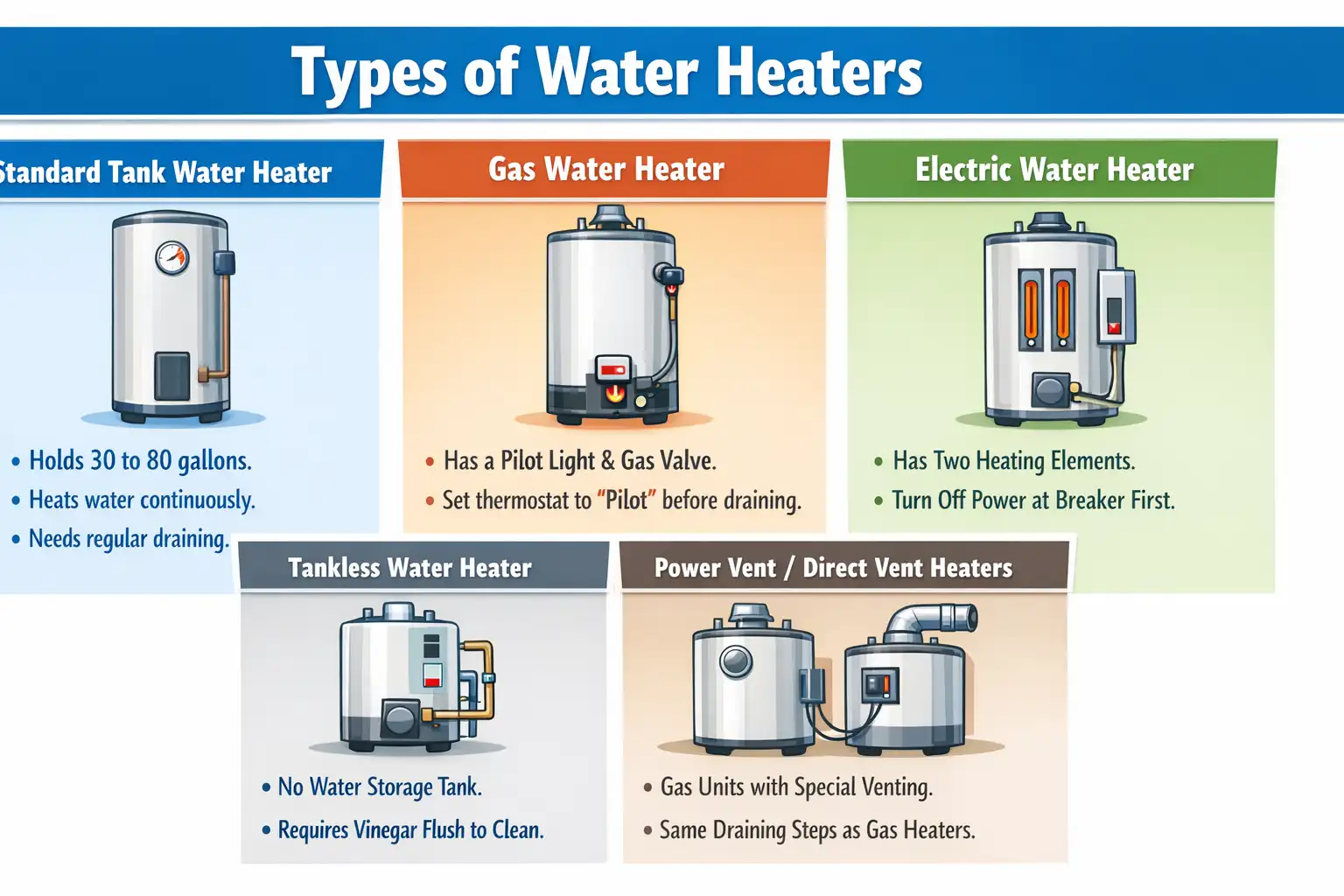
Before you start, know what type of unit you have. The draining process is mostly the same but there are small differences.
Standard tank water heaters are the most common. They hold 30 to 80 gallons and heat water continuously. These need draining the most often.
Gas water heaters have a pilot light and a gas valve. You will set the thermostat to “Pilot” before draining, not completely off.
Electric water heaters have two heating elements inside. You must cut power at the breaker before you start. Running an electric heater dry will burn out the elements.
Tankless water heaters do not store water, so they do not need the same draining process. They need a vinegar flush to clean the heat exchanger instead.
Power vent and direct vent heaters are gas models with different exhaust setups. The draining steps are the same for both.
Tools and Materials Required
Gather everything before you start. You do not want to stop mid-job to search for a part.
- Garden hose (long enough to reach a floor drain or outside)
- Flat-head screwdriver
- Work gloves
- Safety goggles
- Bucket
- Hose with a female end fitting
- Channel-lock pliers (optional, for stiff drain valves)
That is it. No special equipment needed.
Safety Precautions Before You Begin
Water inside a heater can reach 120 to 140 degrees Fahrenheit. That water can cause serious burns. Take these steps first.
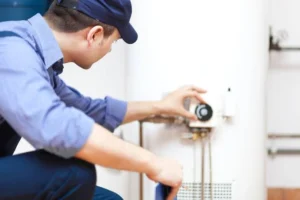
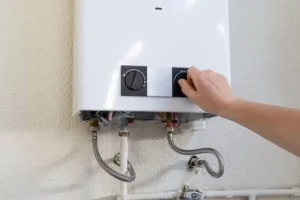
Turn off the power or gas. For electric units, flip the breaker. For gas units, turn the thermostat knob to “Pilot.”
Let the water cool. Wait at least 1 to 2 hours after shutting it down. Overnight is safer if you have time.
Turn off the cold water supply. Find the cold water inlet valve on top of the unit. Turn it clockwise to close it.
Open a hot water faucet nearby. This prevents a vacuum from forming inside the tank. Keep it open during the whole process.
Check the area around your heater. Make sure there is nothing flammable nearby if it is a gas unit.
Step-by-Step Guide How to Drain a Hot Water Heater
This is the core of knowing how to drain a hot water heater the right way. Follow each step in order.
Step 1: Turn Off Power or Gas
Electric heaters: go to your breaker panel and turn off the circuit labeled “water heater.”
Gas heaters: turn the thermostat to “Pilot.” Do not turn it to “Off” completely or you may need to re-light the pilot light.
Step 2: Shut Off the Cold Water Supply Valve
This is usually directly above the unit. It is a lever or round knob. Turn it off completely.
Step 3: Open a Hot Water Faucet in Your Home
Go to any sink or tub and open the hot side. Leave it open. This allows air in so water drains freely. Without this, suction can slow or stop the drain.
Step 4: Connect a Garden Hose to the Drain Valve
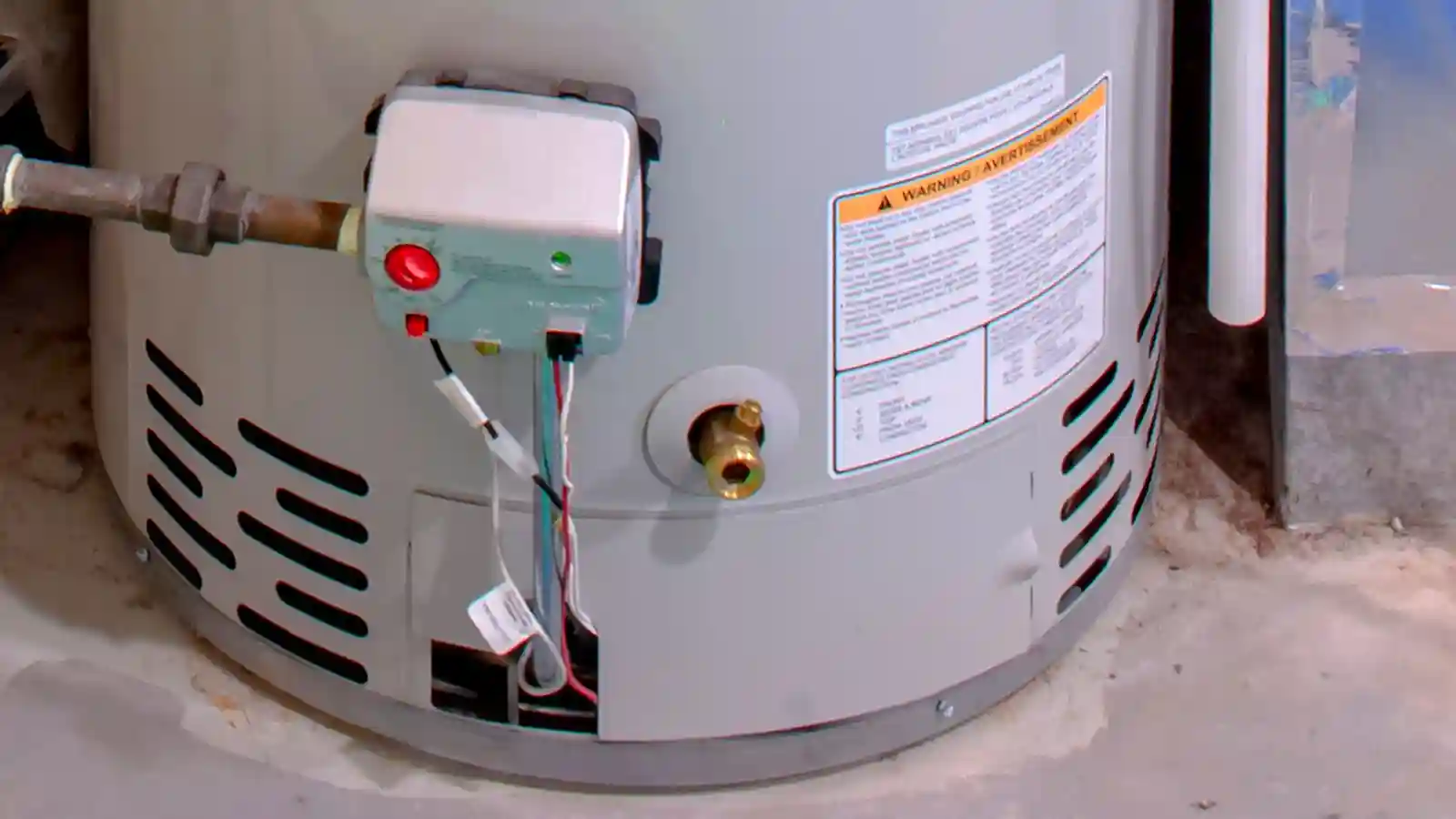
The drain valve is near the bottom of the tank. It looks like a hose bib (a small spigot). Screw your garden hose onto it tightly.
Run the other end of the hose to a floor drain, outside, or into a large bucket. Make sure the drainage point is lower than the valve.
Step 5: Open the Drain Valve
Turn the valve counterclockwise to open it. Water will start flowing out. The first water that comes out may be dark or murky. That is the sediment leaving the tank.
If the water flows slowly, check that your hot water faucet inside is still open.
Step 6: Flush the Tank With Cold Water
Once the tank is empty, turn the cold water supply back on for 1 to 2 minutes. This stirs up remaining sediment at the bottom and pushes it out through the hose. Watch the water draining from the hose. When it runs clear, you are done.
This step is the key difference between simply draining and doing a full flush a water heater job. Do not skip it.
Step 7: Close the Drain Valve and Disconnect the Hose
Turn the drain valve clockwise until it is snug. Do not over-tighten or you may crack the plastic valve body. Remove the garden hose.
Step 8: Refill the Tank
Turn the cold water supply valve back on. Let the tank fill completely. Keep the hot water faucet inside open to release air. When water flows steadily from that faucet without sputtering, the tank is full.
Step 9: Restore Power or Gas
For electric: flip the breaker back on.
For gas: turn the thermostat back to your desired temperature (usually 120 degrees Fahrenheit).
Wait 30 to 60 minutes for the water to heat back up before testing.
You can read about: How to Hide Tankless Water Heater
How Often Should You Drain Your Water Heater?
Most plumbers and manufacturers recommend draining once per year. But your local water quality matters.
If you live in an area with hard water (high mineral content), drain every 6 months. Hard water deposits sediment faster.
If your water is soft, once a year or even every 18 months is fine.
Check with your manufacturer’s manual for the exact recommendation for your model.
What to Do If Your Drain Valve Leaks or Won’t Open
This is one of the most common problems people run into. Here is how to handle each situation.
The valve is stuck. Use channel-lock pliers and turn gently. Do not force it. If it will not budge, call a plumber.
Water leaks from around the valve after draining. The valve seat may be corroded. You can replace the valve yourself if you are comfortable with plumbing. Use a Watts or Eastman replacement ball valve for a more reliable seal than the original plastic valve.
The valve drips after you close it. Wrap the threads with Teflon tape before reinstalling. If it still drips, replace the valve entirely.
No water comes out when you open the valve. The valve may be clogged with sediment. Insert a long screwdriver or thin dowel into the valve opening to break up the blockage.
Troubleshooting Common Problems
Still getting dirty water after flushing? Flush again. Some tanks with heavy buildup need two or three full drain-and-flush cycles to run clear.
Hot water smells like sulfur after draining? The anode rod may be failing. The anode rod is a magnesium or aluminum rod inside the tank that prevents rust. Replace it every 3 to 5 years.
Water heater making noise again shortly after draining? If noise returns quickly, your water has very high mineral content. Consider installing a whole-home water softener.
The tank is not heating after you restore power? For electric units, a dry burn may have tripped the thermal cutoff. Press the reset button on the element access panel. If it trips again, call a plumber.
When to Call a Professional
Some situations are not DIY-friendly. Do not risk a costly mistake.
Call a licensed plumber if:
- Your tank is over 10 years old and showing rust inside or outside
- The drain valve is completely corroded and will not move
- You see signs of a tank leak (water pooling at the base)
- The pressure relief valve is leaking or damaged
- You smell gas near a gas water heater
- The water never heats back up after the job
If you are in the Eagle Rock area, the team at Derks Plumbing handles all of these issues. From drain valve replacement to full Water Heater Installation in Eagle Rock, they have the experience to do the job right the first time.
Do not guess when it comes to gas lines or a failing tank. A professional inspection is worth the cost.
Conclusion
Draining your water heater once a year is one of the simplest things you can do to protect your home and your wallet. It takes less than an hour, costs nothing in parts, and adds years to your unit’s life.
Now you know exactly how to drain a hot water heater from start to finish. Follow the steps above, stay safe, and make it a yearly habit.
If anything feels off during the job, or if your heater is overdue for a professional look, reach out to Derks Plumbing. They make water heater maintenance simple and stress-free.

Frequently Asked Questions
How long does it take to drain a hot water heater?
Most tanks take 20 to 60 minutes to drain fully. Larger tanks (50 to 80 gallons) take longer.
Can I drain a hot water heater without turning off the power?
No. Running an electric heater without water inside will burn out the heating elements. Always cut power first.
What if I have never drained my water heater?
Start now, but go slow. Very old sediment may partially clog the valve. If water barely trickles out, call a plumber.
Do I need to drain a tankless water heater?
Not the same way. Tankless units need a vinegar flush through the heat exchanger. The process is different.
Is it safe to drain a hot water heater myself?
Yes, as long as you follow safety steps. Let the water cool first and always cut power or gas before starting.
What does the flush a water heater process actually remove?
It removes calcium, magnesium, and iron mineral deposits that settle at the tank bottom over time.
How do I know if my water heater is fully drained?
When water stops flowing from the garden hose and the hose feels light, the tank is empty.