Running out of hot water is frustrating. A tankless water heater fixes that but only if you pick the right size. Most homeowners skip the math and end up with a unit that’s too weak for their home. Get it wrong and you’ll have lukewarm showers every morning.
So, what size tankless water heater do I need? The short answer: you need a unit that can handle your peak flow rate and raise your cold water to the temperature you want. This guide walks you through every step, with real numbers and clear examples.
Understanding How Tankless Water Heaters Are Sized
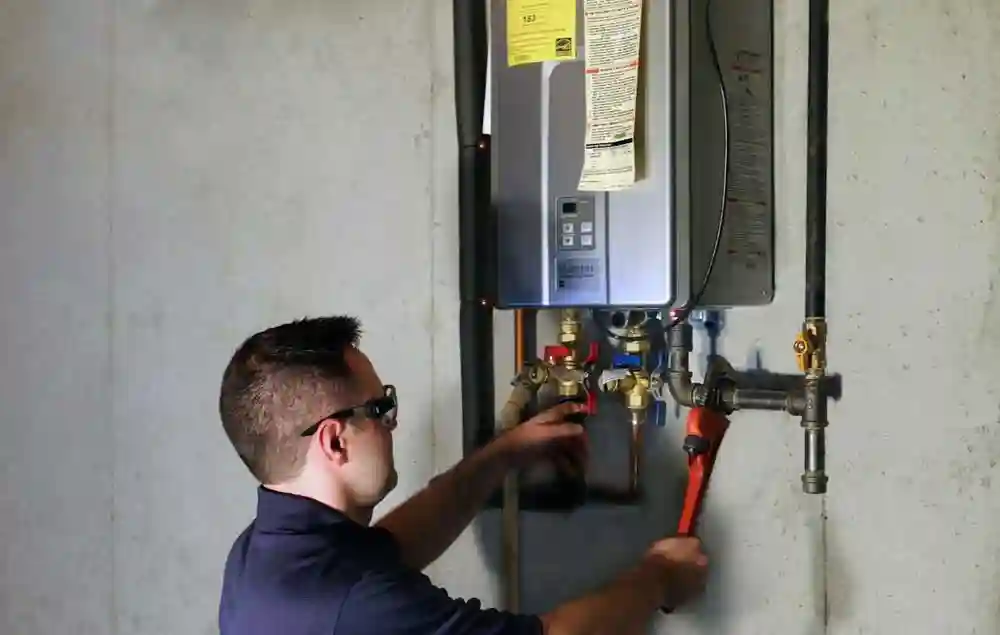
Tankless water heater sizing is not about physical size. It’s about performance, specifically two numbers: flow rate and temperature rise.
Flow rate is how many gallons per minute (GPM) the unit can heat. Temperature rise is how many degrees it needs to warm the incoming cold water.
For example, if your groundwater comes in at 50°F and you want 120°F hot water, the unit must raise the temperature by 70°F. If you’re running a shower and a dishwasher at the same time, it needs to heat maybe 3–4 GPM at that temperature rise.
That combination GPM plus temperature rise determines everything about tankless water heater size.
Step 1: Calculate Your Household’s Flow Rate
Start by listing every hot water fixture you might use at the same time. This is called your peak demand.
Here are average flow rates for common fixtures:
| Fixture | Average GPM |
| Shower | 1.5 – 2.5 GPM |
| Bathroom faucet | 0.5 – 1.5 GPM |
| Kitchen faucet | 1.0 – 1.5 GPM |
| Dishwasher | 1.0 – 2.0 GPM |
| Clothes washer | 1.5 – 3.0 GPM |
| Bathtub | 3.0 – 4.0 GPM |
Example for a family of four: Two showers running at once = 2.0 + 2.0 = 4.0 GPM Add a kitchen faucet = 5.0 GPM total
That’s your target. Your unit must be rated to handle at least 5.0 GPM at your required temperature rise.
Pro tip: Don’t add up every single fixture in the house. Think realistically about what runs during your busiest morning hour.
Step 2: Determine the Required Temperature Rise
Groundwater temperature changes by region. This matters a lot for sizing an on-demand water heater.
- Southern states (Texas, Florida, Arizona): Groundwater averages 65–70°F
- Northern states (Minnesota, Michigan, New York): Groundwater averages 37–50°F
- Mid-Atlantic and Midwest: Typically 50–60°F
Set your target output temperature. Most homes use 120°F. Some prefer 110°F for safety with young children.
Formula:
Temperature Rise = Desired Output Temp − Incoming Groundwater Temp
Example (Northern home): 120°F − 45°F = 75°F temperature rise needed
Example (Southern home): 120°F − 68°F = 52°F temperature rise needed
A home in Minnesota needs a much more powerful unit than a home in Florida even if both have the same number of fixtures. This is the most overlooked part of tankless water heater sizing.
Step 3: Match Your Needs with the Right Unit Size
Now combine your GPM and temperature rise to find the right unit.
Most manufacturers publish performance charts. You look up your required temperature rise, then find the GPM the unit produces at that rise.
Example: You need 4.0 GPM at a 75°F rise. You find a gas unit rated at 6.5 GPM at 75°F rise. That works with room to spare.
A unit rated at 3.0 GPM at 75°F rise? Too small you’ll get cold showers.
Always size up slightly. You’d rather have a unit with a little extra capacity than one that maxes out every morning.
Gas vs. Electric Tankless Water Heaters
This choice matters for sizing because gas and electric units handle temperature rise very differently.
Gas Tankless Water Heaters
Gas units are more powerful. A typical whole-home gas unit runs between 150,000 and 200,000 BTUs. They can handle high GPM at large temperature rises, ideal for cold climates or large families.
Good for: Homes with natural gas or propane lines, large households, cold regions.
Electric Tankless Water Heaters
Electric units are measured in kilowatts (kW). Whole-home electric units typically range from 18 kW to 36 kW. They’re better for smaller homes or climates where groundwater is already warm.
A 36 kW electric unit can manage about 3–4 GPM at a 70°F rise. For colder climates, that may not be enough for two simultaneous showers.
Good for: Smaller homes, point-of-use applications, warm climates, homes without gas lines.
Bottom line: If you live somewhere cold and have a large family, gas is almost always the better fit for whole-home sizing.
You can read about: How Can a Tankless Heater Pump More GPM?
Sizing Chart Based on Simultaneous Usage
Use this chart as a starting point. It assumes an average temperature rise of 70°F, which fits most of the US.
| Simultaneous Fixtures | Flow Rate Needed | Recommended Unit Size |
| 1 shower | 2.0 GPM | 6–8 GPM gas / 18 kW electric |
| 1 shower + kitchen faucet | 3.5 GPM | 7–9 GPM gas / 24 kW electric |
| 2 showers | 4.0 GPM | 8–10 GPM gas / 27 kW electric |
| 2 showers + dishwasher | 5.0 GPM | 9–11 GPM gas / 36 kW electric |
| 3+ showers or full household | 6.0+ GPM | 10+ GPM gas / 36+ kW electric |
For colder climates (groundwater below 50°F), go one tier higher than the chart shows.
Recommended Tankless Water Heater Sizes by Home Type
Here’s a practical breakdown based on what we see most often.
Small Home or Apartment (1–2 people)
You likely run one shower and maybe a faucet at the same time. Look for a unit rated at 6–7 GPM (gas) or 18–24 kW (electric). Point-of-use electric units work well here too.
Medium Home (3–4 people)
This is the most common scenario. Two showers may run at once, plus kitchen use. Target 8–10 GPM gas or 27–36 kW electric.
Large Home (5+ people, multiple bathrooms)
Peak demand can hit 5–7 GPM easily. You need a 10+ GPM gas unit or may need two tankless units working in parallel. Some plumbers recommend a cascading setup where two units share the load.
Vacation Home or Cabin
Usually lower demand but may face cold groundwater. A 6–8 GPM gas unit often works well, but check your region’s groundwater temp first.
Common Mistakes to Avoid When Sizing a Tankless Water Heater
- Ignoring groundwater temperature. This single factor changes everything. Always check your local groundwater temp before sizing.
- Only looking at GPM, not temperature rise. A unit rated at 8 GPM might only deliver 4 GPM at a high temperature rise. Always check the spec at your temperature rise.
- Buying based on house square footage alone. Square footage doesn’t tell you how many showers run at once. Count fixtures and people, not rooms.
- Undersizing to save money. A unit that runs at full capacity all the time wears out faster and leaves you with cold water during peak hours. The price difference between sizes is usually small compared to the headache.
- Not checking gas line capacity. High-BTU gas units need a properly sized gas line. If your line is too small, the unit won’t perform. Have a plumber check before buying.
- Forgetting about venting. Gas tankless units need proper venting. The type of vent (direct vent vs. power vent) affects installation cost and location options.
Benefits of Choosing the Right Tankless Water Heater Size
Getting this right pays off in real ways.
Hot water on demand. No more waiting or running out mid-shower. The right size means continuous hot water for everyone.
Lower energy bills. Tankless units only heat water when you use it. No standby heat loss like traditional tanks. Properly sized units run efficiently oversized units short-cycle and waste energy.
Longer lifespan. A correctly sized unit doesn’t strain to keep up. Most last 15–20 years with proper maintenance, compared to 10–12 years for tank heaters.
Space savings. Tankless units mount on walls and free up significant floor space especially compared to a 50–80 gallon tank.
Better resale value. Buyers notice energy-efficient upgrades. A well-sized tankless system is a genuine selling point.
How Hard Water Affects Sizing and Performance
This section often gets left out but it matters.
Hard water leaves mineral buildup inside tankless units. This narrows the heat exchanger over time and reduces efficiency. In hard water areas, the unit has to work harder to heat the same amount of water.
If your home has hard water (common in much of the Southwest and Midwest), consider:
- Installing a water softener or descaler before the unit
- Flushing the unit annually with a descaling solution
- Sizing up slightly to account for performance loss over time
Skipping this step shortens the unit’s life and reduces hot water output even if you sized it correctly at purchase.
Conclusion
Sizing a tankless water heater comes down to three things: your peak flow rate, your required temperature rise, and whether you choose gas or electric. Get those three numbers right and you’ll have reliable hot water for years.
If you’re in the Los Angeles area and need professional help with a new installation, Derks Plumbing specializes in Tankless Water Heater Installation in Eagle Rock and surrounding areas. Our team calculates exactly what size tankless water heater you need based on your actual home, not guesswork.
Don’t guess at something this important. A wrong-sized unit costs you money every month and may leave you taking cold showers. Get it right the first time with a pro who knows the job.

Frequently Asked Questions
What size tankless water heater do I need for a family of 4?
Most families of four need a unit rated at 8–10 GPM (gas) or 27–36 kW (electric). That covers two simultaneous showers plus kitchen use. If you’re in a cold climate, go toward the higher end of that range.
How do I know what GPM I need?
Add up the flow rates of all fixtures you might use at the same time. A shower uses about 2 GPM, a kitchen faucet about 1.5 GPM. If two showers run at once, you need at least 4 GPM from your unit.
Is a 6 GPM tankless water heater enough for a 3-bedroom house?
It depends on your climate and how many people live there. For a warm-climate home with 2–3 people, yes. For a cold-climate home with 4–5 people, probably not. Always calculate your temperature rise and peak demand first.
What’s the difference between sizing a tankless water heater for gas vs. electric?
Gas units are rated in GPM and BTU. Electric units are rated in kW. Gas units generally handle higher demands and larger temperature rises. For cold climates and large families, gas is usually the better fit.
Can a tankless water heater be too big?
Technically yes, but oversizing causes fewer problems than undersizing. An oversized unit may short-cycle (turn on and off frequently), which can reduce efficiency and cause wear. But it won’t leave you cold.
How often should a tankless water heater be flushed?
Flush it once a year with a descaling solution, especially if you have hard water. Annual maintenance keeps the heat exchanger clean and performance strong. Skip it for a few years and you’ll notice reduced output.




