Your water heater runs quietly in the background every day. But do you actually know what type it is? Most homeowners don’t until something breaks. Knowing your water heater type saves time, money, and a lot of confusion when repairs or replacements come up.
So, how to tell if water heater is gas or electric? Look for a flue pipe on top (gas) or a power cord and two thick wires at the bottom (electric). That’s the quickest way. This guide walks you through every method so you know for sure.
Why Knowing Your Water Heater Type Matters
It’s not just a fun fact. It’s practical information every homeowner needs.
Getting the wrong replacement unit is a costly mistake. A plumber who expects a gas unit and finds an electric one has to stop, re-quote, and reschedule. That delay adds up fast.
Maintenance is also different for each type. Gas heaters need burner inspections and venting checks. Electric heaters need element testing and thermostat checks. If you don’t know which you have, you can’t maintain it properly.
Energy costs are another reason. If your bills seem high and you’re wondering how to tell if electric hot water heater is on, you need to first confirm it’s electric. A unit running inefficiently on the wrong fuel type wastes money every month.
Here’s a quick comparison:
| Feature | Gas Water Heater | Electric Water Heater |
| Power Source | Natural gas or propane | Electrical wiring |
| Vent/Flue | Yes — pipe at top | No flue pipe |
| Pilot Light | Often present | Never present |
| Operating Cost | Usually lower | Usually higher |
| Lifespan | 8–12 years | 10–15 years |
| Recovery Rate | Faster | Slower |
You can read about: Electric vs Gas Tankless Water Heater
Inspect External Fuel Indicators
This is the fastest check you can do. Walk up to your water heater and look at two things: the top and the bottom.
At the top: A gas water heater will have a metal flue pipe or vent stack. It connects from the top of the unit and runs up through the ceiling or wall. This pipe carries combustion gases outside the home. If you see that pipe, it’s gas.
At the bottom: Electric water heaters have a power cord or two thick electrical conduit wires running into the unit from the wall. These carry the voltage needed to heat the water with internal elements.
For propane users: If you see a gas line but no connection to a utility line, you likely have a propane tank outside. That’s still a gas heater, just a different fuel source.
Quick tip: No flue pipe and no gas line? It’s electric. No power cord but a flue pipe? It’s gas. It’s really that simple most of the time.
Inspect the Heater’s Power Source
Go further than just looking. Trace the connections.
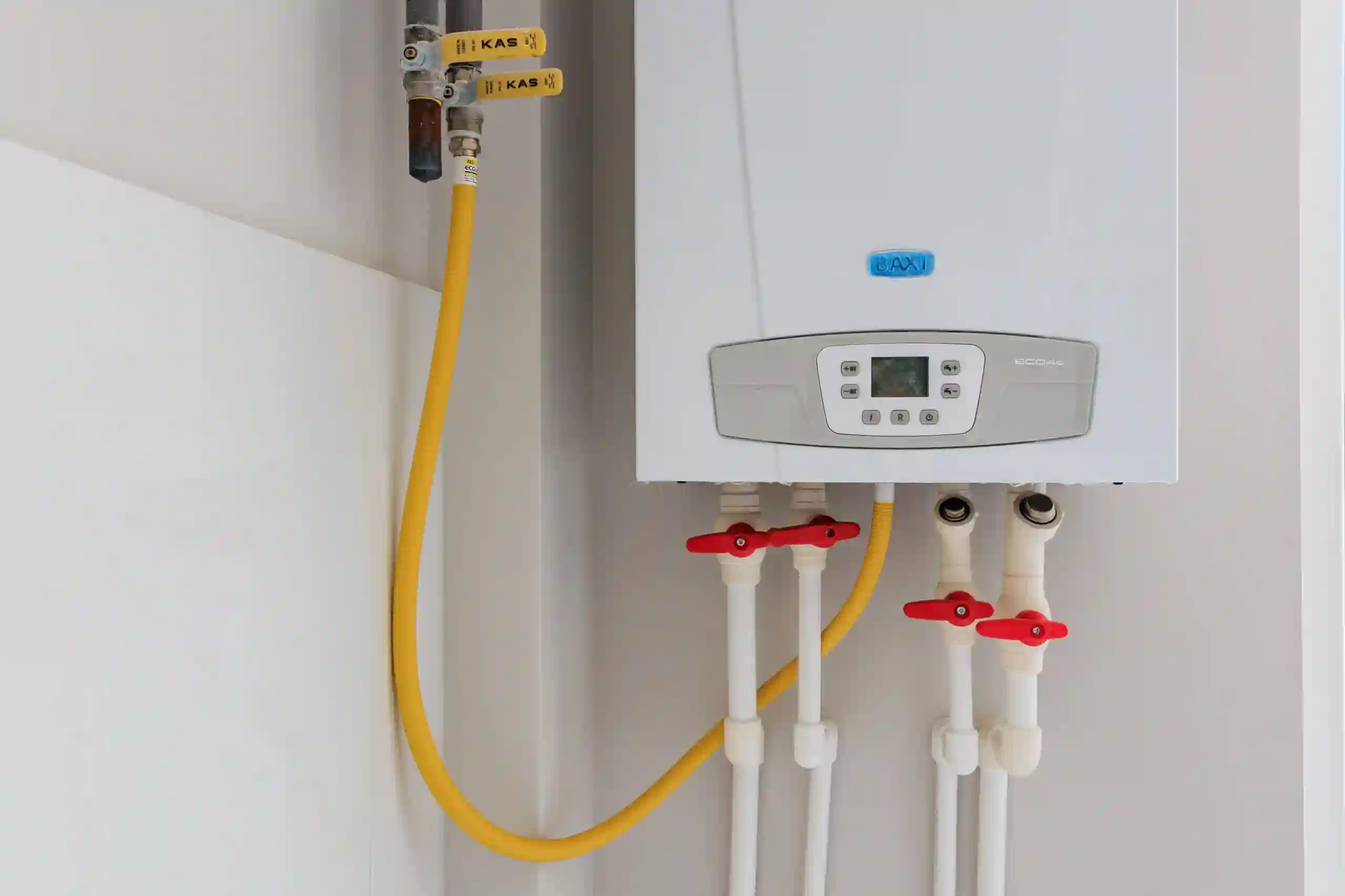
For gas heaters: Follow the pipe that connects to the burner at the base. This pipe will connect to your home’s gas supply line. You’ll also likely see a small thermocouple or igniter wire near the burner assembly. Gas units also have a gas control valve, usually with a dial that says “Pilot,” “On,” and “Off.”
For electric heaters: You’ll see an electrical panel or disconnect box nearby. Two heavy gauge wires (usually red and black, sometimes wrapped in conduit) run from that box into the heater. Electric water heaters in North America typically run on 240 volts that’s a dedicated circuit, not just a regular outlet.
If you’re still unsure whether your boiler is gas or electric, trace the main supply lines. Gas lines are typically copper, black iron pipe, or flexible yellow CSST tubing. Electrical lines are rigid conduit or wire sheathing.
Check the Manufacturer’s Plate or Label
Every water heater has a data plate or rating label. It’s usually a sticker or metal plate on the side of the tank.
This label tells you everything. Look for:
- Fuel Type — listed as “Natural Gas,” “LP Gas,” or “Electric”
- BTU Input — only listed on gas units
- Wattage/Voltage — only listed on electric units
- Model Number — you can cross-reference this online if the label is faded
The model number is your backup plan. Go to the manufacturer’s website and enter it. The specs will confirm fuel type immediately. Common manufacturers include Rheem, Bradford White, A.O. Smith, and State Water Heaters.
If the label is unreadable, take a photo of whatever numbers you can make out and call the manufacturer. They can usually identify the unit from a partial serial number.
You can read about: How to Adjust Water Heater Temperature
How Each Type Functions
Understanding how they work helps you identify them and troubleshoot problems later.
How Gas Water Heaters Work
Gas heaters use a burner at the base of the tank. When cold water enters, the thermostat signals the gas valve to open. Gas flows to the burner and ignites either through a standing pilot light or an electronic ignition.
The flame heats the water in the tank from the bottom up. Hot combustion gases rise through a flue in the center of the tank and exit through the vent pipe at the top. This design is why gas heaters heat water faster than electric ones.
Older gas heaters often have a standing pilot and a small constant flame. Newer ones use electronic ignition, which only sparks when needed.
How Electric Water Heaters Work
Electric heaters use two heating elements mounted inside the tank, one near the top and one near the bottom. When cold water enters, the lower thermostat activates the bottom element first. As the water heats up, the upper element kicks in.
There’s no flame, no combustion, and no venting needed. The element works like a giant version of the coil in an electric kettle. Heat transfers directly into the water.
Because of this design, electric heaters generally recover slower than gas units. But they’re safer in enclosed spaces and easier to install.
You can read about: How to Troubleshoot Your Water Heater
Check Your Energy Bills
Your monthly bills hold a clue too. This is a simple but often overlooked method for how to know if water heater is gas or electric.
If you have a gas heater: You’ll have a gas utility bill. It will show usage in therms or CCF (hundred cubic feet). Water heating typically accounts for 15–20% of total gas usage in a home.
If you have an electric heater: You’ll have a notably higher electric bill especially in winter. Electric water heaters are one of the biggest electricity consumers in a home, second only to HVAC systems.
If your home only has an electric bill and no gas bill at all, your water heater is almost certainly electric. Same idea: if you have gas service but no gas-fueled appliances you’re aware of, your water heater might be that mystery gas appliance.
Installation Location
Where your heater sits inside the home tells a story.
Gas water heaters need ventilation. Because of this, they’re usually installed in garages, utility closets with exterior walls, or basements where a flue pipe can route outside easily. You’ll often see the vent pipe running up through the wall or ceiling.
Electric water heaters don’t need venting. They can go almost anywhere closets, attics, crawl spaces, even inside walls in manufactured homes. If your heater is in a small interior closet with no visible pipe going to the outside, it’s almost certainly electric.
Also look for a gas shut-off valve on the wall nearby. It looks like a lever or knob on a pipe. If that’s present, you’re looking at a gas setup.
Common Misconceptions About Water Heaters
A few things confuse people when they’re figuring out is my water heater gas or electric.
Misconception 1: “If it’s in the garage, it must be gas.” Not true. Electric heaters get installed in garages too especially when gas isn’t run to that part of the home.
Misconception 2: “Heat pump water heaters are electric, not like regular electric heaters.” Heat pump water heaters are electric, yes but they work differently. They pull heat from surrounding air rather than generating heat directly. Still counts as electric for fuel classification.
Misconception 3: “If I smell gas near my heater, it must be gas.” Not always. Sometimes gas lines run near electric appliances, or there’s a different gas appliance nearby. Smell gas? Evacuate and call your utility company immediately regardless of what type of water heater you have.
Misconception 4: “Tankless heaters are always gas.” Tankless water heaters come in both gas and electric models. You still need to check fuel type the same ways described in this guide.
Misconception 5: “Electric heaters don’t need any maintenance.” Electric heaters still accumulate sediment, need anode rod checks, and can fail at the elements or thermostat. Maintenance matters for both types.
Professional Guidance from Derks Plumbing
If you’ve gone through all these steps and still aren’t sure or if you’ve confirmed the type and now need service. Derks Plumbing has years of hands-on experience with both gas and electric water heaters. Whether you need a diagnostic check, a repair, or a full replacement, their team handles it all with care and expertise.
If you’re in Los Angeles, Our Services of Water Heater Installation in Eagle Rock is a trusted option for homeowners who want professional installation done right. From selecting the correct unit size to safe venting and electrical work, Derks Plumbing walks you through every step.
Don’t guess when it comes to your water heater. The wrong diagnosis leads to wasted money or even safety hazards. A quick call to a professional can confirm exactly what you have and what it needs.

Conclusion
Figuring out how to tell if water heater is gas or electric doesn’t require a degree in plumbing. Look for a flue pipe or a power cord. Check the data plate. Trace the fuel or electrical lines. Review your utility bills. These steps give you a clear answer within minutes.
Knowing this information helps you buy the right replacement, book the right service technician, and maintain your unit properly. It also helps you have smarter conversations with plumbers which saves you money in the long run.
If you’ve identified your unit and need service in the Eagle Rock area, Contact us at Derks Plumbing. They make the process simple, safe, and straightforward from start to finish.
Frequently Asked Questions
Q: How to tell if water heater is gas or electric without touching it?
A: Look for a flue or vent pipe at the top of the unit (gas) or electrical conduit and wiring at the side or bottom (electric). You can confirm it visually from a safe distance.
Q: Is my water heater gas or electric if I have both gas and electric service?
A: Check the data plate on the side of the tank. It will list “Natural Gas,” “LP,” or “Electric” directly. That’s the most reliable way.
Q: How do I know if my heat is gas or electric for a combination system?
A: Many homes have gas for heating and electric for water heating (or vice versa). They’re separate systems. Check each appliance individually using the methods above.
Q: How to tell if electric hot water heater is on and working?
A: Turn on a hot water tap and wait. If the water heats up within a few minutes, it’s on. You can also check the breaker panel to confirm the dedicated water heater circuit is switched on.
Q: Is my boiler gas or electric?
A: Boilers follow the same identification rules. Look for a flue pipe (gas) or electrical connections and no venting (electric). Check the rating plate on the unit for definitive confirmation.
Q: How long do gas vs. electric water heaters last?
A: Gas heaters typically last 8–12 years. Electric heaters often last 10–15 years with proper maintenance, including regular anode rod inspections and sediment flushing.




