A running toilet is more than just a rude noise in the middle of the night; it’s wasted water, resulting in higher bills and a sign that something is wrong with the inner workings of your tank. Knowing how to fix a running toilet isn’t going to require you to be a master plumber. As a matter of fact, most homeowners can do the job with just a few tools and a little know-how. And if it is something worse, Derks Plumbing Company or any other such professional can come out and take care of the repair safely and efficiently.
The article below is a full guide on what causes a running toilet, how to detect the problem, and the solutions from the easiest to the most complex that you can try at home to solve this problem.
Why a Running Toilet Matters More Than You Think
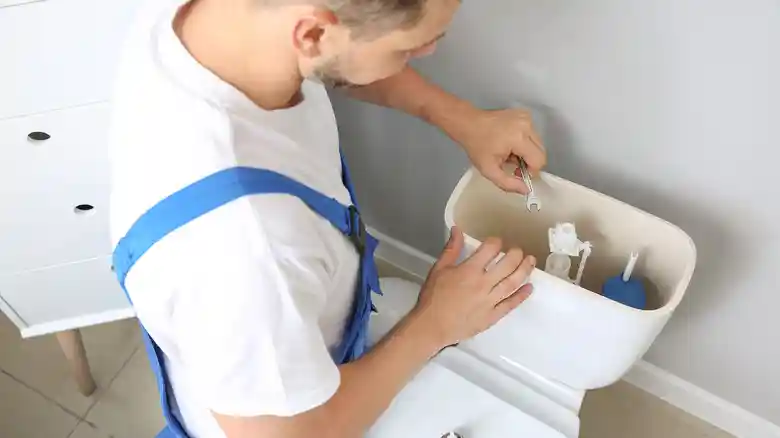
Many people neglect a running toilet for days or weeks, hoping the problem will fix itself. However, such a problem can waste hundreds of gallons of water, resulting in inflated utility bills and unnecessary environmental damage.
A running toilet can also indicate that one or more internal components are broken. Taking care of the problem early can prevent leaks, water damage, and more costly repairs down the road. And fixing it can never hurt when it comes to making sure your bathroom remains useful and efficient.
Homeowners who want to keep their homes caring for their homes need to be able to identify and fix this problem. That is why they, such as Derks Plumbing Company, advise that you act right away if you see anything unusual when using your toilet
The Most Common Reasons Your Toilet Won’t Stop Running
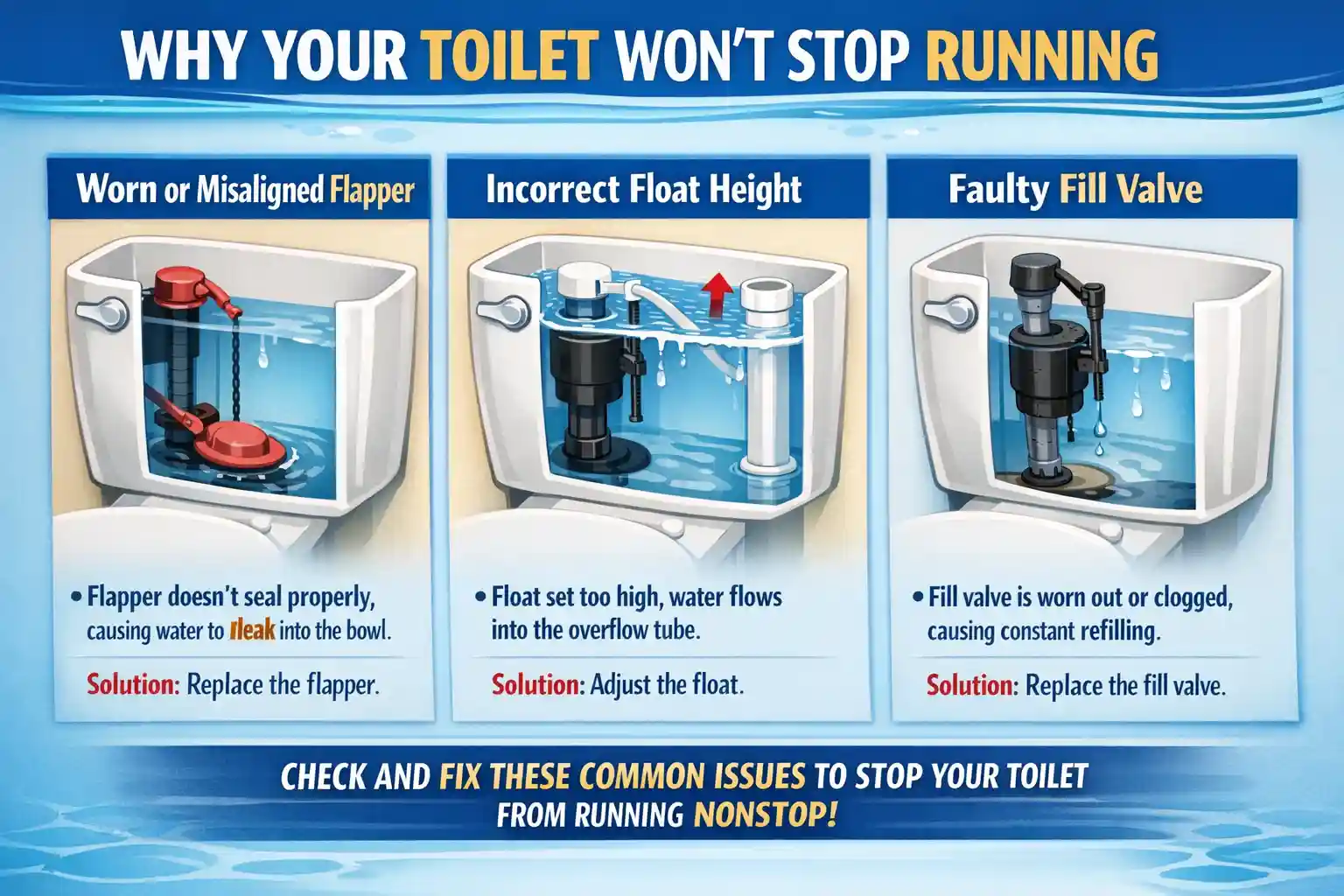
When your toilet won’t stop running, the culprit is generally one of three internal components: the flapper, the float, or the fill valve. These components control the water flow within the tank, and when one malfunctions, the toilet can run continuously.
Knowing which component is malfunctioning is the key to fixing it. Here are the most common reasons why your toilet won’t work and how they affect its performance.
Worn or Misaligned Toilet Flapper
A flapper allows water to flow from the tank into the bowl. If it becomes worn or doesn’t seat properly, the water leaks nonstop, causing the tank to keep refilling. It’s one of the most common causes of running toilets. Flappers can become warped, mineral deposits can prevent them from sealing, or the flapper chain may be too tight or too loose. Replacing a flapper is cheap and usually fixes the problem immediately. It’s an easy fix for anyone comfortable with basic plumbing. If you want to know if your flapper is closing properly, you can perform a simple dye test that will show you if you are missing flapper sealing right away.
Incorrect Float Height or Faulty Float Mechanism
The fill for the toilet tank stops when the float rises. If it is adjusted too high, the water level will rise until it drips into the overflow tube, telling the fill valve to remain on.
Malfunctioning float The balance can be disrupted by a malfunctioning float, which can be either a stuck arm or a waterlogged float ball. An adjustment to the float height will typically fix the problem.
Modern toilets frequently employ a cylinder-style float rather than a floating ball. Both types of balls can fail if the tank becomes encrusted with sediment.
Inspecting and adjusting the float is a matter of minutes, and no special tools are necessary.
Faulty or Old Fill Valve
The flush fill valve will recycle each time, regaining the water in the tank. Wear, clogging, or sticking of the valve may cause the toilet to run endlessly. Mineral deposits caused by hard water may also cause the valve to not close all the way. Fill valves in older toilets commonly fail because of age. An active fill valve replacing it must be replaced and not repaired. Fortunately, modern fill valves are inexpensive, and installation guides are very simple to follow. Replacement of this part guarantees an adequate flow of water and is beneficial for the longevity of the toilet in general.
You can read about: Why were bathrooms called water closets
How to Stop the Toilet From Running
If you know how to manage a home repair toilet, you can work on this common problem that can waste so much water on your own. These instructions should work for most standard toilets.
Step 1: Remove the Tank Lid and Inspect the Parts
Slowly raise the tank lid and place it on its edge on a firm surface. Watch the internals with the toilet running.
Notice the flapper, float, and fill valve to see which one is not working.
A fast visual check will expose leaks, loose parts, or misalignment.
Step 2: Adjust or Replace the Toilet Flapper
Is the flapper sealing the flush valve opening? If it’s warped or not flat, it probably needs to be replaced.
Before replacing the flapper, shut off the water supply with the valve located near the base of the toilet.
Take off the old flapper by unhooking the chain and the rubber arms, then secure the new one firmly.
Have a little slack in the chain, but not so much that it gets caught under the flapper when you adjust the slack.
Step 3: Adjust the Float Height
If the water level becomes too high, move the float up so that the fill valve closes sooner.
For older ball floats, carefully bend the float arm downward. For cylinder floats, turn the adjustment screw or clip.
Set the water level to approximately 1 inch below the overflow tube for best performance.
Ensure the float is unobstructed and is not affected by any mineral deposits.
Step 4: Replace the Fill Valve if Necessary
If raising the float doesn’t work, the fill valve could be broken.
Turn off the water supply and flush the toilet to drain the tank.
Remove the old fill valve, then install the new one as per the manufacturer’s instructions.
Reattach the water supply and press check that the toilet has a nice, slow, quiet refilling cycle.
You can read about: Why Is My Toilet Water Yellow?
When to Call a Professional Plumber
That said, not all running toilet problems are DIY-friendly; some issues have to be resolved by a professional.
If your toilet runs even after installing a new fill valve and flapper and adjusting the float, there could be more severe problems with your flush valve seat or plumbing line.
Lingering problems may also be a sign of hidden leaks, sediment accumulation, or internal components that are on their last legs.
In such situations, calling the Derks Plumbing Company is the best and only solution for your problem. Their experienced team can quickly diagnose complex toilet issues and provide reliable solutions, including expert Toilet Installation in Eagle Rock, to keep your plumbing system working safely and efficiently.

Preventing Toilet Problems in the Future
There are some things you should do after you learn how to fix a toilet that keeps running for good measure, too, so you don’t have to keep fixing it. Inspect your flapper and float every few months to see if they are functioning well. Do not overuse tank cleaning tablets, as they can degrade rubber parts over time. Preventive maintenance can stop a humming toilet and keep your toilet functioning properly much longer, and will also save you from spending more money on repairs.
Conclusion
Learning how to fix a running toilet is a useful skill that can save you money, keep your bathroom efficient, and reduce water waste. Most issues are caused by basic problems with the flapper, float, or fill valve all of which are straightforward to examine and replace.
And should the issue escalate into a more complicated matter, the trusted professionals at Derks Plumbing Company will be happy to come out and make sure everything is working as it should.
FAQs
How can I tell which part of my toilet is running?
Look for water running into the bowl, down the overflow tube, or not shutting off at the fill valve. Each symptom indicates a different component failure.
How long does repairing a running toilet take?
Most repairs will run you between 10 and 30 minutes, depending on whether you have to order any parts.
Is it costly to fix a running toilet?
Many replacement parts – flappers, floats, and fill valves – are cheap, so it’s an economical fix.
Does a running toilet affect the water bill?
Yes, a running toilet can waste hundreds of gallons a day, which can cause your utility bill to spike dramatically.
When do you replace vs repair old toilet parts?
If the toilet is over 10 years old, then replacing worn parts is probably the best option for the long term.
When is it time to call a plumber?
If you’ve been through the flapper, float, fill valve replacement drill, and the problem persists, it’s time to bring in the pros.




