Sewer line problems never show up at a good time. One day your drains work fine, and the next you have water backing up into your tub or a wet patch in the yard that won’t go away.
Most homeowners pay between $1,500 and $4,500 for a standard sewer line fix, though bigger jobs can run higher. So how much does it cost to repair sewer line damage on your property? The answer depends on how bad the damage is, how deep the pipe sits, and which repair method your plumber uses.
How Much Does It Cost to Repair a Sewer Line?
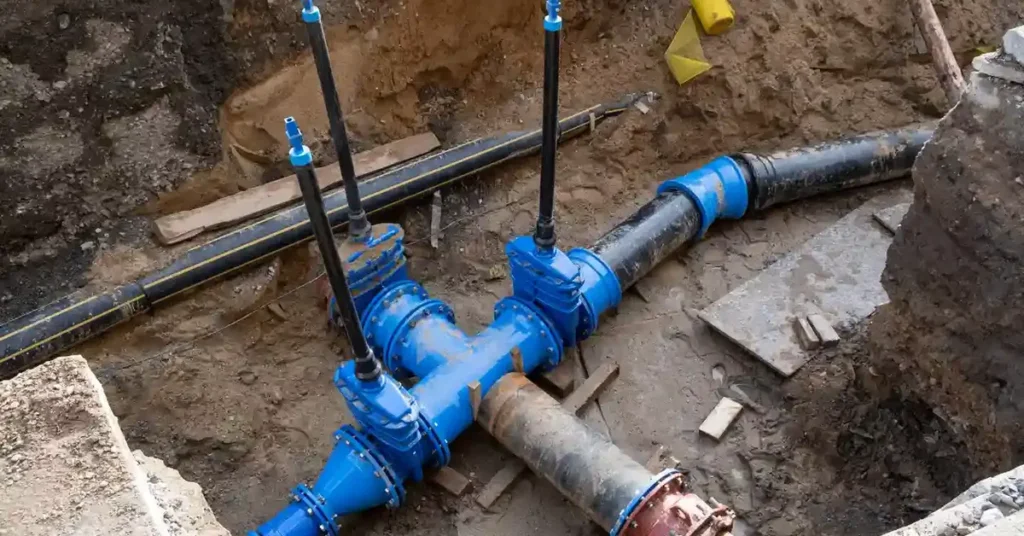
A typical sewer line repair costs $1,000 to $6,000 for homeowners across the country. Small, localized fixes like patching a cracked section or clearing a single root intrusion often land on the lower end of that range. A full collapse under a driveway or a line buried under mature trees can push the total past $10,000.
Three things drive most of that price swing: how much pipe needs work, how deep it sits, and what’s sitting on top of it. A line under a lawn is cheap to reach. A line under a concrete patio or a finished basement floor costs a lot more, because the crew has to break through and rebuild that surface too.
How Much Does Sewer Line Repair Cost Per Linear Foot?
Sewer line repair cost per linear foot usually falls between $50 and $250. Trenchless methods tend to sit at the higher end of that range per foot, but they often save money overall because there’s no landscaping, driveway, or sidewalk to replace afterward.
Traditional dig-and-replace jobs can look cheaper per foot on paper. Once you add site restoration, that gap shrinks fast. A 50-foot repair might run $2,500 to $12,500 depending on which method your plumber uses and what’s blocking the path.
What Is Included in a Sewer Line Repair Estimate?
A solid estimate should spell out labor, materials, permits, and any restoration work. Here’s what a fair quote typically covers:
- Camera inspection to locate the damage
- Excavation or trenchless setup, depending on the method
- Pipe material and fittings
- Labor hours for the crew
- Local permit fees, which many homeowners forget to budget for
- Backfilling and basic yard or driveway repair
Ask your plumber to break these out line by line. A vague one-line total makes it hard to compare bids or catch hidden add-ons later.
What Factors Affect Sewer Line Repair Costs?
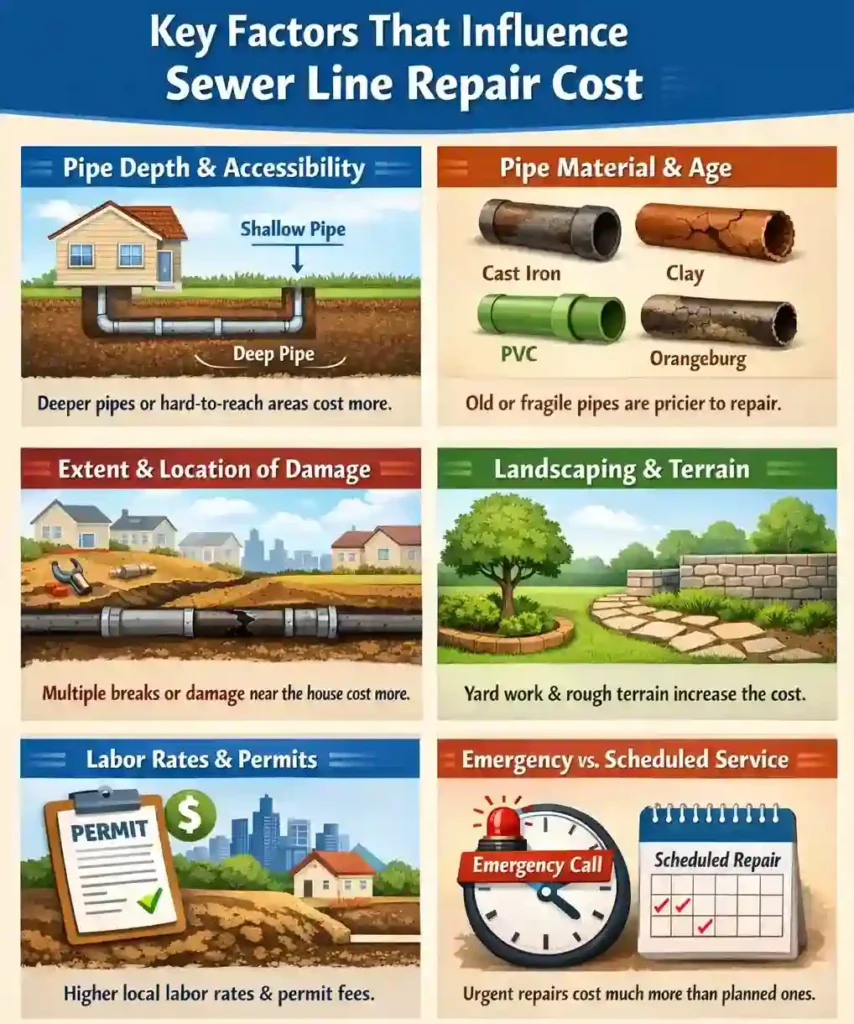
Several factors shape the final number on your invoice:
- Pipe material. Old clay or cast iron pipes often need full replacement, while newer PVC sections can sometimes just be patched.
- Depth and access. Pipes buried six feet down cost more to reach than ones sitting two feet under the lawn.
- Location of the damage. Repairs near the street, under a driveway, or beneath a foundation add complexity and price.
- Cause of the damage. Root intrusion, ground shifting, and pipe corrosion each call for different fixes.
- Local labor rates. Plumbing costs vary by city and region, so your neighbor’s bill isn’t a perfect comparison.
Sewer Line Repair vs. Sewer Line Replacement
Repair fixes a specific section of damaged pipe. Replacement swaps out the entire line, usually because the pipe has aged past the point where patching makes sense.
Sewer line replacement cost typically runs $3,000 to $25,000, depending on the length of the line and the method used. That’s a wide range because replacement covers everything from a short section under a yard to a full line running from the house to the city connection.
A plumber will usually recommend replacement when more than 25% of the pipe shows damage, or when the pipe material itself is failing across its length rather than at one weak spot. If your pipe is otherwise sound and the problem is isolated, repair is almost always the more budget-friendly path.
You can read about: How to Remove Tree Roots from Sewer Line
Traditional Sewer Line Repair vs. Trenchless Sewer Repair
Traditional repair means digging a trench along the damaged pipe, replacing or patching that section, then filling the trench back in. It’s straightforward, but it tears up whatever sits above the pipe.
Trenchless sewer repair uses one or two small access points instead of a long trench. Crews either pull a new pipe liner through the old one or burst the old pipe while pulling a new one into place. It costs more upfront per foot, but it skips the landscaping, concrete, or driveway repair that traditional digging requires. For homeowners weighing how much does it cost to repair sewer line work under an existing structure, trenchless is often the more practical choice.
How Do You Know If Your Sewer Line Needs Repair?
Watch for these warning signs:
- Multiple drains backing up at the same time
- Gurgling sounds from toilets or tubs
- Sewage smell in the yard or basement
- Unusually lush, green patches of grass over the sewer line
- Soggy or sunken spots in the yard
- Slow drainage across the whole house, not just one fixture
One slow drain is usually a local clog. Several fixtures acting up at once points to a problem further down the main line.
How Is a Sewer Line Problem Diagnosed?
Plumbers use a camera inspection to diagnose sewer line problems accurately. A small waterproof camera on a flexible cable travels through the pipe, sending live video back to a screen so the technician can see cracks, blockages, or root intrusion directly.
This step matters because it turns guesswork into a clear plan. Instead of digging up random sections of yard, your plumber can point to the exact spot that needs attention and give you a cost estimate based on what the camera actually shows.
How Long Does Sewer Line Repair Take?
Most sewer line repairs take one to three days from start to finish. A simple trenchless liner job might wrap up in a single day. A traditional dig with extensive damage, or a repair that runs under a driveway, can stretch to a week once you count excavation, the fix itself, and restoring the surface on top.
Weather and permit approval can add time too. Ask your plumber for a realistic timeline before work starts, not just a best-case estimate.
Can You Repair a Sewer Line Without Digging?
Yes. Trenchless methods let plumbers repair a sewer line without digging up your entire yard. Pipe lining coats the inside of the damaged pipe with a new, durable layer. Pipe bursting breaks apart the old pipe while pulling a new one into its place, using the old path as a guide.
Both methods need at least one small access point, so it’s not entirely dig-free, but the disruption is a fraction of what traditional excavation requires.
What Are the Most Common Sewer Line Problems?
The most frequent issues plumbers see include:
- Tree root intrusion, especially in older neighborhoods with mature landscaping
- Pipe corrosion in aging cast iron or clay lines
- Ground shifting that cracks or misaligns pipe sections
- Grease and debris buildup that narrows the pipe over time
- Bellied pipes, where a section sags and traps waste
- Collapsed pipe sections from age or nearby construction
How Much Does Sewer Backup Repair Cost?
Sewer backup repair cost usually ranges from $500 for a simple clog to $4,000 or more when the backup stems from a collapsed or badly damaged line. The cost to fix sewer backup issues depends heavily on the cause. A clog from grease or debris is a quick, affordable fix. A backup caused by a broken pipe or serious root intrusion requires the same repair work as any other sewer line damage.
If sewage has backed up into your home, factor in cleanup and possible water damage restoration on top of the plumbing repair itself. Acting quickly keeps that secondary cost from growing.
How Can You Save Money on Sewer Line Repair?
A few practical steps can bring your total down:
- Get at least three quotes before choosing a plumber
- Ask about trenchless options to avoid landscaping and concrete repair
- Fix small issues early instead of waiting for a full collapse
- Check whether your homeowner’s insurance or a service line warranty covers part of the cost
- Schedule routine camera inspections if you have older pipes or mature trees nearby
Catching a problem while it’s still small is the single biggest money-saver on this list. A $300 root-clearing job today beats a $6,000 collapse repair down the road.
When Is Sewer Line Repair an Emergency?
Treat it as an emergency when sewage backs up into your home, multiple drains stop working at once, or you smell sewage gas indoors. These situations risk water damage and health hazards, so they need same-day attention rather than a scheduled appointment.
A slow drain or an occasional gurgle can usually wait for a normal appointment. Standing sewage inside your house cannot.
Why Choose Professional Sewer Line Repair?
Sewer line work involves more than just fixing a pipe. A licensed plumber knows local codes, understands soil conditions, and picks the right repair method for your specific pipe and damage type. Trying to fix a sewer line yourself can lead to bigger problems, higher costs, and repeat damage down the line. If you need Sewer Line Repair in Eagle Rock, the team at Derks Plumbing handles everything from camera inspections to trenchless repairs, so you get a lasting fix instead of a temporary patch.

Conclusion
Sewer line repair costs vary widely, but most homeowners land somewhere between $1,000 and $6,000, with trenchless methods often saving money once you factor in landscaping and driveway repair. The real answer to how much does it cost to repair sewer line work comes down to your pipe’s condition, its depth, and what sits above it. A camera inspection and a detailed, line-by-line estimate are the best ways to get a number you can actually trust.
FAQs
How much does it cost to repair sewer line damage on average?
Most homeowners pay $1,000 to $6,000, with severe damage or full replacement running higher.
Is trenchless sewer repair worth the extra cost?
Often, yes. It costs more per foot but usually saves money overall by skipping landscaping and driveway restoration.
Does homeowner’s insurance cover sewer line repair?
Standard policies usually don’t cover pipe wear and tear, but many insurers offer a separate service line endorsement that does.
How do I know if I need repair or full replacement?
If less than 25% of the pipe is damaged, repair is usually enough. Widespread corrosion or age-related failure typically calls for replacement.
Can a homeowner do sewer line repair themselves?
No. This work requires permits, proper grading, and a connection to the city main, so it should go to a licensed plumber.