No, you should never flush cat litter down your toilet. Even litters sold as flushable can cause severe blockages in your home drainage pipes. Clay litters absorb water, expand, and turn into solid cement inside your plumbing system. Toilet infrastructure is designed only to process liquid waste, human waste, and water-soluble toilet paper.
If you are wondering can you flush cat litter down the toilet, the short answer is always no. Flushing litter leads to costly pipe repairs, backups, and environmental damage. This article covers why litter ruins pipes and how to dispose of it safely.
Can You Flush Cat Litter Down the Toilet?
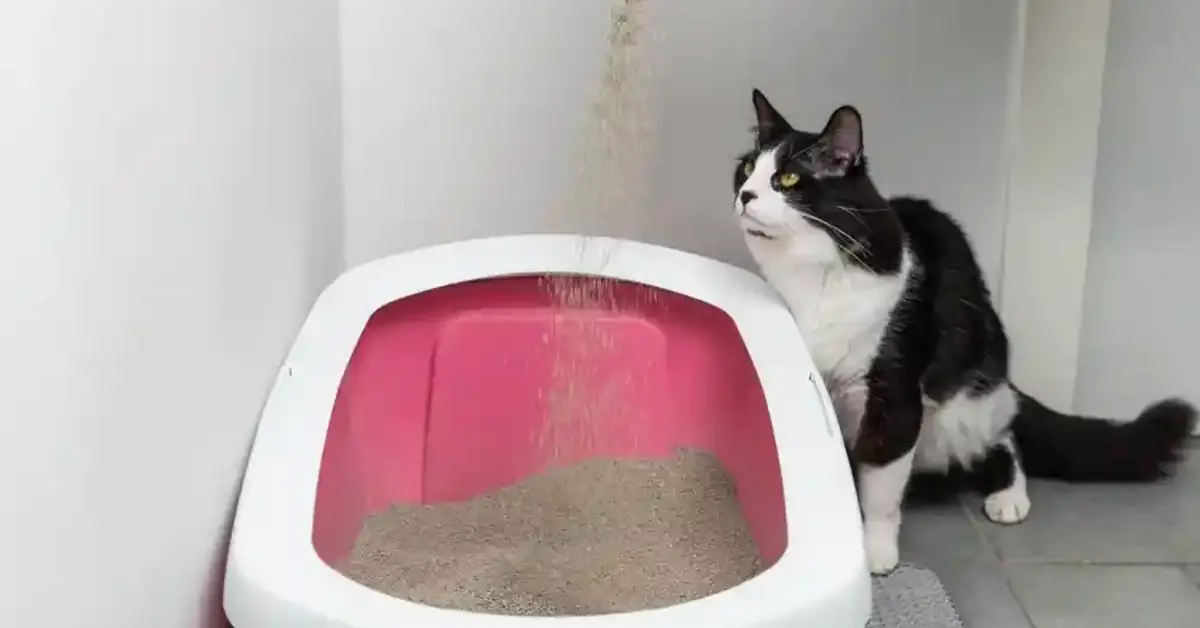
The simple answer to whether can cat litter be flushed is a firm no. Your home plumbing system uses water flow and gravity to push organic waste through narrow pipes. Most cat litter is designed to absorb liquid and bind together into firm clumps. When these materials hit the standing water in your drain line, they swell rapidly.
Many homeowners ask, can i flush cat litter if it is just a tiny amount? Even small daily scoops build up along the walls of your sewer pipe. Over time, the material acts like a trap for grease, hair, and paper. This creates a dense barrier that standard plungers cannot break apart.
Modern home plumbing systems use low-flow toilets to conserve water. These units send only 1.2 to 1.6 gallons of water down the line per flush. That small volume of water lacks the pressure required to push heavy, dense cat litter through long pipe routes. The litter settles in low spots of your main drain line, hardens, and causes total home backups.
Why Flushing Cat Litter Is Bad for Plumbing
Cat litter causes catastrophic damage to residential drainage systems for several physical reasons. The main material used in traditional cat litter is sodium bentonite clay. This specific clay can expand up to fifteen times its original size when exposed to liquid.
When you put cat litter in toilet bowls, the clay mixes with water and forms a thick sludge. This sludge travels into your indoor drain line where water cools and slows down. The heavy clay settles on the bottom of horizontal pipes. Within hours, the clay dries and hardens into a substance similar to concrete.
Here are the main physical problems caused by flushing litter:
- Pipe constriction as sticky clay coats the inner diameter of plastic and cast iron drain lines.
- Heavy blockages at pipe bends, traps, and elbows where flow velocity naturally drops.
- Complete main sewer line blockages that force raw sewage back up through shower drains and toilets.
- Severe mechanical damage to garbage disposals and residential sewage ejector pumps.
Once litter hardens inside your pipes, standard drain clearing chemicals will not dissolve it. Chemical drain cleaners generate heat that can crack your pipes, but they cannot melt clay. Clearing a clay blockage requires professional hydro-jetting equipment or heavy mechanical drain snakes.
Is Flushable Cat Litter Really Safe?
Many pet food companies sell products labeled as flushable cat litter. These items are typically made from plant materials like corn, wheat, wood fiber, pine, or paper pulp. Manufacturers claim these natural fibers break down in water like toilet paper.
However, asking is flushable cat litter safe for plumbing gets a very different answer from licensed plumbers. Most pipe experts agree that flushable litter is not safe for home plumbing or public sewer systems.
While plant fibers do break down faster than bentonite clay, they still require a large amount of water and time to dissolve fully. Modern low-flow toilets do not supply enough water volume to break down plant clumps. The clumps travel whole down your pipes, where they catch on pipe rough spots, rust, and tree roots.
Furthermore, flushable litter is especially dangerous for homes with septic tanks. Septic tanks rely on natural bacteria to digest organic solids. Plant litters add massive amounts of indigestible solid waste to the tank. The litter settles at the bottom, kills beneficial bacteria, fills the tank prematurely, and causes drain field failure.
What Types of Cat Litter Should Never Be Flushed?
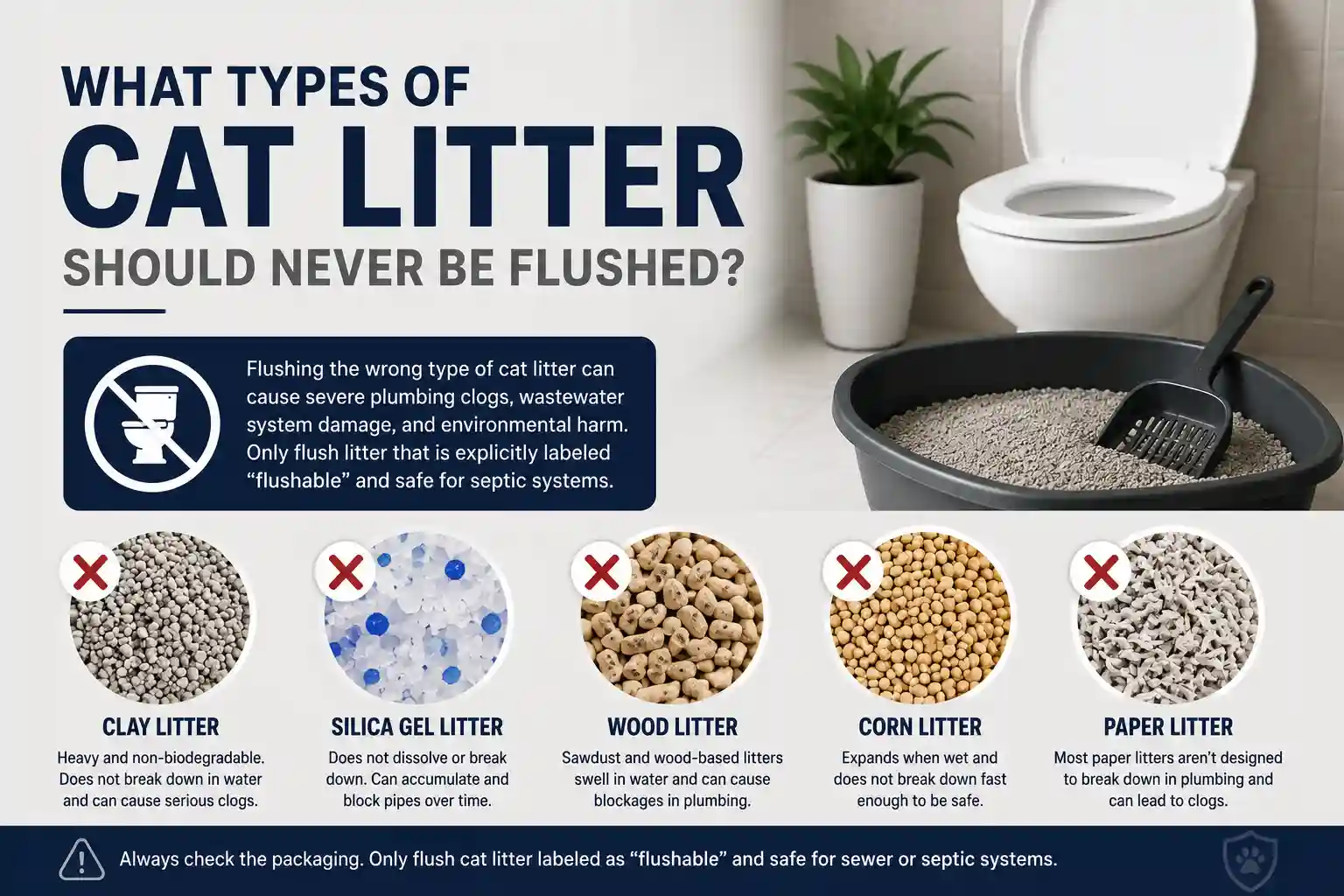
You must keep every major commercial litter type out of your toilet and drain system. Each material creates unique hazard conditions for plumbing infrastructure and environment.
Sodium Bentonite Clumping Clay Litter
This is the most common and most dangerous litter type. Sodium bentonite acts as an expander when wet. It forms solid, sticky clumps designed to trap liquid waste. Flushed clay litter creates hard plugs in pipes that resemble dry plaster.
Silica Gel Crystal Litter
Crystal litter is made from porous sodium silicate. These crystals absorb massive moisture amounts and hold odors. Synthetic silica crystals do not dissolve in water under any condition. They sit at the bottom of pipes, collect organic debris, and form solid blockages.
Non-Clumping Clay Litter
Non-clumping litter uses natural clay minerals like attapulgite or kaolin. While it does not form round clumps, it sinks instantly in standing water. It forms a dense, heavy sediment layer in main sewer lines that restricts normal wastewater flow.
Recycled Paper Pellets
Paper pellets absorb moisture and swell into large soft masses. When flushed, these wet paper masses wedge tightly into pipe bends. They block water movement and catch toilet paper, leading to immediate toilet overflows.
Pine, Corn, and Wheat Litters
Even though these natural litters are sold as biodegradable, they should never go into your toilet. They absorb water, swell up, and absorb pipe grease, creating dense clogs that damage household drains.
Can Any Cat Litter Be Flushed?
No cat litter product is completely safe to flush into a toilet system. Even if a product box says flushable on the front label, plumbing standards advise against putting it down your drain.
Some manufacturers suggest flushing one small clump at a time and waiting twenty minutes between flushes. Following these steps wastes tens of gallons of clean water for a single litter box cleanup. It also fails to stop litters from settling in main lateral pipes under your home foundation.
Municipal water authorities around the country explicitly prohibit flushing cat litter of any kind. City sewage pipes are built to process human body waste and soft tissue paper. Adding heavy plant fibers, clay, or mineral crystals forces municipal treatment plants to clear costly system clogs.
If you are asking can you flush cat litter down the toilet under special circumstances, the answer remains no. Whether your home sits on a municipal sewer line or a private septic tank, flushing litter creates a constant risk of plumbing failure.
Environmental and Health Hazards of Flushing Cat Waste
Flushing cat waste introduces biological risks to public water systems and marine life. Cat feces can carry a microscopic parasite called Toxoplasma gondii. This organism causes toxoplasmosis, an infection that poses severe health risks to humans, pregnant women, and immune-compromised individuals.
Standard wastewater treatment facilities use filtration and chemical processes designed to kill human pathogens. However, standard municipal treatment facilities cannot kill or remove Toxoplasma gondii oocysts from water.
When you flush cat feces down the toilet, these resilient parasite eggs survive the treatment process. The treated water is released into rivers, bays, and oceans. Wildlife experts have traced toxoplasmosis infections in sea otters, seals, and coastal mammals directly to flushed cat waste.
For these reasons, environmental protection agencies strongly warn pet owners never to flush cat waste down the toilet, even without litter attached.
What Happens If You Already Flushed Cat Litter?
If you have already flushed cat litter down your toilet, you must take quick action to stop a full pipe clog. Do not continue flushing the toilet to see if the water clears. Repeated flushing pushes more water into a blocked line, causing dirty water to spill over the toilet rim.
Follow these steps if cat litter was recently flushed down your drain:
- Stop using all water fixtures in your home immediately. Do not run sinks, showers, washing machines, or dishwashers.
- Check the water level inside your toilet bowl. If the level is high, remove excess water manually using a small bucket.
- Use a heavy-duty flange plunger to create a tight seal around the bottom drain hole of your toilet bowl.
- Push and pull the plunger firm and straight for twenty seconds to move standing water.
- If plunging fails to restore normal flow, do not pour liquid chemical drain openers into the toilet bowl.
- Call a licensed plumber to inspect your line with an underground drain camera and clear the clog safely.
Plumbers use a professional tool called a motorized drain auger or a high-pressure hydro-jetter. A hydro-jetter sprays concentrated water streams at high pressure to break apart hardened clay and wash the pipe walls clean.
You can read about: What Happens If You Flush a Clorox Toilet Wand ?
Signs Your Plumbing Is Clogged from Litter
Cat litter clogs do not always cause immediate toilet overflows. Sometimes the material builds up slowly in your main drain pipe over several weeks. Recognizing early warning signs helps you fix problems before sewage backs up into your living spaces.
Watch out for these common plumbing warning signals:
- Water drains slowly from your bathroom sink, shower stall, or bathtub.
- Gurgling or bubbling sounds come from your toilet bowl when you run your sink faucet.
- Toilet water levels rise higher than normal or drop unusually low after a flush cycle.
- Foul sewer odors drift up from bathroom floor drains or fixture openings.
- Water backs up into your shower pan when your washing machine drains out.
If you notice two or more of these warning signs after placing can you flush cat litter to the test, your main sewer line requires professional cleaning.
The Best Ways to Dispose of Cat Litter and Cat Waste
Proper disposal of cat litter keeps your home plumbing safe and protects regional water supplies. Safe disposal requires basic steps that take only a few minutes each day.
Here is the best method to dispose of dirty cat litter and waste:
- Scoop dirty litter and solid waste out of the box daily using a slotted metal or plastic scoop.
- Place the scooped waste directly into a small, sturdy plastic bag or compostable waste pouch.
- Tie the bag opening tightly to seal in dust, moisture, and waste odors.
- Drop the sealed bag into your outdoor household trash bin for regular municipal collection.
- Use a dedicated trash container like a litter disposal pail inside your home to reduce plastic bag waste.
If you prefer eco-friendly disposal options, switch to natural plant litters made from corn, paper, or pine. Throw these litters directly into your regular trash bin. Never place cat waste or cat litter into backyard compost bins meant for garden food crops, as dangerous parasites can survive in home compost soil.
Conclusion
Understanding why can you flush cat litter down the toilet is essential for every cat owner who wants to avoid costly plumbing repairs. Flushing any type of cat litter, whether clay, gel, or natural fiber, causes heavy blockages in home drain lines and municipal sewer systems. Cat waste also carries dangerous parasites that survive standard wastewater treatment and harm ocean wildlife. The safest approach is always to scoop daily, seal waste in sturdy bags, and throw it away in your outdoor trash bin.
If you are already dealing with slow drains or main sewer line blockages from flushed litter, do not let the problem turn into a major sewage backup. For expert diagnostic help and drain clearing, contact Derks Plumbing today. Their licensed team provides professional Plumbing Consultant Services in Eagle Rock to clear stubborn pipe clogs, restore proper water flow, and keep your home drainage system running safely.

Frequently Asked Questions (FAQs)
Can you flush cat litter if it is labeled flushable?
No. Litters labeled flushable still swell in standing water and clog modern low-flow toilets and main drain pipes.
Is it safe to flush cat poop without litter?
No. Cat poop hardens in pipes and can carry Toxoplasma gondii parasites that survive wastewater treatment and harm wildlife.
How do plumbers remove cat litter clogs from pipes?
Plumbers use high-pressure hydro-jetting tools or heavy motorized drain augers to break up hardened clay and scour pipe walls.
What happens if you flush clay cat litter down the toilet?
Clay litter absorbs water, expands up to fifteen times its size, and hardens into a concrete-like barrier inside your drain line.
How should you safely get rid of used cat litter?
Scoop the waste daily, seal it inside a small plastic bag, and toss it directly into your outdoor trash container.




